Drug Information
General Information of This Drug
| Drug ID | DRG00141 | |||||
|---|---|---|---|---|---|---|
| Drug Name | Beta-carboline derivative | |||||
| Synonyms |
66863-43-2; Boc-L-1,2,3,4-Tetrahydronorharman-3-carboxylic acid; Boc-L-Tpi-OH; (S)-2-(tert-butoxycarbonyl)-2,3,4,9-tetrahydro-1H-pyrido[3,4-b]indole-3-carboxylic acid; (S)-2-Boc-1,2,3,4-tetrahydronorharmane-3-carboxylic acid; Boc-L-1,2,3,4-tetrahydro-norharman-3-carboxylic acid; (3S)-2-[(2-methylpropan-2-yl)oxycarbonyl]-1,3,4,9-tetrahydropyrido[3,4-b]indole-3-carboxylic acid; MFCD00800580; FHEPEWKHTOVVAT-AWEZNQCLSA-N; SCHEMBL5880416; CHEMBL2032051; AKOS015948717; N-alpha-tert-Butyloxycarbonyl-1,2,3,4-tetrahydronorharman-L-3-carboxylic acid; AC-5891; CS-W012030; (3S)-2-(tert-butoxycarbonyl)-1H,3H,4H,9H-pyrido[3,4-b]indole-3-carboxylic acid; PS-12017; FT-0659177; A50152; EN300-1071066; N-; A-Boc-L-1,2,3,4-tetrahydronorharmane-3-carboxylic acid; Boc-L-1,2,3,4-tetrahydronorharman-3-carboxylic acid, AldrichCPR; (3S)-2-[(tert-butoxy)carbonyl]-1H,2H,3H,4H,9H-pyrido[3,4-b]indole-3-carboxylic acid; (S)-2-(tert-butoxycarbonyl)-2,3,4,9-tetrahydro-1H-pyrido[3,4-b]indole-3-carboxylicacid; Boc-Tpi-OH;Boc-L-1,2,3,4-Tetrahydro--carboline-3-carboxylic acid;Boc-L-tryptoline-3-carboxylic acid;Boc-L-1,2,3,4-tetrahydro-9H-pyrido[3,4-b]indole-3-carboxylic acid
Click to Show/Hide
|
|||||
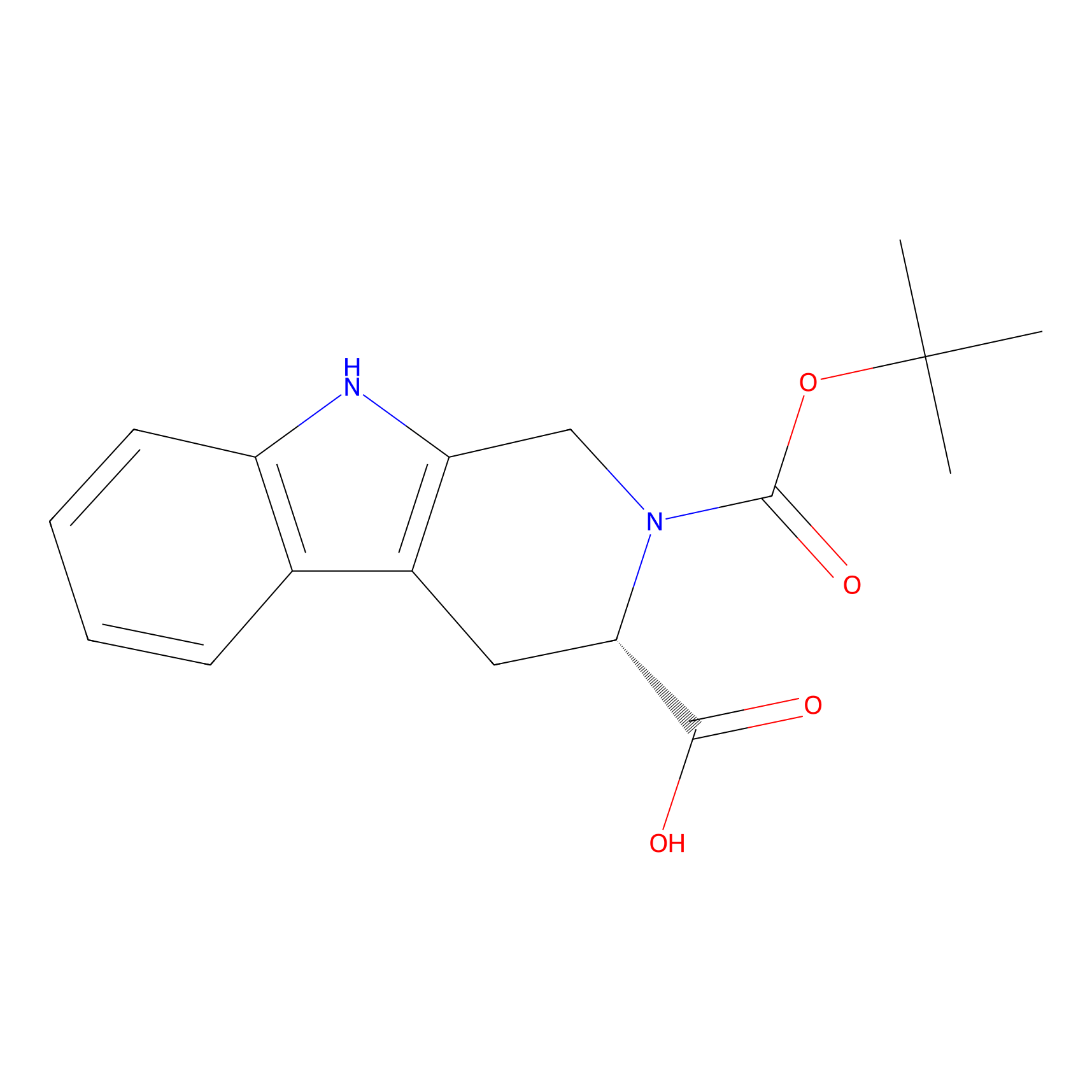
| Structure |
|
|||||
| Formula |
C17H20N2O4
|
|||||
| #Ro5 Violations (Lipinski): 0 | Molecular Weight (mw) | 316.35 | ||||
| Lipid-water partition coefficient (xlogp) | 2.4 | |||||
| Hydrogen Bond Donor Count (hbonddonor) | 2 | |||||
| Hydrogen Bond Acceptor Count (hbondacc) | 4 | |||||
| Rotatable Bond Count (rotbonds) | 3 | |||||
| PubChem CID | ||||||
| Canonical smiles |
CC(C)(C)OC(=O)N1CC2=C(CC1C(=O)O)C3=CC=CC=C3N2
|
|||||
| InChI |
InChI=1S/C17H20N2O4/c1-17(2,3)23-16(22)19-9-13-11(8-14(19)15(20)21)10-6-4-5-7-12(10)18-13/h4-7,14,18H,8-9H2,1-3H3,(H,20,21)/t14-/m0/s1
|
|||||
| InChIKey |
FHEPEWKHTOVVAT-AWEZNQCLSA-N
|
|||||
| IUPAC Name |
(3S)-2-[(2-methylpropan-2-yl)oxycarbonyl]-1,3,4,9-tetrahydropyrido[3,4-b]indole-3-carboxylic acid
|
|||||
Full Information of The Activity Data of The PDC(s) Related to This Drug
Tripeptide 47 - Beta-carboline derivative conjugate 1 [Investigative]
Obtained from the Model Organism Data
| Experiment 1 Reporting the Activity Data of This PDC | [1] | ||||
| Indication | Mesenteric ischemia and reperfusion injury | ||||
| Efficacy Data | Pain threshold variation | 7.46 ± 8.95% | |||
| Evaluation Method | Tail flick method | ||||
| Administration Time | 180min | ||||
| Administration Dosage | 0.05mmol/kg | ||||
| MOA of PDC |
It has been reported that some short peptides with certain sequences may be used as analgesic agents. In addition, our recent research findings indicated that some tripeptides with AA-Phe-Trp sequence present good analgesic activities. Since reactive oxygen species (ROS) and inflammatory leukocytes play an important role in the pathogenesis of I/R injury, antioxidant therapy and inhibition of post-ischemic neutrophil infiltration may have therapeutic efficacy during I/R injury. Ideally, I/R injury can be treated by a combination of the therapeutic agents. Generally, when two synergistic agents are administered individually but simultaneously, they will be transported to the site of action with different efficiencies. However, there are potential advantages in giving the co-administered agents as a single chemical entity. It is desirable to have the two synergistic agents reach a site simultaneously. Considering the antioxidant properties of β-carboline alkaloids coupled with the analgesic activity observed with AA-Phe-Trp tripeptides, we hypothesized that β-carboline and tripeptide (AA-Phe-Trp) conjugates might exhibit both enhanced antioxidant and analgesic activities. To test this hypothesis, we have synthesized a series of novel β-carboline-tripeptide (AA-Phe-Trp) conjugates, and evaluated their biological capacity to protect against mesenteric I/R injury.
Click to Show/Hide
|
||||
| Description |
All compounds were prescreened for analgesic activity at a dose of 0.15 mmol/kg. For each animal, pain thresholds were estimated at 30, 60, 120, 150 and 180 min following vehicle or drug administration. -Carboline-tripeptide conjugates exhibited moderate to good analgesic activity, with compounds 4a,e,k,l,o,p demonstrating especially good analgesic properties. All pain thresholds were increased after 30 min, yet maximal pain thresholds occurred at different time points for various synthetic derivatives. For example, the maximal pain thresholds for 4a,c,e,h,m were observed after 60 min, whereas for 4d,g,k,l,n,o,p this value was 90 min, and for 4b,f,i,q,r, 120 min post drug administration. The duration of the analgesic action of 4a,b,c,d,e,f,i,j was 150 min, while the same value for 4k,l,m,n,o,p was 180 min. We speculate that the physiological difference in analgesic activity is closely related to the tripeptide sequences of the -carbolines.
Click to Show/Hide
|
||||
| In Vivo Model | Male ICR mice. | ||||
| Experiment 2 Reporting the Activity Data of This PDC | [1] | ||||
| Indication | Mesenteric ischemia and reperfusion injury | ||||
| Efficacy Data | Pain threshold variation | 8.23 ± 12.04% | |||
| Evaluation Method | Tail flick method | ||||
| Administration Time | 150min | ||||
| Administration Dosage | 0.05mmol/kg | ||||
| MOA of PDC |
It has been reported that some short peptides with certain sequences may be used as analgesic agents. In addition, our recent research findings indicated that some tripeptides with AA-Phe-Trp sequence present good analgesic activities. Since reactive oxygen species (ROS) and inflammatory leukocytes play an important role in the pathogenesis of I/R injury, antioxidant therapy and inhibition of post-ischemic neutrophil infiltration may have therapeutic efficacy during I/R injury. Ideally, I/R injury can be treated by a combination of the therapeutic agents. Generally, when two synergistic agents are administered individually but simultaneously, they will be transported to the site of action with different efficiencies. However, there are potential advantages in giving the co-administered agents as a single chemical entity. It is desirable to have the two synergistic agents reach a site simultaneously. Considering the antioxidant properties of β-carboline alkaloids coupled with the analgesic activity observed with AA-Phe-Trp tripeptides, we hypothesized that β-carboline and tripeptide (AA-Phe-Trp) conjugates might exhibit both enhanced antioxidant and analgesic activities. To test this hypothesis, we have synthesized a series of novel β-carboline-tripeptide (AA-Phe-Trp) conjugates, and evaluated their biological capacity to protect against mesenteric I/R injury.
Click to Show/Hide
|
||||
| Description |
All compounds were prescreened for analgesic activity at a dose of 0.15 mmol/kg. For each animal, pain thresholds were estimated at 30, 60, 120, 150 and 180 min following vehicle or drug administration. -Carboline-tripeptide conjugates exhibited moderate to good analgesic activity, with compounds 4a,e,k,l,o,p demonstrating especially good analgesic properties. All pain thresholds were increased after 30 min, yet maximal pain thresholds occurred at different time points for various synthetic derivatives. For example, the maximal pain thresholds for 4a,c,e,h,m were observed after 60 min, whereas for 4d,g,k,l,n,o,p this value was 90 min, and for 4b,f,i,q,r, 120 min post drug administration. The duration of the analgesic action of 4a,b,c,d,e,f,i,j was 150 min, while the same value for 4k,l,m,n,o,p was 180 min. We speculate that the physiological difference in analgesic activity is closely related to the tripeptide sequences of the -carbolines.
Click to Show/Hide
|
||||
| In Vivo Model | Male ICR mice. | ||||
| Experiment 3 Reporting the Activity Data of This PDC | [1] | ||||
| Indication | Mesenteric ischemia and reperfusion injury | ||||
| Efficacy Data | Pain threshold variation | 13.42 ± 8.68% | |||
| Evaluation Method | Tail flick method | ||||
| Administration Time | 180min | ||||
| Administration Dosage | 0.10mmol/kg | ||||
| MOA of PDC |
It has been reported that some short peptides with certain sequences may be used as analgesic agents. In addition, our recent research findings indicated that some tripeptides with AA-Phe-Trp sequence present good analgesic activities. Since reactive oxygen species (ROS) and inflammatory leukocytes play an important role in the pathogenesis of I/R injury, antioxidant therapy and inhibition of post-ischemic neutrophil infiltration may have therapeutic efficacy during I/R injury. Ideally, I/R injury can be treated by a combination of the therapeutic agents. Generally, when two synergistic agents are administered individually but simultaneously, they will be transported to the site of action with different efficiencies. However, there are potential advantages in giving the co-administered agents as a single chemical entity. It is desirable to have the two synergistic agents reach a site simultaneously. Considering the antioxidant properties of β-carboline alkaloids coupled with the analgesic activity observed with AA-Phe-Trp tripeptides, we hypothesized that β-carboline and tripeptide (AA-Phe-Trp) conjugates might exhibit both enhanced antioxidant and analgesic activities. To test this hypothesis, we have synthesized a series of novel β-carboline-tripeptide (AA-Phe-Trp) conjugates, and evaluated their biological capacity to protect against mesenteric I/R injury.
Click to Show/Hide
|
||||
| Description |
All compounds were prescreened for analgesic activity at a dose of 0.15 mmol/kg. For each animal, pain thresholds were estimated at 30, 60, 120, 150 and 180 min following vehicle or drug administration. -Carboline-tripeptide conjugates exhibited moderate to good analgesic activity, with compounds 4a,e,k,l,o,p demonstrating especially good analgesic properties. All pain thresholds were increased after 30 min, yet maximal pain thresholds occurred at different time points for various synthetic derivatives. For example, the maximal pain thresholds for 4a,c,e,h,m were observed after 60 min, whereas for 4d,g,k,l,n,o,p this value was 90 min, and for 4b,f,i,q,r, 120 min post drug administration. The duration of the analgesic action of 4a,b,c,d,e,f,i,j was 150 min, while the same value for 4k,l,m,n,o,p was 180 min. We speculate that the physiological difference in analgesic activity is closely related to the tripeptide sequences of the -carbolines.
Click to Show/Hide
|
||||
| In Vivo Model | Male ICR mice. | ||||
| Experiment 4 Reporting the Activity Data of This PDC | [1] | ||||
| Indication | Mesenteric ischemia and reperfusion injury | ||||
| Efficacy Data | Pain threshold variation | 17.97 ± 14.64% | |||
| Evaluation Method | Tail flick method | ||||
| Administration Time | 120min | ||||
| Administration Dosage | 0.05mmol/kg | ||||
| MOA of PDC |
It has been reported that some short peptides with certain sequences may be used as analgesic agents. In addition, our recent research findings indicated that some tripeptides with AA-Phe-Trp sequence present good analgesic activities. Since reactive oxygen species (ROS) and inflammatory leukocytes play an important role in the pathogenesis of I/R injury, antioxidant therapy and inhibition of post-ischemic neutrophil infiltration may have therapeutic efficacy during I/R injury. Ideally, I/R injury can be treated by a combination of the therapeutic agents. Generally, when two synergistic agents are administered individually but simultaneously, they will be transported to the site of action with different efficiencies. However, there are potential advantages in giving the co-administered agents as a single chemical entity. It is desirable to have the two synergistic agents reach a site simultaneously. Considering the antioxidant properties of β-carboline alkaloids coupled with the analgesic activity observed with AA-Phe-Trp tripeptides, we hypothesized that β-carboline and tripeptide (AA-Phe-Trp) conjugates might exhibit both enhanced antioxidant and analgesic activities. To test this hypothesis, we have synthesized a series of novel β-carboline-tripeptide (AA-Phe-Trp) conjugates, and evaluated their biological capacity to protect against mesenteric I/R injury.
Click to Show/Hide
|
||||
| Description |
All compounds were prescreened for analgesic activity at a dose of 0.15 mmol/kg. For each animal, pain thresholds were estimated at 30, 60, 120, 150 and 180 min following vehicle or drug administration. -Carboline-tripeptide conjugates exhibited moderate to good analgesic activity, with compounds 4a,e,k,l,o,p demonstrating especially good analgesic properties. All pain thresholds were increased after 30 min, yet maximal pain thresholds occurred at different time points for various synthetic derivatives. For example, the maximal pain thresholds for 4a,c,e,h,m were observed after 60 min, whereas for 4d,g,k,l,n,o,p this value was 90 min, and for 4b,f,i,q,r, 120 min post drug administration. The duration of the analgesic action of 4a,b,c,d,e,f,i,j was 150 min, while the same value for 4k,l,m,n,o,p was 180 min. We speculate that the physiological difference in analgesic activity is closely related to the tripeptide sequences of the -carbolines.
Click to Show/Hide
|
||||
| In Vivo Model | Male ICR mice. | ||||
| Experiment 5 Reporting the Activity Data of This PDC | [1] | ||||
| Indication | Mesenteric ischemia and reperfusion injury | ||||
| Efficacy Data | Pain threshold variation | 18.86 ± 19.46% | |||
| Evaluation Method | Tail flick method | ||||
| Administration Time | 180min | ||||
| Administration Dosage | 0.15mmol/kg | ||||
| MOA of PDC |
It has been reported that some short peptides with certain sequences may be used as analgesic agents. In addition, our recent research findings indicated that some tripeptides with AA-Phe-Trp sequence present good analgesic activities. Since reactive oxygen species (ROS) and inflammatory leukocytes play an important role in the pathogenesis of I/R injury, antioxidant therapy and inhibition of post-ischemic neutrophil infiltration may have therapeutic efficacy during I/R injury. Ideally, I/R injury can be treated by a combination of the therapeutic agents. Generally, when two synergistic agents are administered individually but simultaneously, they will be transported to the site of action with different efficiencies. However, there are potential advantages in giving the co-administered agents as a single chemical entity. It is desirable to have the two synergistic agents reach a site simultaneously. Considering the antioxidant properties of β-carboline alkaloids coupled with the analgesic activity observed with AA-Phe-Trp tripeptides, we hypothesized that β-carboline and tripeptide (AA-Phe-Trp) conjugates might exhibit both enhanced antioxidant and analgesic activities. To test this hypothesis, we have synthesized a series of novel β-carboline-tripeptide (AA-Phe-Trp) conjugates, and evaluated their biological capacity to protect against mesenteric I/R injury.
Click to Show/Hide
|
||||
| Description |
All compounds were prescreened for analgesic activity at a dose of 0.15 mmol/kg. For each animal, pain thresholds were estimated at 30, 60, 120, 150 and 180 min following vehicle or drug administration. -Carboline-tripeptide conjugates exhibited moderate to good analgesic activity, with compounds 4a,e,k,l,o,p demonstrating especially good analgesic properties. All pain thresholds were increased after 30 min, yet maximal pain thresholds occurred at different time points for various synthetic derivatives. For example, the maximal pain thresholds for 4a,c,e,h,m were observed after 60 min, whereas for 4d,g,k,l,n,o,p this value was 90 min, and for 4b,f,i,q,r, 120 min post drug administration. The duration of the analgesic action of 4a,b,c,d,e,f,i,j was 150 min, while the same value for 4k,l,m,n,o,p was 180 min. We speculate that the physiological difference in analgesic activity is closely related to the tripeptide sequences of the -carbolines.
Click to Show/Hide
|
||||
| In Vivo Model | Male ICR mice. | ||||
| Experiment 6 Reporting the Activity Data of This PDC | [1] | ||||
| Indication | Mesenteric ischemia and reperfusion injury | ||||
| Efficacy Data | Pain threshold variation | 20.65 ± 18.94% | |||
| Evaluation Method | Tail flick method | ||||
| Administration Time | 90min | ||||
| Administration Dosage | 0.05mmol/kg | ||||
| MOA of PDC |
It has been reported that some short peptides with certain sequences may be used as analgesic agents. In addition, our recent research findings indicated that some tripeptides with AA-Phe-Trp sequence present good analgesic activities. Since reactive oxygen species (ROS) and inflammatory leukocytes play an important role in the pathogenesis of I/R injury, antioxidant therapy and inhibition of post-ischemic neutrophil infiltration may have therapeutic efficacy during I/R injury. Ideally, I/R injury can be treated by a combination of the therapeutic agents. Generally, when two synergistic agents are administered individually but simultaneously, they will be transported to the site of action with different efficiencies. However, there are potential advantages in giving the co-administered agents as a single chemical entity. It is desirable to have the two synergistic agents reach a site simultaneously. Considering the antioxidant properties of β-carboline alkaloids coupled with the analgesic activity observed with AA-Phe-Trp tripeptides, we hypothesized that β-carboline and tripeptide (AA-Phe-Trp) conjugates might exhibit both enhanced antioxidant and analgesic activities. To test this hypothesis, we have synthesized a series of novel β-carboline-tripeptide (AA-Phe-Trp) conjugates, and evaluated their biological capacity to protect against mesenteric I/R injury.
Click to Show/Hide
|
||||
| Description |
All compounds were prescreened for analgesic activity at a dose of 0.15 mmol/kg. For each animal, pain thresholds were estimated at 30, 60, 120, 150 and 180 min following vehicle or drug administration. -Carboline-tripeptide conjugates exhibited moderate to good analgesic activity, with compounds 4a,e,k,l,o,p demonstrating especially good analgesic properties. All pain thresholds were increased after 30 min, yet maximal pain thresholds occurred at different time points for various synthetic derivatives. For example, the maximal pain thresholds for 4a,c,e,h,m were observed after 60 min, whereas for 4d,g,k,l,n,o,p this value was 90 min, and for 4b,f,i,q,r, 120 min post drug administration. The duration of the analgesic action of 4a,b,c,d,e,f,i,j was 150 min, while the same value for 4k,l,m,n,o,p was 180 min. We speculate that the physiological difference in analgesic activity is closely related to the tripeptide sequences of the -carbolines.
Click to Show/Hide
|
||||
| In Vivo Model | Male ICR mice. | ||||
| Experiment 7 Reporting the Activity Data of This PDC | [1] | ||||
| Indication | Mesenteric ischemia and reperfusion injury | ||||
| Efficacy Data | Pain threshold variation | 22.13 ± 14.89% | |||
| Evaluation Method | Tail flick method | ||||
| Administration Time | 150min | ||||
| Administration Dosage | 0.10mmol/kg | ||||
| MOA of PDC |
It has been reported that some short peptides with certain sequences may be used as analgesic agents. In addition, our recent research findings indicated that some tripeptides with AA-Phe-Trp sequence present good analgesic activities. Since reactive oxygen species (ROS) and inflammatory leukocytes play an important role in the pathogenesis of I/R injury, antioxidant therapy and inhibition of post-ischemic neutrophil infiltration may have therapeutic efficacy during I/R injury. Ideally, I/R injury can be treated by a combination of the therapeutic agents. Generally, when two synergistic agents are administered individually but simultaneously, they will be transported to the site of action with different efficiencies. However, there are potential advantages in giving the co-administered agents as a single chemical entity. It is desirable to have the two synergistic agents reach a site simultaneously. Considering the antioxidant properties of β-carboline alkaloids coupled with the analgesic activity observed with AA-Phe-Trp tripeptides, we hypothesized that β-carboline and tripeptide (AA-Phe-Trp) conjugates might exhibit both enhanced antioxidant and analgesic activities. To test this hypothesis, we have synthesized a series of novel β-carboline-tripeptide (AA-Phe-Trp) conjugates, and evaluated their biological capacity to protect against mesenteric I/R injury.
Click to Show/Hide
|
||||
| Description |
All compounds were prescreened for analgesic activity at a dose of 0.15 mmol/kg. For each animal, pain thresholds were estimated at 30, 60, 120, 150 and 180 min following vehicle or drug administration. -Carboline-tripeptide conjugates exhibited moderate to good analgesic activity, with compounds 4a,e,k,l,o,p demonstrating especially good analgesic properties. All pain thresholds were increased after 30 min, yet maximal pain thresholds occurred at different time points for various synthetic derivatives. For example, the maximal pain thresholds for 4a,c,e,h,m were observed after 60 min, whereas for 4d,g,k,l,n,o,p this value was 90 min, and for 4b,f,i,q,r, 120 min post drug administration. The duration of the analgesic action of 4a,b,c,d,e,f,i,j was 150 min, while the same value for 4k,l,m,n,o,p was 180 min. We speculate that the physiological difference in analgesic activity is closely related to the tripeptide sequences of the -carbolines.
Click to Show/Hide
|
||||
| In Vivo Model | Male ICR mice. | ||||
| Experiment 8 Reporting the Activity Data of This PDC | [1] | ||||
| Indication | Mesenteric ischemia and reperfusion injury | ||||
| Efficacy Data | Pain threshold variation | 23.45 ± 15.31% | |||
| Evaluation Method | Tail flick method | ||||
| Administration Time | 60min | ||||
| Administration Dosage | 0.05mmol/kg | ||||
| MOA of PDC |
It has been reported that some short peptides with certain sequences may be used as analgesic agents. In addition, our recent research findings indicated that some tripeptides with AA-Phe-Trp sequence present good analgesic activities. Since reactive oxygen species (ROS) and inflammatory leukocytes play an important role in the pathogenesis of I/R injury, antioxidant therapy and inhibition of post-ischemic neutrophil infiltration may have therapeutic efficacy during I/R injury. Ideally, I/R injury can be treated by a combination of the therapeutic agents. Generally, when two synergistic agents are administered individually but simultaneously, they will be transported to the site of action with different efficiencies. However, there are potential advantages in giving the co-administered agents as a single chemical entity. It is desirable to have the two synergistic agents reach a site simultaneously. Considering the antioxidant properties of β-carboline alkaloids coupled with the analgesic activity observed with AA-Phe-Trp tripeptides, we hypothesized that β-carboline and tripeptide (AA-Phe-Trp) conjugates might exhibit both enhanced antioxidant and analgesic activities. To test this hypothesis, we have synthesized a series of novel β-carboline-tripeptide (AA-Phe-Trp) conjugates, and evaluated their biological capacity to protect against mesenteric I/R injury.
Click to Show/Hide
|
||||
| Description |
All compounds were prescreened for analgesic activity at a dose of 0.15 mmol/kg. For each animal, pain thresholds were estimated at 30, 60, 120, 150 and 180 min following vehicle or drug administration. -Carboline-tripeptide conjugates exhibited moderate to good analgesic activity, with compounds 4a,e,k,l,o,p demonstrating especially good analgesic properties. All pain thresholds were increased after 30 min, yet maximal pain thresholds occurred at different time points for various synthetic derivatives. For example, the maximal pain thresholds for 4a,c,e,h,m were observed after 60 min, whereas for 4d,g,k,l,n,o,p this value was 90 min, and for 4b,f,i,q,r, 120 min post drug administration. The duration of the analgesic action of 4a,b,c,d,e,f,i,j was 150 min, while the same value for 4k,l,m,n,o,p was 180 min. We speculate that the physiological difference in analgesic activity is closely related to the tripeptide sequences of the -carbolines.
Click to Show/Hide
|
||||
| In Vivo Model | Male ICR mice. | ||||
| Experiment 9 Reporting the Activity Data of This PDC | [1] | ||||
| Indication | Mesenteric ischemia and reperfusion injury | ||||
| Efficacy Data | Pain threshold variation | 25.45 ± 15.37% | |||
| Evaluation Method | Tail flick method | ||||
| Administration Time | 120min | ||||
| Administration Dosage | 0.10mmol/kg | ||||
| MOA of PDC |
It has been reported that some short peptides with certain sequences may be used as analgesic agents. In addition, our recent research findings indicated that some tripeptides with AA-Phe-Trp sequence present good analgesic activities. Since reactive oxygen species (ROS) and inflammatory leukocytes play an important role in the pathogenesis of I/R injury, antioxidant therapy and inhibition of post-ischemic neutrophil infiltration may have therapeutic efficacy during I/R injury. Ideally, I/R injury can be treated by a combination of the therapeutic agents. Generally, when two synergistic agents are administered individually but simultaneously, they will be transported to the site of action with different efficiencies. However, there are potential advantages in giving the co-administered agents as a single chemical entity. It is desirable to have the two synergistic agents reach a site simultaneously. Considering the antioxidant properties of β-carboline alkaloids coupled with the analgesic activity observed with AA-Phe-Trp tripeptides, we hypothesized that β-carboline and tripeptide (AA-Phe-Trp) conjugates might exhibit both enhanced antioxidant and analgesic activities. To test this hypothesis, we have synthesized a series of novel β-carboline-tripeptide (AA-Phe-Trp) conjugates, and evaluated their biological capacity to protect against mesenteric I/R injury.
Click to Show/Hide
|
||||
| Description |
All compounds were prescreened for analgesic activity at a dose of 0.15 mmol/kg. For each animal, pain thresholds were estimated at 30, 60, 120, 150 and 180 min following vehicle or drug administration. -Carboline-tripeptide conjugates exhibited moderate to good analgesic activity, with compounds 4a,e,k,l,o,p demonstrating especially good analgesic properties. All pain thresholds were increased after 30 min, yet maximal pain thresholds occurred at different time points for various synthetic derivatives. For example, the maximal pain thresholds for 4a,c,e,h,m were observed after 60 min, whereas for 4d,g,k,l,n,o,p this value was 90 min, and for 4b,f,i,q,r, 120 min post drug administration. The duration of the analgesic action of 4a,b,c,d,e,f,i,j was 150 min, while the same value for 4k,l,m,n,o,p was 180 min. We speculate that the physiological difference in analgesic activity is closely related to the tripeptide sequences of the -carbolines.
Click to Show/Hide
|
||||
| In Vivo Model | Male ICR mice. | ||||
| Experiment 10 Reporting the Activity Data of This PDC | [1] | ||||
| Indication | Mesenteric ischemia and reperfusion injury | ||||
| Efficacy Data | Pain threshold variation | 25.46 ± 12.12% | |||
| Evaluation Method | Tail flick method | ||||
| Administration Time | 150min | ||||
| Administration Dosage | 0.15mmol/kg | ||||
| MOA of PDC |
It has been reported that some short peptides with certain sequences may be used as analgesic agents. In addition, our recent research findings indicated that some tripeptides with AA-Phe-Trp sequence present good analgesic activities. Since reactive oxygen species (ROS) and inflammatory leukocytes play an important role in the pathogenesis of I/R injury, antioxidant therapy and inhibition of post-ischemic neutrophil infiltration may have therapeutic efficacy during I/R injury. Ideally, I/R injury can be treated by a combination of the therapeutic agents. Generally, when two synergistic agents are administered individually but simultaneously, they will be transported to the site of action with different efficiencies. However, there are potential advantages in giving the co-administered agents as a single chemical entity. It is desirable to have the two synergistic agents reach a site simultaneously. Considering the antioxidant properties of β-carboline alkaloids coupled with the analgesic activity observed with AA-Phe-Trp tripeptides, we hypothesized that β-carboline and tripeptide (AA-Phe-Trp) conjugates might exhibit both enhanced antioxidant and analgesic activities. To test this hypothesis, we have synthesized a series of novel β-carboline-tripeptide (AA-Phe-Trp) conjugates, and evaluated their biological capacity to protect against mesenteric I/R injury.
Click to Show/Hide
|
||||
| Description |
All compounds were prescreened for analgesic activity at a dose of 0.15 mmol/kg. For each animal, pain thresholds were estimated at 30, 60, 120, 150 and 180 min following vehicle or drug administration. -Carboline-tripeptide conjugates exhibited moderate to good analgesic activity, with compounds 4a,e,k,l,o,p demonstrating especially good analgesic properties. All pain thresholds were increased after 30 min, yet maximal pain thresholds occurred at different time points for various synthetic derivatives. For example, the maximal pain thresholds for 4a,c,e,h,m were observed after 60 min, whereas for 4d,g,k,l,n,o,p this value was 90 min, and for 4b,f,i,q,r, 120 min post drug administration. The duration of the analgesic action of 4a,b,c,d,e,f,i,j was 150 min, while the same value for 4k,l,m,n,o,p was 180 min. We speculate that the physiological difference in analgesic activity is closely related to the tripeptide sequences of the -carbolines.
Click to Show/Hide
|
||||
| In Vivo Model | Male ICR mice. | ||||
| Experiment 11 Reporting the Activity Data of This PDC | [1] | ||||
| Indication | Mesenteric ischemia and reperfusion injury | ||||
| Efficacy Data | Pain threshold variation | 29.22 ± 10.26% | |||
| Evaluation Method | Tail flick method | ||||
| Administration Time | 30min | ||||
| Administration Dosage | 0.05mmol/kg | ||||
| MOA of PDC |
It has been reported that some short peptides with certain sequences may be used as analgesic agents. In addition, our recent research findings indicated that some tripeptides with AA-Phe-Trp sequence present good analgesic activities. Since reactive oxygen species (ROS) and inflammatory leukocytes play an important role in the pathogenesis of I/R injury, antioxidant therapy and inhibition of post-ischemic neutrophil infiltration may have therapeutic efficacy during I/R injury. Ideally, I/R injury can be treated by a combination of the therapeutic agents. Generally, when two synergistic agents are administered individually but simultaneously, they will be transported to the site of action with different efficiencies. However, there are potential advantages in giving the co-administered agents as a single chemical entity. It is desirable to have the two synergistic agents reach a site simultaneously. Considering the antioxidant properties of β-carboline alkaloids coupled with the analgesic activity observed with AA-Phe-Trp tripeptides, we hypothesized that β-carboline and tripeptide (AA-Phe-Trp) conjugates might exhibit both enhanced antioxidant and analgesic activities. To test this hypothesis, we have synthesized a series of novel β-carboline-tripeptide (AA-Phe-Trp) conjugates, and evaluated their biological capacity to protect against mesenteric I/R injury.
Click to Show/Hide
|
||||
| Description |
All compounds were prescreened for analgesic activity at a dose of 0.15 mmol/kg. For each animal, pain thresholds were estimated at 30, 60, 120, 150 and 180 min following vehicle or drug administration. -Carboline-tripeptide conjugates exhibited moderate to good analgesic activity, with compounds 4a,e,k,l,o,p demonstrating especially good analgesic properties. All pain thresholds were increased after 30 min, yet maximal pain thresholds occurred at different time points for various synthetic derivatives. For example, the maximal pain thresholds for 4a,c,e,h,m were observed after 60 min, whereas for 4d,g,k,l,n,o,p this value was 90 min, and for 4b,f,i,q,r, 120 min post drug administration. The duration of the analgesic action of 4a,b,c,d,e,f,i,j was 150 min, while the same value for 4k,l,m,n,o,p was 180 min. We speculate that the physiological difference in analgesic activity is closely related to the tripeptide sequences of the -carbolines.
Click to Show/Hide
|
||||
| In Vivo Model | Male ICR mice. | ||||
| Experiment 12 Reporting the Activity Data of This PDC | [1] | ||||
| Indication | Mesenteric ischemia and reperfusion injury | ||||
| Efficacy Data | Pain threshold variation | 32.73 ± 18.69% | |||
| Evaluation Method | Tail flick method | ||||
| Administration Time | 90min | ||||
| Administration Dosage | 0.10mmol/kg | ||||
| MOA of PDC |
It has been reported that some short peptides with certain sequences may be used as analgesic agents. In addition, our recent research findings indicated that some tripeptides with AA-Phe-Trp sequence present good analgesic activities. Since reactive oxygen species (ROS) and inflammatory leukocytes play an important role in the pathogenesis of I/R injury, antioxidant therapy and inhibition of post-ischemic neutrophil infiltration may have therapeutic efficacy during I/R injury. Ideally, I/R injury can be treated by a combination of the therapeutic agents. Generally, when two synergistic agents are administered individually but simultaneously, they will be transported to the site of action with different efficiencies. However, there are potential advantages in giving the co-administered agents as a single chemical entity. It is desirable to have the two synergistic agents reach a site simultaneously. Considering the antioxidant properties of β-carboline alkaloids coupled with the analgesic activity observed with AA-Phe-Trp tripeptides, we hypothesized that β-carboline and tripeptide (AA-Phe-Trp) conjugates might exhibit both enhanced antioxidant and analgesic activities. To test this hypothesis, we have synthesized a series of novel β-carboline-tripeptide (AA-Phe-Trp) conjugates, and evaluated their biological capacity to protect against mesenteric I/R injury.
Click to Show/Hide
|
||||
| Description |
All compounds were prescreened for analgesic activity at a dose of 0.15 mmol/kg. For each animal, pain thresholds were estimated at 30, 60, 120, 150 and 180 min following vehicle or drug administration. -Carboline-tripeptide conjugates exhibited moderate to good analgesic activity, with compounds 4a,e,k,l,o,p demonstrating especially good analgesic properties. All pain thresholds were increased after 30 min, yet maximal pain thresholds occurred at different time points for various synthetic derivatives. For example, the maximal pain thresholds for 4a,c,e,h,m were observed after 60 min, whereas for 4d,g,k,l,n,o,p this value was 90 min, and for 4b,f,i,q,r, 120 min post drug administration. The duration of the analgesic action of 4a,b,c,d,e,f,i,j was 150 min, while the same value for 4k,l,m,n,o,p was 180 min. We speculate that the physiological difference in analgesic activity is closely related to the tripeptide sequences of the -carbolines.
Click to Show/Hide
|
||||
| In Vivo Model | Male ICR mice. | ||||
| Experiment 13 Reporting the Activity Data of This PDC | [1] | ||||
| Indication | Mesenteric ischemia and reperfusion injury | ||||
| Efficacy Data | Pain threshold variation | 34.55 ± 38.43% | |||
| Evaluation Method | Tail flick method | ||||
| Administration Time | 120min | ||||
| Administration Dosage | 0.15mmol/kg | ||||
| MOA of PDC |
It has been reported that some short peptides with certain sequences may be used as analgesic agents. In addition, our recent research findings indicated that some tripeptides with AA-Phe-Trp sequence present good analgesic activities. Since reactive oxygen species (ROS) and inflammatory leukocytes play an important role in the pathogenesis of I/R injury, antioxidant therapy and inhibition of post-ischemic neutrophil infiltration may have therapeutic efficacy during I/R injury. Ideally, I/R injury can be treated by a combination of the therapeutic agents. Generally, when two synergistic agents are administered individually but simultaneously, they will be transported to the site of action with different efficiencies. However, there are potential advantages in giving the co-administered agents as a single chemical entity. It is desirable to have the two synergistic agents reach a site simultaneously. Considering the antioxidant properties of β-carboline alkaloids coupled with the analgesic activity observed with AA-Phe-Trp tripeptides, we hypothesized that β-carboline and tripeptide (AA-Phe-Trp) conjugates might exhibit both enhanced antioxidant and analgesic activities. To test this hypothesis, we have synthesized a series of novel β-carboline-tripeptide (AA-Phe-Trp) conjugates, and evaluated their biological capacity to protect against mesenteric I/R injury.
Click to Show/Hide
|
||||
| Description |
All compounds were prescreened for analgesic activity at a dose of 0.15 mmol/kg. For each animal, pain thresholds were estimated at 30, 60, 120, 150 and 180 min following vehicle or drug administration. -Carboline-tripeptide conjugates exhibited moderate to good analgesic activity, with compounds 4a,e,k,l,o,p demonstrating especially good analgesic properties. All pain thresholds were increased after 30 min, yet maximal pain thresholds occurred at different time points for various synthetic derivatives. For example, the maximal pain thresholds for 4a,c,e,h,m were observed after 60 min, whereas for 4d,g,k,l,n,o,p this value was 90 min, and for 4b,f,i,q,r, 120 min post drug administration. The duration of the analgesic action of 4a,b,c,d,e,f,i,j was 150 min, while the same value for 4k,l,m,n,o,p was 180 min. We speculate that the physiological difference in analgesic activity is closely related to the tripeptide sequences of the -carbolines.
Click to Show/Hide
|
||||
| In Vivo Model | Male ICR mice. | ||||
| Experiment 14 Reporting the Activity Data of This PDC | [1] | ||||
| Indication | Mesenteric ischemia and reperfusion injury | ||||
| Efficacy Data | Pain threshold variation | 35.41 ± 13.56% | |||
| Evaluation Method | Tail flick method | ||||
| Administration Time | 30min | ||||
| Administration Dosage | 0.10mmol/kg | ||||
| MOA of PDC |
It has been reported that some short peptides with certain sequences may be used as analgesic agents. In addition, our recent research findings indicated that some tripeptides with AA-Phe-Trp sequence present good analgesic activities. Since reactive oxygen species (ROS) and inflammatory leukocytes play an important role in the pathogenesis of I/R injury, antioxidant therapy and inhibition of post-ischemic neutrophil infiltration may have therapeutic efficacy during I/R injury. Ideally, I/R injury can be treated by a combination of the therapeutic agents. Generally, when two synergistic agents are administered individually but simultaneously, they will be transported to the site of action with different efficiencies. However, there are potential advantages in giving the co-administered agents as a single chemical entity. It is desirable to have the two synergistic agents reach a site simultaneously. Considering the antioxidant properties of β-carboline alkaloids coupled with the analgesic activity observed with AA-Phe-Trp tripeptides, we hypothesized that β-carboline and tripeptide (AA-Phe-Trp) conjugates might exhibit both enhanced antioxidant and analgesic activities. To test this hypothesis, we have synthesized a series of novel β-carboline-tripeptide (AA-Phe-Trp) conjugates, and evaluated their biological capacity to protect against mesenteric I/R injury.
Click to Show/Hide
|
||||
| Description |
All compounds were prescreened for analgesic activity at a dose of 0.15 mmol/kg. For each animal, pain thresholds were estimated at 30, 60, 120, 150 and 180 min following vehicle or drug administration. -Carboline-tripeptide conjugates exhibited moderate to good analgesic activity, with compounds 4a,e,k,l,o,p demonstrating especially good analgesic properties. All pain thresholds were increased after 30 min, yet maximal pain thresholds occurred at different time points for various synthetic derivatives. For example, the maximal pain thresholds for 4a,c,e,h,m were observed after 60 min, whereas for 4d,g,k,l,n,o,p this value was 90 min, and for 4b,f,i,q,r, 120 min post drug administration. The duration of the analgesic action of 4a,b,c,d,e,f,i,j was 150 min, while the same value for 4k,l,m,n,o,p was 180 min. We speculate that the physiological difference in analgesic activity is closely related to the tripeptide sequences of the -carbolines.
Click to Show/Hide
|
||||
| In Vivo Model | Male ICR mice. | ||||
| Experiment 15 Reporting the Activity Data of This PDC | [1] | ||||
| Indication | Mesenteric ischemia and reperfusion injury | ||||
| Efficacy Data | Pain threshold variation | 37.65 ± 28.53% | |||
| Evaluation Method | Tail flick method | ||||
| Administration Time | 60min | ||||
| Administration Dosage | 0.10mmol/kg | ||||
| MOA of PDC |
It has been reported that some short peptides with certain sequences may be used as analgesic agents. In addition, our recent research findings indicated that some tripeptides with AA-Phe-Trp sequence present good analgesic activities. Since reactive oxygen species (ROS) and inflammatory leukocytes play an important role in the pathogenesis of I/R injury, antioxidant therapy and inhibition of post-ischemic neutrophil infiltration may have therapeutic efficacy during I/R injury. Ideally, I/R injury can be treated by a combination of the therapeutic agents. Generally, when two synergistic agents are administered individually but simultaneously, they will be transported to the site of action with different efficiencies. However, there are potential advantages in giving the co-administered agents as a single chemical entity. It is desirable to have the two synergistic agents reach a site simultaneously. Considering the antioxidant properties of β-carboline alkaloids coupled with the analgesic activity observed with AA-Phe-Trp tripeptides, we hypothesized that β-carboline and tripeptide (AA-Phe-Trp) conjugates might exhibit both enhanced antioxidant and analgesic activities. To test this hypothesis, we have synthesized a series of novel β-carboline-tripeptide (AA-Phe-Trp) conjugates, and evaluated their biological capacity to protect against mesenteric I/R injury.
Click to Show/Hide
|
||||
| Description |
All compounds were prescreened for analgesic activity at a dose of 0.15 mmol/kg. For each animal, pain thresholds were estimated at 30, 60, 120, 150 and 180 min following vehicle or drug administration. -Carboline-tripeptide conjugates exhibited moderate to good analgesic activity, with compounds 4a,e,k,l,o,p demonstrating especially good analgesic properties. All pain thresholds were increased after 30 min, yet maximal pain thresholds occurred at different time points for various synthetic derivatives. For example, the maximal pain thresholds for 4a,c,e,h,m were observed after 60 min, whereas for 4d,g,k,l,n,o,p this value was 90 min, and for 4b,f,i,q,r, 120 min post drug administration. The duration of the analgesic action of 4a,b,c,d,e,f,i,j was 150 min, while the same value for 4k,l,m,n,o,p was 180 min. We speculate that the physiological difference in analgesic activity is closely related to the tripeptide sequences of the -carbolines.
Click to Show/Hide
|
||||
| In Vivo Model | Male ICR mice. | ||||
| Experiment 16 Reporting the Activity Data of This PDC | [1] | ||||
| Indication | Mesenteric ischemia and reperfusion injury | ||||
| Efficacy Data | Pain threshold variation | 44.67 ± 41.08% | |||
| Evaluation Method | Tail flick method | ||||
| Administration Time | 90min | ||||
| Administration Dosage | 0.15mmol/kg | ||||
| MOA of PDC |
It has been reported that some short peptides with certain sequences may be used as analgesic agents. In addition, our recent research findings indicated that some tripeptides with AA-Phe-Trp sequence present good analgesic activities. Since reactive oxygen species (ROS) and inflammatory leukocytes play an important role in the pathogenesis of I/R injury, antioxidant therapy and inhibition of post-ischemic neutrophil infiltration may have therapeutic efficacy during I/R injury. Ideally, I/R injury can be treated by a combination of the therapeutic agents. Generally, when two synergistic agents are administered individually but simultaneously, they will be transported to the site of action with different efficiencies. However, there are potential advantages in giving the co-administered agents as a single chemical entity. It is desirable to have the two synergistic agents reach a site simultaneously. Considering the antioxidant properties of β-carboline alkaloids coupled with the analgesic activity observed with AA-Phe-Trp tripeptides, we hypothesized that β-carboline and tripeptide (AA-Phe-Trp) conjugates might exhibit both enhanced antioxidant and analgesic activities. To test this hypothesis, we have synthesized a series of novel β-carboline-tripeptide (AA-Phe-Trp) conjugates, and evaluated their biological capacity to protect against mesenteric I/R injury.
Click to Show/Hide
|
||||
| Description |
All compounds were prescreened for analgesic activity at a dose of 0.15 mmol/kg. For each animal, pain thresholds were estimated at 30, 60, 120, 150 and 180 min following vehicle or drug administration. -Carboline-tripeptide conjugates exhibited moderate to good analgesic activity, with compounds 4a,e,k,l,o,p demonstrating especially good analgesic properties. All pain thresholds were increased after 30 min, yet maximal pain thresholds occurred at different time points for various synthetic derivatives. For example, the maximal pain thresholds for 4a,c,e,h,m were observed after 60 min, whereas for 4d,g,k,l,n,o,p this value was 90 min, and for 4b,f,i,q,r, 120 min post drug administration. The duration of the analgesic action of 4a,b,c,d,e,f,i,j was 150 min, while the same value for 4k,l,m,n,o,p was 180 min. We speculate that the physiological difference in analgesic activity is closely related to the tripeptide sequences of the -carbolines.
Click to Show/Hide
|
||||
| In Vivo Model | Male ICR mice. | ||||
| Experiment 17 Reporting the Activity Data of This PDC | [1] | ||||
| Indication | Mesenteric ischemia and reperfusion injury | ||||
| Efficacy Data | Pain threshold variation | 48.25 ± 45.02% | |||
| Evaluation Method | Tail flick method | ||||
| Administration Time | 30min | ||||
| Administration Dosage | 0.15mmol/kg | ||||
| MOA of PDC |
It has been reported that some short peptides with certain sequences may be used as analgesic agents. In addition, our recent research findings indicated that some tripeptides with AA-Phe-Trp sequence present good analgesic activities. Since reactive oxygen species (ROS) and inflammatory leukocytes play an important role in the pathogenesis of I/R injury, antioxidant therapy and inhibition of post-ischemic neutrophil infiltration may have therapeutic efficacy during I/R injury. Ideally, I/R injury can be treated by a combination of the therapeutic agents. Generally, when two synergistic agents are administered individually but simultaneously, they will be transported to the site of action with different efficiencies. However, there are potential advantages in giving the co-administered agents as a single chemical entity. It is desirable to have the two synergistic agents reach a site simultaneously. Considering the antioxidant properties of β-carboline alkaloids coupled with the analgesic activity observed with AA-Phe-Trp tripeptides, we hypothesized that β-carboline and tripeptide (AA-Phe-Trp) conjugates might exhibit both enhanced antioxidant and analgesic activities. To test this hypothesis, we have synthesized a series of novel β-carboline-tripeptide (AA-Phe-Trp) conjugates, and evaluated their biological capacity to protect against mesenteric I/R injury.
Click to Show/Hide
|
||||
| Description |
All compounds were prescreened for analgesic activity at a dose of 0.15 mmol/kg. For each animal, pain thresholds were estimated at 30, 60, 120, 150 and 180 min following vehicle or drug administration. -Carboline-tripeptide conjugates exhibited moderate to good analgesic activity, with compounds 4a,e,k,l,o,p demonstrating especially good analgesic properties. All pain thresholds were increased after 30 min, yet maximal pain thresholds occurred at different time points for various synthetic derivatives. For example, the maximal pain thresholds for 4a,c,e,h,m were observed after 60 min, whereas for 4d,g,k,l,n,o,p this value was 90 min, and for 4b,f,i,q,r, 120 min post drug administration. The duration of the analgesic action of 4a,b,c,d,e,f,i,j was 150 min, while the same value for 4k,l,m,n,o,p was 180 min. We speculate that the physiological difference in analgesic activity is closely related to the tripeptide sequences of the -carbolines.
Click to Show/Hide
|
||||
| In Vivo Model | Male ICR mice. | ||||
| Experiment 18 Reporting the Activity Data of This PDC | [1] | ||||
| Indication | Mesenteric ischemia and reperfusion injury | ||||
| Efficacy Data | Pain threshold variation | 59.37 ± 37.02% | |||
| Evaluation Method | Tail flick method | ||||
| Administration Time | 60min | ||||
| Administration Dosage | 0.15mmol/kg | ||||
| MOA of PDC |
It has been reported that some short peptides with certain sequences may be used as analgesic agents. In addition, our recent research findings indicated that some tripeptides with AA-Phe-Trp sequence present good analgesic activities. Since reactive oxygen species (ROS) and inflammatory leukocytes play an important role in the pathogenesis of I/R injury, antioxidant therapy and inhibition of post-ischemic neutrophil infiltration may have therapeutic efficacy during I/R injury. Ideally, I/R injury can be treated by a combination of the therapeutic agents. Generally, when two synergistic agents are administered individually but simultaneously, they will be transported to the site of action with different efficiencies. However, there are potential advantages in giving the co-administered agents as a single chemical entity. It is desirable to have the two synergistic agents reach a site simultaneously. Considering the antioxidant properties of β-carboline alkaloids coupled with the analgesic activity observed with AA-Phe-Trp tripeptides, we hypothesized that β-carboline and tripeptide (AA-Phe-Trp) conjugates might exhibit both enhanced antioxidant and analgesic activities. To test this hypothesis, we have synthesized a series of novel β-carboline-tripeptide (AA-Phe-Trp) conjugates, and evaluated their biological capacity to protect against mesenteric I/R injury.
Click to Show/Hide
|
||||
| Description |
All compounds were prescreened for analgesic activity at a dose of 0.15 mmol/kg. For each animal, pain thresholds were estimated at 30, 60, 120, 150 and 180 min following vehicle or drug administration. -Carboline-tripeptide conjugates exhibited moderate to good analgesic activity, with compounds 4a,e,k,l,o,p demonstrating especially good analgesic properties. All pain thresholds were increased after 30 min, yet maximal pain thresholds occurred at different time points for various synthetic derivatives. For example, the maximal pain thresholds for 4a,c,e,h,m were observed after 60 min, whereas for 4d,g,k,l,n,o,p this value was 90 min, and for 4b,f,i,q,r, 120 min post drug administration. The duration of the analgesic action of 4a,b,c,d,e,f,i,j was 150 min, while the same value for 4k,l,m,n,o,p was 180 min. We speculate that the physiological difference in analgesic activity is closely related to the tripeptide sequences of the -carbolines.
Click to Show/Hide
|
||||
| In Vivo Model | Male ICR mice. | ||||
| Experiment 19 Reporting the Activity Data of This PDC | [1] | ||||
| Indication | Mesenteric ischemia and reperfusion injury | ||||
| Efficacy Data | Edema weight | 1.29 ± 0.35 mg | |||
| Administration Time | 30 min | ||||
| Administration Dosage | 0.15mmol/kg | ||||
| MOA of PDC |
It has been reported that some short peptides with certain sequences may be used as analgesic agents. In addition, our recent research findings indicated that some tripeptides with AA-Phe-Trp sequence present good analgesic activities. Since reactive oxygen species (ROS) and inflammatory leukocytes play an important role in the pathogenesis of I/R injury, antioxidant therapy and inhibition of post-ischemic neutrophil infiltration may have therapeutic efficacy during I/R injury. Ideally, I/R injury can be treated by a combination of the therapeutic agents. Generally, when two synergistic agents are administered individually but simultaneously, they will be transported to the site of action with different efficiencies. However, there are potential advantages in giving the co-administered agents as a single chemical entity. It is desirable to have the two synergistic agents reach a site simultaneously. Considering the antioxidant properties of β-carboline alkaloids coupled with the analgesic activity observed with AA-Phe-Trp tripeptides, we hypothesized that β-carboline and tripeptide (AA-Phe-Trp) conjugates might exhibit both enhanced antioxidant and analgesic activities. To test this hypothesis, we have synthesized a series of novel β-carboline-tripeptide (AA-Phe-Trp) conjugates, and evaluated their biological capacity to protect against mesenteric I/R injury.
Click to Show/Hide
|
||||
| Description |
All compounds were evaluated for anti-inflammatory capacity in a xylene-induced ear edema model. Briefly, this in vivo assay involves oral administration of test compounds in 0.5% carboxymethyl cellulose (CMC) suspension. Each compound was initially tested at 0.15 mmol/kg, and all revealed significant protection against xylene-induced inflammation, suggesting potent anti-inflammatory capacity. Since compounds (4a,e,k,o,p) exhibit good analgesic activities in the tail flick assay and superior anti-inflammatory activities in the xylene-induced ear edema model, these compounds were then examined in the same assay at lower doses to establish the detailed pharmacological activity profile. From Table 4, we noticed a dose-dependent anti-inflammatory response for 4a,e,k,o,p.
Click to Show/Hide
|
||||
| In Vivo Model | Male ICR mice xylene-induced ear edema model. | ||||
| Experiment 20 Reporting the Activity Data of This PDC | [1] | ||||
| Indication | Mesenteric ischemia and reperfusion injury | ||||
| Efficacy Data | Edema weight | 1.65 ± 0.51 mg | |||
| Administration Time | 30 min | ||||
| Administration Dosage | 0.1 mmol/kg | ||||
| MOA of PDC |
It has been reported that some short peptides with certain sequences may be used as analgesic agents. In addition, our recent research findings indicated that some tripeptides with AA-Phe-Trp sequence present good analgesic activities. Since reactive oxygen species (ROS) and inflammatory leukocytes play an important role in the pathogenesis of I/R injury, antioxidant therapy and inhibition of post-ischemic neutrophil infiltration may have therapeutic efficacy during I/R injury. Ideally, I/R injury can be treated by a combination of the therapeutic agents. Generally, when two synergistic agents are administered individually but simultaneously, they will be transported to the site of action with different efficiencies. However, there are potential advantages in giving the co-administered agents as a single chemical entity. It is desirable to have the two synergistic agents reach a site simultaneously. Considering the antioxidant properties of β-carboline alkaloids coupled with the analgesic activity observed with AA-Phe-Trp tripeptides, we hypothesized that β-carboline and tripeptide (AA-Phe-Trp) conjugates might exhibit both enhanced antioxidant and analgesic activities. To test this hypothesis, we have synthesized a series of novel β-carboline-tripeptide (AA-Phe-Trp) conjugates, and evaluated their biological capacity to protect against mesenteric I/R injury.
Click to Show/Hide
|
||||
| Description |
All compounds were evaluated for anti-inflammatory capacity in a xylene-induced ear edema model. Briefly, this in vivo assay involves oral administration of test compounds in 0.5% carboxymethyl cellulose (CMC) suspension. Each compound was initially tested at 0.15 mmol/kg, and all revealed significant protection against xylene-induced inflammation, suggesting potent anti-inflammatory capacity. Since compounds (4a,e,k,o,p) exhibit good analgesic activities in the tail flick assay and superior anti-inflammatory activities in the xylene-induced ear edema model, these compounds were then examined in the same assay at lower doses to establish the detailed pharmacological activity profile. From Table 4, we noticed a dose-dependent anti-inflammatory response for 4a,e,k,o,p.
Click to Show/Hide
|
||||
| In Vivo Model | Male ICR mice xylene-induced ear edema model. | ||||
| Experiment 21 Reporting the Activity Data of This PDC | [1] | ||||
| Indication | Mesenteric ischemia and reperfusion injury | ||||
| Efficacy Data | Edema weight | 2.01 ± 0.48 mg | |||
| Administration Time | 30 min | ||||
| Administration Dosage | 0.05 mmol/kg | ||||
| MOA of PDC |
It has been reported that some short peptides with certain sequences may be used as analgesic agents. In addition, our recent research findings indicated that some tripeptides with AA-Phe-Trp sequence present good analgesic activities. Since reactive oxygen species (ROS) and inflammatory leukocytes play an important role in the pathogenesis of I/R injury, antioxidant therapy and inhibition of post-ischemic neutrophil infiltration may have therapeutic efficacy during I/R injury. Ideally, I/R injury can be treated by a combination of the therapeutic agents. Generally, when two synergistic agents are administered individually but simultaneously, they will be transported to the site of action with different efficiencies. However, there are potential advantages in giving the co-administered agents as a single chemical entity. It is desirable to have the two synergistic agents reach a site simultaneously. Considering the antioxidant properties of β-carboline alkaloids coupled with the analgesic activity observed with AA-Phe-Trp tripeptides, we hypothesized that β-carboline and tripeptide (AA-Phe-Trp) conjugates might exhibit both enhanced antioxidant and analgesic activities. To test this hypothesis, we have synthesized a series of novel β-carboline-tripeptide (AA-Phe-Trp) conjugates, and evaluated their biological capacity to protect against mesenteric I/R injury.
Click to Show/Hide
|
||||
| Description |
All compounds were evaluated for anti-inflammatory capacity in a xylene-induced ear edema model. Briefly, this in vivo assay involves oral administration of test compounds in 0.5% carboxymethyl cellulose (CMC) suspension. Each compound was initially tested at 0.15 mmol/kg, and all revealed significant protection against xylene-induced inflammation, suggesting potent anti-inflammatory capacity. Since compounds (4a,e,k,o,p) exhibit good analgesic activities in the tail flick assay and superior anti-inflammatory activities in the xylene-induced ear edema model, these compounds were then examined in the same assay at lower doses to establish the detailed pharmacological activity profile. From Table 4, we noticed a dose-dependent anti-inflammatory response for 4a,e,k,o,p.
Click to Show/Hide
|
||||
| In Vivo Model | Male ICR mice xylene-induced ear edema model. | ||||
| Experiment 22 Reporting the Activity Data of This PDC | [1] | ||||
| Indication | Mesenteric ischemia and reperfusion injury | ||||
| Efficacy Data | Edema inhibition rate | 38.70% | |||
| Administration Time | 30 min | ||||
| Administration Dosage | 0.05 mmol/kg | ||||
| MOA of PDC |
It has been reported that some short peptides with certain sequences may be used as analgesic agents. In addition, our recent research findings indicated that some tripeptides with AA-Phe-Trp sequence present good analgesic activities. Since reactive oxygen species (ROS) and inflammatory leukocytes play an important role in the pathogenesis of I/R injury, antioxidant therapy and inhibition of post-ischemic neutrophil infiltration may have therapeutic efficacy during I/R injury. Ideally, I/R injury can be treated by a combination of the therapeutic agents. Generally, when two synergistic agents are administered individually but simultaneously, they will be transported to the site of action with different efficiencies. However, there are potential advantages in giving the co-administered agents as a single chemical entity. It is desirable to have the two synergistic agents reach a site simultaneously. Considering the antioxidant properties of β-carboline alkaloids coupled with the analgesic activity observed with AA-Phe-Trp tripeptides, we hypothesized that β-carboline and tripeptide (AA-Phe-Trp) conjugates might exhibit both enhanced antioxidant and analgesic activities. To test this hypothesis, we have synthesized a series of novel β-carboline-tripeptide (AA-Phe-Trp) conjugates, and evaluated their biological capacity to protect against mesenteric I/R injury.
Click to Show/Hide
|
||||
| Description |
All compounds were evaluated for anti-inflammatory capacity in a xylene-induced ear edema model. Briefly, this in vivo assay involves oral administration of test compounds in 0.5% carboxymethyl cellulose (CMC) suspension. Each compound was initially tested at 0.15 mmol/kg, and all revealed significant protection against xylene-induced inflammation, suggesting potent anti-inflammatory capacity. Since compounds (4a,e,k,o,p) exhibit good analgesic activities in the tail flick assay and superior anti-inflammatory activities in the xylene-induced ear edema model, these compounds were then examined in the same assay at lower doses to establish the detailed pharmacological activity profile. From Table 4, we noticed a dose-dependent anti-inflammatory response for 4a,e,k,o,p.
Click to Show/Hide
|
||||
| In Vivo Model | Male ICR mice xylene-induced ear edema model. | ||||
| Experiment 23 Reporting the Activity Data of This PDC | [1] | ||||
| Indication | Mesenteric ischemia and reperfusion injury | ||||
| Efficacy Data | Edema inhibition rate | 49.60% | |||
| Administration Time | 30 min | ||||
| Administration Dosage | 0.1 mmol/kg | ||||
| MOA of PDC |
It has been reported that some short peptides with certain sequences may be used as analgesic agents. In addition, our recent research findings indicated that some tripeptides with AA-Phe-Trp sequence present good analgesic activities. Since reactive oxygen species (ROS) and inflammatory leukocytes play an important role in the pathogenesis of I/R injury, antioxidant therapy and inhibition of post-ischemic neutrophil infiltration may have therapeutic efficacy during I/R injury. Ideally, I/R injury can be treated by a combination of the therapeutic agents. Generally, when two synergistic agents are administered individually but simultaneously, they will be transported to the site of action with different efficiencies. However, there are potential advantages in giving the co-administered agents as a single chemical entity. It is desirable to have the two synergistic agents reach a site simultaneously. Considering the antioxidant properties of β-carboline alkaloids coupled with the analgesic activity observed with AA-Phe-Trp tripeptides, we hypothesized that β-carboline and tripeptide (AA-Phe-Trp) conjugates might exhibit both enhanced antioxidant and analgesic activities. To test this hypothesis, we have synthesized a series of novel β-carboline-tripeptide (AA-Phe-Trp) conjugates, and evaluated their biological capacity to protect against mesenteric I/R injury.
Click to Show/Hide
|
||||
| Description |
All compounds were evaluated for anti-inflammatory capacity in a xylene-induced ear edema model. Briefly, this in vivo assay involves oral administration of test compounds in 0.5% carboxymethyl cellulose (CMC) suspension. Each compound was initially tested at 0.15 mmol/kg, and all revealed significant protection against xylene-induced inflammation, suggesting potent anti-inflammatory capacity. Since compounds (4a,e,k,o,p) exhibit good analgesic activities in the tail flick assay and superior anti-inflammatory activities in the xylene-induced ear edema model, these compounds were then examined in the same assay at lower doses to establish the detailed pharmacological activity profile. From Table 4, we noticed a dose-dependent anti-inflammatory response for 4a,e,k,o,p.
Click to Show/Hide
|
||||
| In Vivo Model | Male ICR mice xylene-induced ear edema model. | ||||
| Experiment 24 Reporting the Activity Data of This PDC | [1] | ||||
| Indication | Mesenteric ischemia and reperfusion injury | ||||
| Efficacy Data | Edema inhibition rate | 60.70% | |||
| Administration Time | 30 min | ||||
| Administration Dosage | 0.15mmol/kg | ||||
| MOA of PDC |
It has been reported that some short peptides with certain sequences may be used as analgesic agents. In addition, our recent research findings indicated that some tripeptides with AA-Phe-Trp sequence present good analgesic activities. Since reactive oxygen species (ROS) and inflammatory leukocytes play an important role in the pathogenesis of I/R injury, antioxidant therapy and inhibition of post-ischemic neutrophil infiltration may have therapeutic efficacy during I/R injury. Ideally, I/R injury can be treated by a combination of the therapeutic agents. Generally, when two synergistic agents are administered individually but simultaneously, they will be transported to the site of action with different efficiencies. However, there are potential advantages in giving the co-administered agents as a single chemical entity. It is desirable to have the two synergistic agents reach a site simultaneously. Considering the antioxidant properties of β-carboline alkaloids coupled with the analgesic activity observed with AA-Phe-Trp tripeptides, we hypothesized that β-carboline and tripeptide (AA-Phe-Trp) conjugates might exhibit both enhanced antioxidant and analgesic activities. To test this hypothesis, we have synthesized a series of novel β-carboline-tripeptide (AA-Phe-Trp) conjugates, and evaluated their biological capacity to protect against mesenteric I/R injury.
Click to Show/Hide
|
||||
| Description |
All compounds were evaluated for anti-inflammatory capacity in a xylene-induced ear edema model. Briefly, this in vivo assay involves oral administration of test compounds in 0.5% carboxymethyl cellulose (CMC) suspension. Each compound was initially tested at 0.15 mmol/kg, and all revealed significant protection against xylene-induced inflammation, suggesting potent anti-inflammatory capacity. Since compounds (4a,e,k,o,p) exhibit good analgesic activities in the tail flick assay and superior anti-inflammatory activities in the xylene-induced ear edema model, these compounds were then examined in the same assay at lower doses to establish the detailed pharmacological activity profile. From Table 4, we noticed a dose-dependent anti-inflammatory response for 4a,e,k,o,p.
Click to Show/Hide
|
||||
| In Vivo Model | Male ICR mice xylene-induced ear edema model. | ||||
Tripeptide 37 - Beta-carboline derivative conjugate 1 [Investigative]
Obtained from the Model Organism Data
| Experiment 1 Reporting the Activity Data of This PDC | [1] | ||||
| Indication | Mesenteric ischemia and reperfusion injury | ||||
| Efficacy Data | Pain threshold variation | 9.06 ± 15.43% | |||
| Evaluation Method | Tail flick method | ||||
| Administration Time | 180min | ||||
| Administration Dosage | 0.05mmol/kg | ||||
| MOA of PDC |
It has been reported that some short peptides with certain sequences may be used as analgesic agents. In addition, our recent research findings indicated that some tripeptides with AA-Phe-Trp sequence present good analgesic activities. Since reactive oxygen species (ROS) and inflammatory leukocytes play an important role in the pathogenesis of I/R injury, antioxidant therapy and inhibition of post-ischemic neutrophil infiltration may have therapeutic efficacy during I/R injury. Ideally, I/R injury can be treated by a combination of the therapeutic agents. Generally, when two synergistic agents are administered individually but simultaneously, they will be transported to the site of action with different efficiencies. However, there are potential advantages in giving the co-administered agents as a single chemical entity. It is desirable to have the two synergistic agents reach a site simultaneously. Considering the antioxidant properties of β-carboline alkaloids coupled with the analgesic activity observed with AA-Phe-Trp tripeptides, we hypothesized that β-carboline and tripeptide (AA-Phe-Trp) conjugates might exhibit both enhanced antioxidant and analgesic activities. To test this hypothesis, we have synthesized a series of novel β-carboline-tripeptide (AA-Phe-Trp) conjugates, and evaluated their biological capacity to protect against mesenteric I/R injury.
Click to Show/Hide
|
||||
| Description |
All compounds were prescreened for analgesic activity at a dose of 0.15 mmol/kg. For each animal, pain thresholds were estimated at 30, 60, 120, 150 and 180 min following vehicle or drug administration. -Carboline-tripeptide conjugates exhibited moderate to good analgesic activity, with compounds 4a,e,k,l,o,p demonstrating especially good analgesic properties. All pain thresholds were increased after 30 min, yet maximal pain thresholds occurred at different time points for various synthetic derivatives. For example, the maximal pain thresholds for 4a,c,e,h,m were observed after 60 min, whereas for 4d,g,k,l,n,o,p this value was 90 min, and for 4b,f,i,q,r, 120 min post drug administration. The duration of the analgesic action of 4a,b,c,d,e,f,i,j was 150 min, while the same value for 4k,l,m,n,o,p was 180 min. We speculate that the physiological difference in analgesic activity is closely related to the tripeptide sequences of the -carbolines.
Click to Show/Hide
|
||||
| In Vivo Model | Male ICR mice. | ||||
| Experiment 2 Reporting the Activity Data of This PDC | [1] | ||||
| Indication | Mesenteric ischemia and reperfusion injury | ||||
| Efficacy Data | Pain threshold variation | 11.55 ± 9.28% | |||
| Evaluation Method | Tail flick method | ||||
| Administration Time | 30min | ||||
| Administration Dosage | 0.05mmol/kg | ||||
| MOA of PDC |
It has been reported that some short peptides with certain sequences may be used as analgesic agents. In addition, our recent research findings indicated that some tripeptides with AA-Phe-Trp sequence present good analgesic activities. Since reactive oxygen species (ROS) and inflammatory leukocytes play an important role in the pathogenesis of I/R injury, antioxidant therapy and inhibition of post-ischemic neutrophil infiltration may have therapeutic efficacy during I/R injury. Ideally, I/R injury can be treated by a combination of the therapeutic agents. Generally, when two synergistic agents are administered individually but simultaneously, they will be transported to the site of action with different efficiencies. However, there are potential advantages in giving the co-administered agents as a single chemical entity. It is desirable to have the two synergistic agents reach a site simultaneously. Considering the antioxidant properties of β-carboline alkaloids coupled with the analgesic activity observed with AA-Phe-Trp tripeptides, we hypothesized that β-carboline and tripeptide (AA-Phe-Trp) conjugates might exhibit both enhanced antioxidant and analgesic activities. To test this hypothesis, we have synthesized a series of novel β-carboline-tripeptide (AA-Phe-Trp) conjugates, and evaluated their biological capacity to protect against mesenteric I/R injury.
Click to Show/Hide
|
||||
| Description |
All compounds were prescreened for analgesic activity at a dose of 0.15 mmol/kg. For each animal, pain thresholds were estimated at 30, 60, 120, 150 and 180 min following vehicle or drug administration. -Carboline-tripeptide conjugates exhibited moderate to good analgesic activity, with compounds 4a,e,k,l,o,p demonstrating especially good analgesic properties. All pain thresholds were increased after 30 min, yet maximal pain thresholds occurred at different time points for various synthetic derivatives. For example, the maximal pain thresholds for 4a,c,e,h,m were observed after 60 min, whereas for 4d,g,k,l,n,o,p this value was 90 min, and for 4b,f,i,q,r, 120 min post drug administration. The duration of the analgesic action of 4a,b,c,d,e,f,i,j was 150 min, while the same value for 4k,l,m,n,o,p was 180 min. We speculate that the physiological difference in analgesic activity is closely related to the tripeptide sequences of the -carbolines.
Click to Show/Hide
|
||||
| In Vivo Model | Male ICR mice. | ||||
| Experiment 3 Reporting the Activity Data of This PDC | [1] | ||||
| Indication | Mesenteric ischemia and reperfusion injury | ||||
| Efficacy Data | Pain threshold variation | 14.38 ± 20.13% | |||
| Evaluation Method | Tail flick method | ||||
| Administration Time | 180min | ||||
| Administration Dosage | 0.10mmol/kg | ||||
| MOA of PDC |
It has been reported that some short peptides with certain sequences may be used as analgesic agents. In addition, our recent research findings indicated that some tripeptides with AA-Phe-Trp sequence present good analgesic activities. Since reactive oxygen species (ROS) and inflammatory leukocytes play an important role in the pathogenesis of I/R injury, antioxidant therapy and inhibition of post-ischemic neutrophil infiltration may have therapeutic efficacy during I/R injury. Ideally, I/R injury can be treated by a combination of the therapeutic agents. Generally, when two synergistic agents are administered individually but simultaneously, they will be transported to the site of action with different efficiencies. However, there are potential advantages in giving the co-administered agents as a single chemical entity. It is desirable to have the two synergistic agents reach a site simultaneously. Considering the antioxidant properties of β-carboline alkaloids coupled with the analgesic activity observed with AA-Phe-Trp tripeptides, we hypothesized that β-carboline and tripeptide (AA-Phe-Trp) conjugates might exhibit both enhanced antioxidant and analgesic activities. To test this hypothesis, we have synthesized a series of novel β-carboline-tripeptide (AA-Phe-Trp) conjugates, and evaluated their biological capacity to protect against mesenteric I/R injury.
Click to Show/Hide
|
||||
| Description |
All compounds were prescreened for analgesic activity at a dose of 0.15 mmol/kg. For each animal, pain thresholds were estimated at 30, 60, 120, 150 and 180 min following vehicle or drug administration. -Carboline-tripeptide conjugates exhibited moderate to good analgesic activity, with compounds 4a,e,k,l,o,p demonstrating especially good analgesic properties. All pain thresholds were increased after 30 min, yet maximal pain thresholds occurred at different time points for various synthetic derivatives. For example, the maximal pain thresholds for 4a,c,e,h,m were observed after 60 min, whereas for 4d,g,k,l,n,o,p this value was 90 min, and for 4b,f,i,q,r, 120 min post drug administration. The duration of the analgesic action of 4a,b,c,d,e,f,i,j was 150 min, while the same value for 4k,l,m,n,o,p was 180 min. We speculate that the physiological difference in analgesic activity is closely related to the tripeptide sequences of the -carbolines.
Click to Show/Hide
|
||||
| In Vivo Model | Male ICR mice. | ||||
| Experiment 4 Reporting the Activity Data of This PDC | [1] | ||||
| Indication | Mesenteric ischemia and reperfusion injury | ||||
| Efficacy Data | Pain threshold variation | 15.43 ± 10.94% | |||
| Evaluation Method | Tail flick method | ||||
| Administration Time | 150min | ||||
| Administration Dosage | 0.05mmol/kg | ||||
| MOA of PDC |
It has been reported that some short peptides with certain sequences may be used as analgesic agents. In addition, our recent research findings indicated that some tripeptides with AA-Phe-Trp sequence present good analgesic activities. Since reactive oxygen species (ROS) and inflammatory leukocytes play an important role in the pathogenesis of I/R injury, antioxidant therapy and inhibition of post-ischemic neutrophil infiltration may have therapeutic efficacy during I/R injury. Ideally, I/R injury can be treated by a combination of the therapeutic agents. Generally, when two synergistic agents are administered individually but simultaneously, they will be transported to the site of action with different efficiencies. However, there are potential advantages in giving the co-administered agents as a single chemical entity. It is desirable to have the two synergistic agents reach a site simultaneously. Considering the antioxidant properties of β-carboline alkaloids coupled with the analgesic activity observed with AA-Phe-Trp tripeptides, we hypothesized that β-carboline and tripeptide (AA-Phe-Trp) conjugates might exhibit both enhanced antioxidant and analgesic activities. To test this hypothesis, we have synthesized a series of novel β-carboline-tripeptide (AA-Phe-Trp) conjugates, and evaluated their biological capacity to protect against mesenteric I/R injury.
Click to Show/Hide
|
||||
| Description |
All compounds were prescreened for analgesic activity at a dose of 0.15 mmol/kg. For each animal, pain thresholds were estimated at 30, 60, 120, 150 and 180 min following vehicle or drug administration. -Carboline-tripeptide conjugates exhibited moderate to good analgesic activity, with compounds 4a,e,k,l,o,p demonstrating especially good analgesic properties. All pain thresholds were increased after 30 min, yet maximal pain thresholds occurred at different time points for various synthetic derivatives. For example, the maximal pain thresholds for 4a,c,e,h,m were observed after 60 min, whereas for 4d,g,k,l,n,o,p this value was 90 min, and for 4b,f,i,q,r, 120 min post drug administration. The duration of the analgesic action of 4a,b,c,d,e,f,i,j was 150 min, while the same value for 4k,l,m,n,o,p was 180 min. We speculate that the physiological difference in analgesic activity is closely related to the tripeptide sequences of the -carbolines.
Click to Show/Hide
|
||||
| In Vivo Model | Male ICR mice. | ||||
| Experiment 5 Reporting the Activity Data of This PDC | [1] | ||||
| Indication | Mesenteric ischemia and reperfusion injury | ||||
| Efficacy Data | Pain threshold variation | 18.99 ± 8.96% | |||
| Evaluation Method | Tail flick method | ||||
| Administration Time | 120min | ||||
| Administration Dosage | 0.05mmol/kg | ||||
| MOA of PDC |
It has been reported that some short peptides with certain sequences may be used as analgesic agents. In addition, our recent research findings indicated that some tripeptides with AA-Phe-Trp sequence present good analgesic activities. Since reactive oxygen species (ROS) and inflammatory leukocytes play an important role in the pathogenesis of I/R injury, antioxidant therapy and inhibition of post-ischemic neutrophil infiltration may have therapeutic efficacy during I/R injury. Ideally, I/R injury can be treated by a combination of the therapeutic agents. Generally, when two synergistic agents are administered individually but simultaneously, they will be transported to the site of action with different efficiencies. However, there are potential advantages in giving the co-administered agents as a single chemical entity. It is desirable to have the two synergistic agents reach a site simultaneously. Considering the antioxidant properties of β-carboline alkaloids coupled with the analgesic activity observed with AA-Phe-Trp tripeptides, we hypothesized that β-carboline and tripeptide (AA-Phe-Trp) conjugates might exhibit both enhanced antioxidant and analgesic activities. To test this hypothesis, we have synthesized a series of novel β-carboline-tripeptide (AA-Phe-Trp) conjugates, and evaluated their biological capacity to protect against mesenteric I/R injury.
Click to Show/Hide
|
||||
| Description |
All compounds were prescreened for analgesic activity at a dose of 0.15 mmol/kg. For each animal, pain thresholds were estimated at 30, 60, 120, 150 and 180 min following vehicle or drug administration. -Carboline-tripeptide conjugates exhibited moderate to good analgesic activity, with compounds 4a,e,k,l,o,p demonstrating especially good analgesic properties. All pain thresholds were increased after 30 min, yet maximal pain thresholds occurred at different time points for various synthetic derivatives. For example, the maximal pain thresholds for 4a,c,e,h,m were observed after 60 min, whereas for 4d,g,k,l,n,o,p this value was 90 min, and for 4b,f,i,q,r, 120 min post drug administration. The duration of the analgesic action of 4a,b,c,d,e,f,i,j was 150 min, while the same value for 4k,l,m,n,o,p was 180 min. We speculate that the physiological difference in analgesic activity is closely related to the tripeptide sequences of the -carbolines.
Click to Show/Hide
|
||||
| In Vivo Model | Male ICR mice. | ||||
| Experiment 6 Reporting the Activity Data of This PDC | [1] | ||||
| Indication | Mesenteric ischemia and reperfusion injury | ||||
| Efficacy Data | Pain threshold variation | 21.39 ± 15.60% | |||
| Evaluation Method | Tail flick method | ||||
| Administration Time | 150min | ||||
| Administration Dosage | 0.10mmol/kg | ||||
| MOA of PDC |
It has been reported that some short peptides with certain sequences may be used as analgesic agents. In addition, our recent research findings indicated that some tripeptides with AA-Phe-Trp sequence present good analgesic activities. Since reactive oxygen species (ROS) and inflammatory leukocytes play an important role in the pathogenesis of I/R injury, antioxidant therapy and inhibition of post-ischemic neutrophil infiltration may have therapeutic efficacy during I/R injury. Ideally, I/R injury can be treated by a combination of the therapeutic agents. Generally, when two synergistic agents are administered individually but simultaneously, they will be transported to the site of action with different efficiencies. However, there are potential advantages in giving the co-administered agents as a single chemical entity. It is desirable to have the two synergistic agents reach a site simultaneously. Considering the antioxidant properties of β-carboline alkaloids coupled with the analgesic activity observed with AA-Phe-Trp tripeptides, we hypothesized that β-carboline and tripeptide (AA-Phe-Trp) conjugates might exhibit both enhanced antioxidant and analgesic activities. To test this hypothesis, we have synthesized a series of novel β-carboline-tripeptide (AA-Phe-Trp) conjugates, and evaluated their biological capacity to protect against mesenteric I/R injury.
Click to Show/Hide
|
||||
| Description |
All compounds were prescreened for analgesic activity at a dose of 0.15 mmol/kg. For each animal, pain thresholds were estimated at 30, 60, 120, 150 and 180 min following vehicle or drug administration. -Carboline-tripeptide conjugates exhibited moderate to good analgesic activity, with compounds 4a,e,k,l,o,p demonstrating especially good analgesic properties. All pain thresholds were increased after 30 min, yet maximal pain thresholds occurred at different time points for various synthetic derivatives. For example, the maximal pain thresholds for 4a,c,e,h,m were observed after 60 min, whereas for 4d,g,k,l,n,o,p this value was 90 min, and for 4b,f,i,q,r, 120 min post drug administration. The duration of the analgesic action of 4a,b,c,d,e,f,i,j was 150 min, while the same value for 4k,l,m,n,o,p was 180 min. We speculate that the physiological difference in analgesic activity is closely related to the tripeptide sequences of the -carbolines.
Click to Show/Hide
|
||||
| In Vivo Model | Male ICR mice. | ||||
| Experiment 7 Reporting the Activity Data of This PDC | [1] | ||||
| Indication | Mesenteric ischemia and reperfusion injury | ||||
| Efficacy Data | Pain threshold variation | 23.08 ± 13.89% | |||
| Evaluation Method | Tail flick method | ||||
| Administration Time | 120min | ||||
| Administration Dosage | 0.10mmol/kg | ||||
| MOA of PDC |
It has been reported that some short peptides with certain sequences may be used as analgesic agents. In addition, our recent research findings indicated that some tripeptides with AA-Phe-Trp sequence present good analgesic activities. Since reactive oxygen species (ROS) and inflammatory leukocytes play an important role in the pathogenesis of I/R injury, antioxidant therapy and inhibition of post-ischemic neutrophil infiltration may have therapeutic efficacy during I/R injury. Ideally, I/R injury can be treated by a combination of the therapeutic agents. Generally, when two synergistic agents are administered individually but simultaneously, they will be transported to the site of action with different efficiencies. However, there are potential advantages in giving the co-administered agents as a single chemical entity. It is desirable to have the two synergistic agents reach a site simultaneously. Considering the antioxidant properties of β-carboline alkaloids coupled with the analgesic activity observed with AA-Phe-Trp tripeptides, we hypothesized that β-carboline and tripeptide (AA-Phe-Trp) conjugates might exhibit both enhanced antioxidant and analgesic activities. To test this hypothesis, we have synthesized a series of novel β-carboline-tripeptide (AA-Phe-Trp) conjugates, and evaluated their biological capacity to protect against mesenteric I/R injury.
Click to Show/Hide
|
||||
| Description |
All compounds were prescreened for analgesic activity at a dose of 0.15 mmol/kg. For each animal, pain thresholds were estimated at 30, 60, 120, 150 and 180 min following vehicle or drug administration. -Carboline-tripeptide conjugates exhibited moderate to good analgesic activity, with compounds 4a,e,k,l,o,p demonstrating especially good analgesic properties. All pain thresholds were increased after 30 min, yet maximal pain thresholds occurred at different time points for various synthetic derivatives. For example, the maximal pain thresholds for 4a,c,e,h,m were observed after 60 min, whereas for 4d,g,k,l,n,o,p this value was 90 min, and for 4b,f,i,q,r, 120 min post drug administration. The duration of the analgesic action of 4a,b,c,d,e,f,i,j was 150 min, while the same value for 4k,l,m,n,o,p was 180 min. We speculate that the physiological difference in analgesic activity is closely related to the tripeptide sequences of the -carbolines.
Click to Show/Hide
|
||||
| In Vivo Model | Male ICR mice. | ||||
| Experiment 8 Reporting the Activity Data of This PDC | [1] | ||||
| Indication | Mesenteric ischemia and reperfusion injury | ||||
| Efficacy Data | Pain threshold variation | 23.58 ± 11.46% | |||
| Evaluation Method | Tail flick method | ||||
| Administration Time | 90min | ||||
| Administration Dosage | 0.05mmol/kg | ||||
| MOA of PDC |
It has been reported that some short peptides with certain sequences may be used as analgesic agents. In addition, our recent research findings indicated that some tripeptides with AA-Phe-Trp sequence present good analgesic activities. Since reactive oxygen species (ROS) and inflammatory leukocytes play an important role in the pathogenesis of I/R injury, antioxidant therapy and inhibition of post-ischemic neutrophil infiltration may have therapeutic efficacy during I/R injury. Ideally, I/R injury can be treated by a combination of the therapeutic agents. Generally, when two synergistic agents are administered individually but simultaneously, they will be transported to the site of action with different efficiencies. However, there are potential advantages in giving the co-administered agents as a single chemical entity. It is desirable to have the two synergistic agents reach a site simultaneously. Considering the antioxidant properties of β-carboline alkaloids coupled with the analgesic activity observed with AA-Phe-Trp tripeptides, we hypothesized that β-carboline and tripeptide (AA-Phe-Trp) conjugates might exhibit both enhanced antioxidant and analgesic activities. To test this hypothesis, we have synthesized a series of novel β-carboline-tripeptide (AA-Phe-Trp) conjugates, and evaluated their biological capacity to protect against mesenteric I/R injury.
Click to Show/Hide
|
||||
| Description |
All compounds were prescreened for analgesic activity at a dose of 0.15 mmol/kg. For each animal, pain thresholds were estimated at 30, 60, 120, 150 and 180 min following vehicle or drug administration. -Carboline-tripeptide conjugates exhibited moderate to good analgesic activity, with compounds 4a,e,k,l,o,p demonstrating especially good analgesic properties. All pain thresholds were increased after 30 min, yet maximal pain thresholds occurred at different time points for various synthetic derivatives. For example, the maximal pain thresholds for 4a,c,e,h,m were observed after 60 min, whereas for 4d,g,k,l,n,o,p this value was 90 min, and for 4b,f,i,q,r, 120 min post drug administration. The duration of the analgesic action of 4a,b,c,d,e,f,i,j was 150 min, while the same value for 4k,l,m,n,o,p was 180 min. We speculate that the physiological difference in analgesic activity is closely related to the tripeptide sequences of the -carbolines.
Click to Show/Hide
|
||||
| In Vivo Model | Male ICR mice. | ||||
| Experiment 9 Reporting the Activity Data of This PDC | [1] | ||||
| Indication | Mesenteric ischemia and reperfusion injury | ||||
| Efficacy Data | Pain threshold variation | 25.69 ± 11.36% | |||
| Evaluation Method | Tail flick method | ||||
| Administration Time | 180min | ||||
| Administration Dosage | 0.15mmol/kg | ||||
| MOA of PDC |
It has been reported that some short peptides with certain sequences may be used as analgesic agents. In addition, our recent research findings indicated that some tripeptides with AA-Phe-Trp sequence present good analgesic activities. Since reactive oxygen species (ROS) and inflammatory leukocytes play an important role in the pathogenesis of I/R injury, antioxidant therapy and inhibition of post-ischemic neutrophil infiltration may have therapeutic efficacy during I/R injury. Ideally, I/R injury can be treated by a combination of the therapeutic agents. Generally, when two synergistic agents are administered individually but simultaneously, they will be transported to the site of action with different efficiencies. However, there are potential advantages in giving the co-administered agents as a single chemical entity. It is desirable to have the two synergistic agents reach a site simultaneously. Considering the antioxidant properties of β-carboline alkaloids coupled with the analgesic activity observed with AA-Phe-Trp tripeptides, we hypothesized that β-carboline and tripeptide (AA-Phe-Trp) conjugates might exhibit both enhanced antioxidant and analgesic activities. To test this hypothesis, we have synthesized a series of novel β-carboline-tripeptide (AA-Phe-Trp) conjugates, and evaluated their biological capacity to protect against mesenteric I/R injury.
Click to Show/Hide
|
||||
| Description |
All compounds were prescreened for analgesic activity at a dose of 0.15 mmol/kg. For each animal, pain thresholds were estimated at 30, 60, 120, 150 and 180 min following vehicle or drug administration. -Carboline-tripeptide conjugates exhibited moderate to good analgesic activity, with compounds 4a,e,k,l,o,p demonstrating especially good analgesic properties. All pain thresholds were increased after 30 min, yet maximal pain thresholds occurred at different time points for various synthetic derivatives. For example, the maximal pain thresholds for 4a,c,e,h,m were observed after 60 min, whereas for 4d,g,k,l,n,o,p this value was 90 min, and for 4b,f,i,q,r, 120 min post drug administration. The duration of the analgesic action of 4a,b,c,d,e,f,i,j was 150 min, while the same value for 4k,l,m,n,o,p was 180 min. We speculate that the physiological difference in analgesic activity is closely related to the tripeptide sequences of the -carbolines.
Click to Show/Hide
|
||||
| In Vivo Model | Male ICR mice. | ||||
| Experiment 10 Reporting the Activity Data of This PDC | [1] | ||||
| Indication | Mesenteric ischemia and reperfusion injury | ||||
| Efficacy Data | Pain threshold variation | 26.54 ± 10.33% | |||
| Evaluation Method | Tail flick method | ||||
| Administration Time | 60min | ||||
| Administration Dosage | 0.05mmol/kg | ||||
| MOA of PDC |
It has been reported that some short peptides with certain sequences may be used as analgesic agents. In addition, our recent research findings indicated that some tripeptides with AA-Phe-Trp sequence present good analgesic activities. Since reactive oxygen species (ROS) and inflammatory leukocytes play an important role in the pathogenesis of I/R injury, antioxidant therapy and inhibition of post-ischemic neutrophil infiltration may have therapeutic efficacy during I/R injury. Ideally, I/R injury can be treated by a combination of the therapeutic agents. Generally, when two synergistic agents are administered individually but simultaneously, they will be transported to the site of action with different efficiencies. However, there are potential advantages in giving the co-administered agents as a single chemical entity. It is desirable to have the two synergistic agents reach a site simultaneously. Considering the antioxidant properties of β-carboline alkaloids coupled with the analgesic activity observed with AA-Phe-Trp tripeptides, we hypothesized that β-carboline and tripeptide (AA-Phe-Trp) conjugates might exhibit both enhanced antioxidant and analgesic activities. To test this hypothesis, we have synthesized a series of novel β-carboline-tripeptide (AA-Phe-Trp) conjugates, and evaluated their biological capacity to protect against mesenteric I/R injury.
Click to Show/Hide
|
||||
| Description |
All compounds were prescreened for analgesic activity at a dose of 0.15 mmol/kg. For each animal, pain thresholds were estimated at 30, 60, 120, 150 and 180 min following vehicle or drug administration. -Carboline-tripeptide conjugates exhibited moderate to good analgesic activity, with compounds 4a,e,k,l,o,p demonstrating especially good analgesic properties. All pain thresholds were increased after 30 min, yet maximal pain thresholds occurred at different time points for various synthetic derivatives. For example, the maximal pain thresholds for 4a,c,e,h,m were observed after 60 min, whereas for 4d,g,k,l,n,o,p this value was 90 min, and for 4b,f,i,q,r, 120 min post drug administration. The duration of the analgesic action of 4a,b,c,d,e,f,i,j was 150 min, while the same value for 4k,l,m,n,o,p was 180 min. We speculate that the physiological difference in analgesic activity is closely related to the tripeptide sequences of the -carbolines.
Click to Show/Hide
|
||||
| In Vivo Model | Male ICR mice. | ||||
| Experiment 11 Reporting the Activity Data of This PDC | [1] | ||||
| Indication | Mesenteric ischemia and reperfusion injury | ||||
| Efficacy Data | Pain threshold variation | 29.04 ± 22.58% | |||
| Evaluation Method | Tail flick method | ||||
| Administration Time | 150min | ||||
| Administration Dosage | 0.15mmol/kg | ||||
| MOA of PDC |
It has been reported that some short peptides with certain sequences may be used as analgesic agents. In addition, our recent research findings indicated that some tripeptides with AA-Phe-Trp sequence present good analgesic activities. Since reactive oxygen species (ROS) and inflammatory leukocytes play an important role in the pathogenesis of I/R injury, antioxidant therapy and inhibition of post-ischemic neutrophil infiltration may have therapeutic efficacy during I/R injury. Ideally, I/R injury can be treated by a combination of the therapeutic agents. Generally, when two synergistic agents are administered individually but simultaneously, they will be transported to the site of action with different efficiencies. However, there are potential advantages in giving the co-administered agents as a single chemical entity. It is desirable to have the two synergistic agents reach a site simultaneously. Considering the antioxidant properties of β-carboline alkaloids coupled with the analgesic activity observed with AA-Phe-Trp tripeptides, we hypothesized that β-carboline and tripeptide (AA-Phe-Trp) conjugates might exhibit both enhanced antioxidant and analgesic activities. To test this hypothesis, we have synthesized a series of novel β-carboline-tripeptide (AA-Phe-Trp) conjugates, and evaluated their biological capacity to protect against mesenteric I/R injury.
Click to Show/Hide
|
||||
| Description |
All compounds were prescreened for analgesic activity at a dose of 0.15 mmol/kg. For each animal, pain thresholds were estimated at 30, 60, 120, 150 and 180 min following vehicle or drug administration. -Carboline-tripeptide conjugates exhibited moderate to good analgesic activity, with compounds 4a,e,k,l,o,p demonstrating especially good analgesic properties. All pain thresholds were increased after 30 min, yet maximal pain thresholds occurred at different time points for various synthetic derivatives. For example, the maximal pain thresholds for 4a,c,e,h,m were observed after 60 min, whereas for 4d,g,k,l,n,o,p this value was 90 min, and for 4b,f,i,q,r, 120 min post drug administration. The duration of the analgesic action of 4a,b,c,d,e,f,i,j was 150 min, while the same value for 4k,l,m,n,o,p was 180 min. We speculate that the physiological difference in analgesic activity is closely related to the tripeptide sequences of the -carbolines.
Click to Show/Hide
|
||||
| In Vivo Model | Male ICR mice. | ||||
| Experiment 12 Reporting the Activity Data of This PDC | [1] | ||||
| Indication | Mesenteric ischemia and reperfusion injury | ||||
| Efficacy Data | Pain threshold variation | 32.32 ± 19.55% | |||
| Evaluation Method | Tail flick method | ||||
| Administration Time | 30min | ||||
| Administration Dosage | 0.10mmol/kg | ||||
| MOA of PDC |
It has been reported that some short peptides with certain sequences may be used as analgesic agents. In addition, our recent research findings indicated that some tripeptides with AA-Phe-Trp sequence present good analgesic activities. Since reactive oxygen species (ROS) and inflammatory leukocytes play an important role in the pathogenesis of I/R injury, antioxidant therapy and inhibition of post-ischemic neutrophil infiltration may have therapeutic efficacy during I/R injury. Ideally, I/R injury can be treated by a combination of the therapeutic agents. Generally, when two synergistic agents are administered individually but simultaneously, they will be transported to the site of action with different efficiencies. However, there are potential advantages in giving the co-administered agents as a single chemical entity. It is desirable to have the two synergistic agents reach a site simultaneously. Considering the antioxidant properties of β-carboline alkaloids coupled with the analgesic activity observed with AA-Phe-Trp tripeptides, we hypothesized that β-carboline and tripeptide (AA-Phe-Trp) conjugates might exhibit both enhanced antioxidant and analgesic activities. To test this hypothesis, we have synthesized a series of novel β-carboline-tripeptide (AA-Phe-Trp) conjugates, and evaluated their biological capacity to protect against mesenteric I/R injury.
Click to Show/Hide
|
||||
| Description |
All compounds were prescreened for analgesic activity at a dose of 0.15 mmol/kg. For each animal, pain thresholds were estimated at 30, 60, 120, 150 and 180 min following vehicle or drug administration. -Carboline-tripeptide conjugates exhibited moderate to good analgesic activity, with compounds 4a,e,k,l,o,p demonstrating especially good analgesic properties. All pain thresholds were increased after 30 min, yet maximal pain thresholds occurred at different time points for various synthetic derivatives. For example, the maximal pain thresholds for 4a,c,e,h,m were observed after 60 min, whereas for 4d,g,k,l,n,o,p this value was 90 min, and for 4b,f,i,q,r, 120 min post drug administration. The duration of the analgesic action of 4a,b,c,d,e,f,i,j was 150 min, while the same value for 4k,l,m,n,o,p was 180 min. We speculate that the physiological difference in analgesic activity is closely related to the tripeptide sequences of the -carbolines.
Click to Show/Hide
|
||||
| In Vivo Model | Male ICR mice. | ||||
| Experiment 13 Reporting the Activity Data of This PDC | [1] | ||||
| Indication | Mesenteric ischemia and reperfusion injury | ||||
| Efficacy Data | Pain threshold variation | 34.48 ± 21.03% | |||
| Evaluation Method | Tail flick method | ||||
| Administration Time | 60min | ||||
| Administration Dosage | 0.10mmol/kg | ||||
| MOA of PDC |
It has been reported that some short peptides with certain sequences may be used as analgesic agents. In addition, our recent research findings indicated that some tripeptides with AA-Phe-Trp sequence present good analgesic activities. Since reactive oxygen species (ROS) and inflammatory leukocytes play an important role in the pathogenesis of I/R injury, antioxidant therapy and inhibition of post-ischemic neutrophil infiltration may have therapeutic efficacy during I/R injury. Ideally, I/R injury can be treated by a combination of the therapeutic agents. Generally, when two synergistic agents are administered individually but simultaneously, they will be transported to the site of action with different efficiencies. However, there are potential advantages in giving the co-administered agents as a single chemical entity. It is desirable to have the two synergistic agents reach a site simultaneously. Considering the antioxidant properties of β-carboline alkaloids coupled with the analgesic activity observed with AA-Phe-Trp tripeptides, we hypothesized that β-carboline and tripeptide (AA-Phe-Trp) conjugates might exhibit both enhanced antioxidant and analgesic activities. To test this hypothesis, we have synthesized a series of novel β-carboline-tripeptide (AA-Phe-Trp) conjugates, and evaluated their biological capacity to protect against mesenteric I/R injury.
Click to Show/Hide
|
||||
| Description |
All compounds were prescreened for analgesic activity at a dose of 0.15 mmol/kg. For each animal, pain thresholds were estimated at 30, 60, 120, 150 and 180 min following vehicle or drug administration. -Carboline-tripeptide conjugates exhibited moderate to good analgesic activity, with compounds 4a,e,k,l,o,p demonstrating especially good analgesic properties. All pain thresholds were increased after 30 min, yet maximal pain thresholds occurred at different time points for various synthetic derivatives. For example, the maximal pain thresholds for 4a,c,e,h,m were observed after 60 min, whereas for 4d,g,k,l,n,o,p this value was 90 min, and for 4b,f,i,q,r, 120 min post drug administration. The duration of the analgesic action of 4a,b,c,d,e,f,i,j was 150 min, while the same value for 4k,l,m,n,o,p was 180 min. We speculate that the physiological difference in analgesic activity is closely related to the tripeptide sequences of the -carbolines.
Click to Show/Hide
|
||||
| In Vivo Model | Male ICR mice. | ||||
| Experiment 14 Reporting the Activity Data of This PDC | [1] | ||||
| Indication | Mesenteric ischemia and reperfusion injury | ||||
| Efficacy Data | Pain threshold variation | 38.33 ± 11.25% | |||
| Evaluation Method | Tail flick method | ||||
| Administration Time | 90min | ||||
| Administration Dosage | 0.10mmol/kg | ||||
| MOA of PDC |
It has been reported that some short peptides with certain sequences may be used as analgesic agents. In addition, our recent research findings indicated that some tripeptides with AA-Phe-Trp sequence present good analgesic activities. Since reactive oxygen species (ROS) and inflammatory leukocytes play an important role in the pathogenesis of I/R injury, antioxidant therapy and inhibition of post-ischemic neutrophil infiltration may have therapeutic efficacy during I/R injury. Ideally, I/R injury can be treated by a combination of the therapeutic agents. Generally, when two synergistic agents are administered individually but simultaneously, they will be transported to the site of action with different efficiencies. However, there are potential advantages in giving the co-administered agents as a single chemical entity. It is desirable to have the two synergistic agents reach a site simultaneously. Considering the antioxidant properties of β-carboline alkaloids coupled with the analgesic activity observed with AA-Phe-Trp tripeptides, we hypothesized that β-carboline and tripeptide (AA-Phe-Trp) conjugates might exhibit both enhanced antioxidant and analgesic activities. To test this hypothesis, we have synthesized a series of novel β-carboline-tripeptide (AA-Phe-Trp) conjugates, and evaluated their biological capacity to protect against mesenteric I/R injury.
Click to Show/Hide
|
||||
| Description |
All compounds were prescreened for analgesic activity at a dose of 0.15 mmol/kg. For each animal, pain thresholds were estimated at 30, 60, 120, 150 and 180 min following vehicle or drug administration. -Carboline-tripeptide conjugates exhibited moderate to good analgesic activity, with compounds 4a,e,k,l,o,p demonstrating especially good analgesic properties. All pain thresholds were increased after 30 min, yet maximal pain thresholds occurred at different time points for various synthetic derivatives. For example, the maximal pain thresholds for 4a,c,e,h,m were observed after 60 min, whereas for 4d,g,k,l,n,o,p this value was 90 min, and for 4b,f,i,q,r, 120 min post drug administration. The duration of the analgesic action of 4a,b,c,d,e,f,i,j was 150 min, while the same value for 4k,l,m,n,o,p was 180 min. We speculate that the physiological difference in analgesic activity is closely related to the tripeptide sequences of the -carbolines.
Click to Show/Hide
|
||||
| In Vivo Model | Male ICR mice. | ||||
| Experiment 15 Reporting the Activity Data of This PDC | [1] | ||||
| Indication | Mesenteric ischemia and reperfusion injury | ||||
| Efficacy Data | Pain threshold variation | 41.28 ± 13.33% | |||
| Evaluation Method | Tail flick method | ||||
| Administration Time | 120min | ||||
| Administration Dosage | 0.15mmol/kg | ||||
| MOA of PDC |
It has been reported that some short peptides with certain sequences may be used as analgesic agents. In addition, our recent research findings indicated that some tripeptides with AA-Phe-Trp sequence present good analgesic activities. Since reactive oxygen species (ROS) and inflammatory leukocytes play an important role in the pathogenesis of I/R injury, antioxidant therapy and inhibition of post-ischemic neutrophil infiltration may have therapeutic efficacy during I/R injury. Ideally, I/R injury can be treated by a combination of the therapeutic agents. Generally, when two synergistic agents are administered individually but simultaneously, they will be transported to the site of action with different efficiencies. However, there are potential advantages in giving the co-administered agents as a single chemical entity. It is desirable to have the two synergistic agents reach a site simultaneously. Considering the antioxidant properties of β-carboline alkaloids coupled with the analgesic activity observed with AA-Phe-Trp tripeptides, we hypothesized that β-carboline and tripeptide (AA-Phe-Trp) conjugates might exhibit both enhanced antioxidant and analgesic activities. To test this hypothesis, we have synthesized a series of novel β-carboline-tripeptide (AA-Phe-Trp) conjugates, and evaluated their biological capacity to protect against mesenteric I/R injury.
Click to Show/Hide
|
||||
| Description |
All compounds were prescreened for analgesic activity at a dose of 0.15 mmol/kg. For each animal, pain thresholds were estimated at 30, 60, 120, 150 and 180 min following vehicle or drug administration. -Carboline-tripeptide conjugates exhibited moderate to good analgesic activity, with compounds 4a,e,k,l,o,p demonstrating especially good analgesic properties. All pain thresholds were increased after 30 min, yet maximal pain thresholds occurred at different time points for various synthetic derivatives. For example, the maximal pain thresholds for 4a,c,e,h,m were observed after 60 min, whereas for 4d,g,k,l,n,o,p this value was 90 min, and for 4b,f,i,q,r, 120 min post drug administration. The duration of the analgesic action of 4a,b,c,d,e,f,i,j was 150 min, while the same value for 4k,l,m,n,o,p was 180 min. We speculate that the physiological difference in analgesic activity is closely related to the tripeptide sequences of the -carbolines.
Click to Show/Hide
|
||||
| In Vivo Model | Male ICR mice. | ||||
| Experiment 16 Reporting the Activity Data of This PDC | [1] | ||||
| Indication | Mesenteric ischemia and reperfusion injury | ||||
| Efficacy Data | Pain threshold variation | 44.27 ± 42.46% | |||
| Evaluation Method | Tail flick method | ||||
| Administration Time | 30min | ||||
| Administration Dosage | 0.15mmol/kg | ||||
| MOA of PDC |
It has been reported that some short peptides with certain sequences may be used as analgesic agents. In addition, our recent research findings indicated that some tripeptides with AA-Phe-Trp sequence present good analgesic activities. Since reactive oxygen species (ROS) and inflammatory leukocytes play an important role in the pathogenesis of I/R injury, antioxidant therapy and inhibition of post-ischemic neutrophil infiltration may have therapeutic efficacy during I/R injury. Ideally, I/R injury can be treated by a combination of the therapeutic agents. Generally, when two synergistic agents are administered individually but simultaneously, they will be transported to the site of action with different efficiencies. However, there are potential advantages in giving the co-administered agents as a single chemical entity. It is desirable to have the two synergistic agents reach a site simultaneously. Considering the antioxidant properties of β-carboline alkaloids coupled with the analgesic activity observed with AA-Phe-Trp tripeptides, we hypothesized that β-carboline and tripeptide (AA-Phe-Trp) conjugates might exhibit both enhanced antioxidant and analgesic activities. To test this hypothesis, we have synthesized a series of novel β-carboline-tripeptide (AA-Phe-Trp) conjugates, and evaluated their biological capacity to protect against mesenteric I/R injury.
Click to Show/Hide
|
||||
| Description |
All compounds were prescreened for analgesic activity at a dose of 0.15 mmol/kg. For each animal, pain thresholds were estimated at 30, 60, 120, 150 and 180 min following vehicle or drug administration. -Carboline-tripeptide conjugates exhibited moderate to good analgesic activity, with compounds 4a,e,k,l,o,p demonstrating especially good analgesic properties. All pain thresholds were increased after 30 min, yet maximal pain thresholds occurred at different time points for various synthetic derivatives. For example, the maximal pain thresholds for 4a,c,e,h,m were observed after 60 min, whereas for 4d,g,k,l,n,o,p this value was 90 min, and for 4b,f,i,q,r, 120 min post drug administration. The duration of the analgesic action of 4a,b,c,d,e,f,i,j was 150 min, while the same value for 4k,l,m,n,o,p was 180 min. We speculate that the physiological difference in analgesic activity is closely related to the tripeptide sequences of the -carbolines.
Click to Show/Hide
|
||||
| In Vivo Model | Male ICR mice. | ||||
| Experiment 17 Reporting the Activity Data of This PDC | [1] | ||||
| Indication | Mesenteric ischemia and reperfusion injury | ||||
| Efficacy Data | Pain threshold variation | 52.22 ± 33.12% | |||
| Evaluation Method | Tail flick method | ||||
| Administration Time | 60min | ||||
| Administration Dosage | 0.15mmol/kg | ||||
| MOA of PDC |
It has been reported that some short peptides with certain sequences may be used as analgesic agents. In addition, our recent research findings indicated that some tripeptides with AA-Phe-Trp sequence present good analgesic activities. Since reactive oxygen species (ROS) and inflammatory leukocytes play an important role in the pathogenesis of I/R injury, antioxidant therapy and inhibition of post-ischemic neutrophil infiltration may have therapeutic efficacy during I/R injury. Ideally, I/R injury can be treated by a combination of the therapeutic agents. Generally, when two synergistic agents are administered individually but simultaneously, they will be transported to the site of action with different efficiencies. However, there are potential advantages in giving the co-administered agents as a single chemical entity. It is desirable to have the two synergistic agents reach a site simultaneously. Considering the antioxidant properties of β-carboline alkaloids coupled with the analgesic activity observed with AA-Phe-Trp tripeptides, we hypothesized that β-carboline and tripeptide (AA-Phe-Trp) conjugates might exhibit both enhanced antioxidant and analgesic activities. To test this hypothesis, we have synthesized a series of novel β-carboline-tripeptide (AA-Phe-Trp) conjugates, and evaluated their biological capacity to protect against mesenteric I/R injury.
Click to Show/Hide
|
||||
| Description |
All compounds were prescreened for analgesic activity at a dose of 0.15 mmol/kg. For each animal, pain thresholds were estimated at 30, 60, 120, 150 and 180 min following vehicle or drug administration. -Carboline-tripeptide conjugates exhibited moderate to good analgesic activity, with compounds 4a,e,k,l,o,p demonstrating especially good analgesic properties. All pain thresholds were increased after 30 min, yet maximal pain thresholds occurred at different time points for various synthetic derivatives. For example, the maximal pain thresholds for 4a,c,e,h,m were observed after 60 min, whereas for 4d,g,k,l,n,o,p this value was 90 min, and for 4b,f,i,q,r, 120 min post drug administration. The duration of the analgesic action of 4a,b,c,d,e,f,i,j was 150 min, while the same value for 4k,l,m,n,o,p was 180 min. We speculate that the physiological difference in analgesic activity is closely related to the tripeptide sequences of the -carbolines.
Click to Show/Hide
|
||||
| In Vivo Model | Male ICR mice. | ||||
| Experiment 18 Reporting the Activity Data of This PDC | [1] | ||||
| Indication | Mesenteric ischemia and reperfusion injury | ||||
| Efficacy Data | Pain threshold variation | 54.39 ± 23.67% | |||
| Evaluation Method | Tail flick method | ||||
| Administration Time | 90min | ||||
| Administration Dosage | 0.15mmol/kg | ||||
| MOA of PDC |
It has been reported that some short peptides with certain sequences may be used as analgesic agents. In addition, our recent research findings indicated that some tripeptides with AA-Phe-Trp sequence present good analgesic activities. Since reactive oxygen species (ROS) and inflammatory leukocytes play an important role in the pathogenesis of I/R injury, antioxidant therapy and inhibition of post-ischemic neutrophil infiltration may have therapeutic efficacy during I/R injury. Ideally, I/R injury can be treated by a combination of the therapeutic agents. Generally, when two synergistic agents are administered individually but simultaneously, they will be transported to the site of action with different efficiencies. However, there are potential advantages in giving the co-administered agents as a single chemical entity. It is desirable to have the two synergistic agents reach a site simultaneously. Considering the antioxidant properties of β-carboline alkaloids coupled with the analgesic activity observed with AA-Phe-Trp tripeptides, we hypothesized that β-carboline and tripeptide (AA-Phe-Trp) conjugates might exhibit both enhanced antioxidant and analgesic activities. To test this hypothesis, we have synthesized a series of novel β-carboline-tripeptide (AA-Phe-Trp) conjugates, and evaluated their biological capacity to protect against mesenteric I/R injury.
Click to Show/Hide
|
||||
| Description |
All compounds were prescreened for analgesic activity at a dose of 0.15 mmol/kg. For each animal, pain thresholds were estimated at 30, 60, 120, 150 and 180 min following vehicle or drug administration. -Carboline-tripeptide conjugates exhibited moderate to good analgesic activity, with compounds 4a,e,k,l,o,p demonstrating especially good analgesic properties. All pain thresholds were increased after 30 min, yet maximal pain thresholds occurred at different time points for various synthetic derivatives. For example, the maximal pain thresholds for 4a,c,e,h,m were observed after 60 min, whereas for 4d,g,k,l,n,o,p this value was 90 min, and for 4b,f,i,q,r, 120 min post drug administration. The duration of the analgesic action of 4a,b,c,d,e,f,i,j was 150 min, while the same value for 4k,l,m,n,o,p was 180 min. We speculate that the physiological difference in analgesic activity is closely related to the tripeptide sequences of the -carbolines.
Click to Show/Hide
|
||||
| In Vivo Model | Male ICR mice. | ||||
| Experiment 19 Reporting the Activity Data of This PDC | [1] | ||||
| Indication | Mesenteric ischemia and reperfusion injury | ||||
| Efficacy Data | Edema weight | 1.47 ± 0.27 mg | |||
| Administration Time | 30 min | ||||
| Administration Dosage | 0.15mmol/kg | ||||
| MOA of PDC |
It has been reported that some short peptides with certain sequences may be used as analgesic agents. In addition, our recent research findings indicated that some tripeptides with AA-Phe-Trp sequence present good analgesic activities. Since reactive oxygen species (ROS) and inflammatory leukocytes play an important role in the pathogenesis of I/R injury, antioxidant therapy and inhibition of post-ischemic neutrophil infiltration may have therapeutic efficacy during I/R injury. Ideally, I/R injury can be treated by a combination of the therapeutic agents. Generally, when two synergistic agents are administered individually but simultaneously, they will be transported to the site of action with different efficiencies. However, there are potential advantages in giving the co-administered agents as a single chemical entity. It is desirable to have the two synergistic agents reach a site simultaneously. Considering the antioxidant properties of β-carboline alkaloids coupled with the analgesic activity observed with AA-Phe-Trp tripeptides, we hypothesized that β-carboline and tripeptide (AA-Phe-Trp) conjugates might exhibit both enhanced antioxidant and analgesic activities. To test this hypothesis, we have synthesized a series of novel β-carboline-tripeptide (AA-Phe-Trp) conjugates, and evaluated their biological capacity to protect against mesenteric I/R injury.
Click to Show/Hide
|
||||
| Description |
All compounds were evaluated for anti-inflammatory capacity in a xylene-induced ear edema model. Briefly, this in vivo assay involves oral administration of test compounds in 0.5% carboxymethyl cellulose (CMC) suspension. Each compound was initially tested at 0.15 mmol/kg, and all revealed significant protection against xylene-induced inflammation, suggesting potent anti-inflammatory capacity. Since compounds (4a,e,k,o,p) exhibit good analgesic activities in the tail flick assay and superior anti-inflammatory activities in the xylene-induced ear edema model, these compounds were then examined in the same assay at lower doses to establish the detailed pharmacological activity profile. From Table 4, we noticed a dose-dependent anti-inflammatory response for 4a,e,k,o,p.
Click to Show/Hide
|
||||
| In Vivo Model | Male ICR mice xylene-induced ear edema model. | ||||
| Experiment 20 Reporting the Activity Data of This PDC | [1] | ||||
| Indication | Mesenteric ischemia and reperfusion injury | ||||
| Efficacy Data | Edema weight | 1.79 ± 0.54 mg | |||
| Administration Time | 30 min | ||||
| Administration Dosage | 0.1 mmol/kg | ||||
| MOA of PDC |
It has been reported that some short peptides with certain sequences may be used as analgesic agents. In addition, our recent research findings indicated that some tripeptides with AA-Phe-Trp sequence present good analgesic activities. Since reactive oxygen species (ROS) and inflammatory leukocytes play an important role in the pathogenesis of I/R injury, antioxidant therapy and inhibition of post-ischemic neutrophil infiltration may have therapeutic efficacy during I/R injury. Ideally, I/R injury can be treated by a combination of the therapeutic agents. Generally, when two synergistic agents are administered individually but simultaneously, they will be transported to the site of action with different efficiencies. However, there are potential advantages in giving the co-administered agents as a single chemical entity. It is desirable to have the two synergistic agents reach a site simultaneously. Considering the antioxidant properties of β-carboline alkaloids coupled with the analgesic activity observed with AA-Phe-Trp tripeptides, we hypothesized that β-carboline and tripeptide (AA-Phe-Trp) conjugates might exhibit both enhanced antioxidant and analgesic activities. To test this hypothesis, we have synthesized a series of novel β-carboline-tripeptide (AA-Phe-Trp) conjugates, and evaluated their biological capacity to protect against mesenteric I/R injury.
Click to Show/Hide
|
||||
| Description |
All compounds were evaluated for anti-inflammatory capacity in a xylene-induced ear edema model. Briefly, this in vivo assay involves oral administration of test compounds in 0.5% carboxymethyl cellulose (CMC) suspension. Each compound was initially tested at 0.15 mmol/kg, and all revealed significant protection against xylene-induced inflammation, suggesting potent anti-inflammatory capacity. Since compounds (4a,e,k,o,p) exhibit good analgesic activities in the tail flick assay and superior anti-inflammatory activities in the xylene-induced ear edema model, these compounds were then examined in the same assay at lower doses to establish the detailed pharmacological activity profile. From Table 4, we noticed a dose-dependent anti-inflammatory response for 4a,e,k,o,p.
Click to Show/Hide
|
||||
| In Vivo Model | Male ICR mice xylene-induced ear edema model. | ||||
| Experiment 21 Reporting the Activity Data of This PDC | [1] | ||||
| Indication | Mesenteric ischemia and reperfusion injury | ||||
| Efficacy Data | Edema weight | 2.35 ± 0.43 mg | |||
| Administration Time | 30 min | ||||
| Administration Dosage | 0.05 mmol/kg | ||||
| MOA of PDC |
It has been reported that some short peptides with certain sequences may be used as analgesic agents. In addition, our recent research findings indicated that some tripeptides with AA-Phe-Trp sequence present good analgesic activities. Since reactive oxygen species (ROS) and inflammatory leukocytes play an important role in the pathogenesis of I/R injury, antioxidant therapy and inhibition of post-ischemic neutrophil infiltration may have therapeutic efficacy during I/R injury. Ideally, I/R injury can be treated by a combination of the therapeutic agents. Generally, when two synergistic agents are administered individually but simultaneously, they will be transported to the site of action with different efficiencies. However, there are potential advantages in giving the co-administered agents as a single chemical entity. It is desirable to have the two synergistic agents reach a site simultaneously. Considering the antioxidant properties of β-carboline alkaloids coupled with the analgesic activity observed with AA-Phe-Trp tripeptides, we hypothesized that β-carboline and tripeptide (AA-Phe-Trp) conjugates might exhibit both enhanced antioxidant and analgesic activities. To test this hypothesis, we have synthesized a series of novel β-carboline-tripeptide (AA-Phe-Trp) conjugates, and evaluated their biological capacity to protect against mesenteric I/R injury.
Click to Show/Hide
|
||||
| Description |
All compounds were evaluated for anti-inflammatory capacity in a xylene-induced ear edema model. Briefly, this in vivo assay involves oral administration of test compounds in 0.5% carboxymethyl cellulose (CMC) suspension. Each compound was initially tested at 0.15 mmol/kg, and all revealed significant protection against xylene-induced inflammation, suggesting potent anti-inflammatory capacity. Since compounds (4a,e,k,o,p) exhibit good analgesic activities in the tail flick assay and superior anti-inflammatory activities in the xylene-induced ear edema model, these compounds were then examined in the same assay at lower doses to establish the detailed pharmacological activity profile. From Table 4, we noticed a dose-dependent anti-inflammatory response for 4a,e,k,o,p.
Click to Show/Hide
|
||||
| In Vivo Model | Male ICR mice xylene-induced ear edema model. | ||||
| Experiment 22 Reporting the Activity Data of This PDC | [1] | ||||
| Indication | Mesenteric ischemia and reperfusion injury | ||||
| Efficacy Data | Edema inhibition rate | 28.30% | |||
| Administration Time | 30 min | ||||
| Administration Dosage | 0.05 mmol/kg | ||||
| MOA of PDC |
It has been reported that some short peptides with certain sequences may be used as analgesic agents. In addition, our recent research findings indicated that some tripeptides with AA-Phe-Trp sequence present good analgesic activities. Since reactive oxygen species (ROS) and inflammatory leukocytes play an important role in the pathogenesis of I/R injury, antioxidant therapy and inhibition of post-ischemic neutrophil infiltration may have therapeutic efficacy during I/R injury. Ideally, I/R injury can be treated by a combination of the therapeutic agents. Generally, when two synergistic agents are administered individually but simultaneously, they will be transported to the site of action with different efficiencies. However, there are potential advantages in giving the co-administered agents as a single chemical entity. It is desirable to have the two synergistic agents reach a site simultaneously. Considering the antioxidant properties of β-carboline alkaloids coupled with the analgesic activity observed with AA-Phe-Trp tripeptides, we hypothesized that β-carboline and tripeptide (AA-Phe-Trp) conjugates might exhibit both enhanced antioxidant and analgesic activities. To test this hypothesis, we have synthesized a series of novel β-carboline-tripeptide (AA-Phe-Trp) conjugates, and evaluated their biological capacity to protect against mesenteric I/R injury.
Click to Show/Hide
|
||||
| Description |
All compounds were evaluated for anti-inflammatory capacity in a xylene-induced ear edema model. Briefly, this in vivo assay involves oral administration of test compounds in 0.5% carboxymethyl cellulose (CMC) suspension. Each compound was initially tested at 0.15 mmol/kg, and all revealed significant protection against xylene-induced inflammation, suggesting potent anti-inflammatory capacity. Since compounds (4a,e,k,o,p) exhibit good analgesic activities in the tail flick assay and superior anti-inflammatory activities in the xylene-induced ear edema model, these compounds were then examined in the same assay at lower doses to establish the detailed pharmacological activity profile. From Table 4, we noticed a dose-dependent anti-inflammatory response for 4a,e,k,o,p.
Click to Show/Hide
|
||||
| In Vivo Model | Male ICR mice xylene-induced ear edema model. | ||||
| Experiment 23 Reporting the Activity Data of This PDC | [1] | ||||
| Indication | Mesenteric ischemia and reperfusion injury | ||||
| Efficacy Data | Edema inhibition rate | 45.40% | |||
| Administration Time | 30 min | ||||
| Administration Dosage | 0.1 mmol/kg | ||||
| MOA of PDC |
It has been reported that some short peptides with certain sequences may be used as analgesic agents. In addition, our recent research findings indicated that some tripeptides with AA-Phe-Trp sequence present good analgesic activities. Since reactive oxygen species (ROS) and inflammatory leukocytes play an important role in the pathogenesis of I/R injury, antioxidant therapy and inhibition of post-ischemic neutrophil infiltration may have therapeutic efficacy during I/R injury. Ideally, I/R injury can be treated by a combination of the therapeutic agents. Generally, when two synergistic agents are administered individually but simultaneously, they will be transported to the site of action with different efficiencies. However, there are potential advantages in giving the co-administered agents as a single chemical entity. It is desirable to have the two synergistic agents reach a site simultaneously. Considering the antioxidant properties of β-carboline alkaloids coupled with the analgesic activity observed with AA-Phe-Trp tripeptides, we hypothesized that β-carboline and tripeptide (AA-Phe-Trp) conjugates might exhibit both enhanced antioxidant and analgesic activities. To test this hypothesis, we have synthesized a series of novel β-carboline-tripeptide (AA-Phe-Trp) conjugates, and evaluated their biological capacity to protect against mesenteric I/R injury.
Click to Show/Hide
|
||||
| Description |
All compounds were evaluated for anti-inflammatory capacity in a xylene-induced ear edema model. Briefly, this in vivo assay involves oral administration of test compounds in 0.5% carboxymethyl cellulose (CMC) suspension. Each compound was initially tested at 0.15 mmol/kg, and all revealed significant protection against xylene-induced inflammation, suggesting potent anti-inflammatory capacity. Since compounds (4a,e,k,o,p) exhibit good analgesic activities in the tail flick assay and superior anti-inflammatory activities in the xylene-induced ear edema model, these compounds were then examined in the same assay at lower doses to establish the detailed pharmacological activity profile. From Table 4, we noticed a dose-dependent anti-inflammatory response for 4a,e,k,o,p.
Click to Show/Hide
|
||||
| In Vivo Model | Male ICR mice xylene-induced ear edema model. | ||||
| Experiment 24 Reporting the Activity Data of This PDC | [1] | ||||
| Indication | Mesenteric ischemia and reperfusion injury | ||||
| Efficacy Data | Edema inhibition rate | 55.20% | |||
| Administration Time | 30 min | ||||
| Administration Dosage | 0.15mmol/kg | ||||
| MOA of PDC |
It has been reported that some short peptides with certain sequences may be used as analgesic agents. In addition, our recent research findings indicated that some tripeptides with AA-Phe-Trp sequence present good analgesic activities. Since reactive oxygen species (ROS) and inflammatory leukocytes play an important role in the pathogenesis of I/R injury, antioxidant therapy and inhibition of post-ischemic neutrophil infiltration may have therapeutic efficacy during I/R injury. Ideally, I/R injury can be treated by a combination of the therapeutic agents. Generally, when two synergistic agents are administered individually but simultaneously, they will be transported to the site of action with different efficiencies. However, there are potential advantages in giving the co-administered agents as a single chemical entity. It is desirable to have the two synergistic agents reach a site simultaneously. Considering the antioxidant properties of β-carboline alkaloids coupled with the analgesic activity observed with AA-Phe-Trp tripeptides, we hypothesized that β-carboline and tripeptide (AA-Phe-Trp) conjugates might exhibit both enhanced antioxidant and analgesic activities. To test this hypothesis, we have synthesized a series of novel β-carboline-tripeptide (AA-Phe-Trp) conjugates, and evaluated their biological capacity to protect against mesenteric I/R injury.
Click to Show/Hide
|
||||
| Description |
All compounds were evaluated for anti-inflammatory capacity in a xylene-induced ear edema model. Briefly, this in vivo assay involves oral administration of test compounds in 0.5% carboxymethyl cellulose (CMC) suspension. Each compound was initially tested at 0.15 mmol/kg, and all revealed significant protection against xylene-induced inflammation, suggesting potent anti-inflammatory capacity. Since compounds (4a,e,k,o,p) exhibit good analgesic activities in the tail flick assay and superior anti-inflammatory activities in the xylene-induced ear edema model, these compounds were then examined in the same assay at lower doses to establish the detailed pharmacological activity profile. From Table 4, we noticed a dose-dependent anti-inflammatory response for 4a,e,k,o,p.
Click to Show/Hide
|
||||
| In Vivo Model | Male ICR mice xylene-induced ear edema model. | ||||
Tripeptide 46 - Beta-carboline derivative conjugate 1 [Investigative]
Obtained from the Model Organism Data
| Experiment 1 Reporting the Activity Data of This PDC | [1] | ||||
| Indication | Mesenteric ischemia and reperfusion injury | ||||
| Efficacy Data | Pain threshold variation | 10.36 ± 22.24% | |||
| Evaluation Method | Tail flick method | ||||
| Administration Time | 30min | ||||
| Administration Dosage | 0.15mmol/kg | ||||
| MOA of PDC |
It has been reported that some short peptides with certain sequences may be used as analgesic agents. In addition, our recent research findings indicated that some tripeptides with AA-Phe-Trp sequence present good analgesic activities. Since reactive oxygen species (ROS) and inflammatory leukocytes play an important role in the pathogenesis of I/R injury, antioxidant therapy and inhibition of post-ischemic neutrophil infiltration may have therapeutic efficacy during I/R injury. Ideally, I/R injury can be treated by a combination of the therapeutic agents. Generally, when two synergistic agents are administered individually but simultaneously, they will be transported to the site of action with different efficiencies. However, there are potential advantages in giving the co-administered agents as a single chemical entity. It is desirable to have the two synergistic agents reach a site simultaneously. Considering the antioxidant properties of β-carboline alkaloids coupled with the analgesic activity observed with AA-Phe-Trp tripeptides, we hypothesized that β-carboline and tripeptide (AA-Phe-Trp) conjugates might exhibit both enhanced antioxidant and analgesic activities. To test this hypothesis, we have synthesized a series of novel β-carboline-tripeptide (AA-Phe-Trp) conjugates, and evaluated their biological capacity to protect against mesenteric I/R injury.
Click to Show/Hide
|
||||
| Description |
All compounds were prescreened for analgesic activity at a dose of 0.15 mmol/kg. For each animal, pain thresholds were estimated at 30, 60, 120, 150 and 180 min following vehicle or drug administration. -Carboline-tripeptide conjugates exhibited moderate to good analgesic activity, with compounds 4a,e,k,l,o,p demonstrating especially good analgesic properties. All pain thresholds were increased after 30 min, yet maximal pain thresholds occurred at different time points for various synthetic derivatives. For example, the maximal pain thresholds for 4a,c,e,h,m were observed after 60 min, whereas for 4d,g,k,l,n,o,p this value was 90 min, and for 4b,f,i,q,r, 120 min post drug administration. The duration of the analgesic action of 4a,b,c,d,e,f,i,j was 150 min, while the same value for 4k,l,m,n,o,p was 180 min. We speculate that the physiological difference in analgesic activity is closely related to the tripeptide sequences of the -carbolines.
Click to Show/Hide
|
||||
| In Vivo Model | Male ICR mice. | ||||
| Experiment 2 Reporting the Activity Data of This PDC | [1] | ||||
| Indication | Mesenteric ischemia and reperfusion injury | ||||
| Efficacy Data | Pain threshold variation | 14.36 ± 28.12% | |||
| Evaluation Method | Tail flick method | ||||
| Administration Time | 180min | ||||
| Administration Dosage | 0.15mmol/kg | ||||
| MOA of PDC |
It has been reported that some short peptides with certain sequences may be used as analgesic agents. In addition, our recent research findings indicated that some tripeptides with AA-Phe-Trp sequence present good analgesic activities. Since reactive oxygen species (ROS) and inflammatory leukocytes play an important role in the pathogenesis of I/R injury, antioxidant therapy and inhibition of post-ischemic neutrophil infiltration may have therapeutic efficacy during I/R injury. Ideally, I/R injury can be treated by a combination of the therapeutic agents. Generally, when two synergistic agents are administered individually but simultaneously, they will be transported to the site of action with different efficiencies. However, there are potential advantages in giving the co-administered agents as a single chemical entity. It is desirable to have the two synergistic agents reach a site simultaneously. Considering the antioxidant properties of β-carboline alkaloids coupled with the analgesic activity observed with AA-Phe-Trp tripeptides, we hypothesized that β-carboline and tripeptide (AA-Phe-Trp) conjugates might exhibit both enhanced antioxidant and analgesic activities. To test this hypothesis, we have synthesized a series of novel β-carboline-tripeptide (AA-Phe-Trp) conjugates, and evaluated their biological capacity to protect against mesenteric I/R injury.
Click to Show/Hide
|
||||
| Description |
All compounds were prescreened for analgesic activity at a dose of 0.15 mmol/kg. For each animal, pain thresholds were estimated at 30, 60, 120, 150 and 180 min following vehicle or drug administration. -Carboline-tripeptide conjugates exhibited moderate to good analgesic activity, with compounds 4a,e,k,l,o,p demonstrating especially good analgesic properties. All pain thresholds were increased after 30 min, yet maximal pain thresholds occurred at different time points for various synthetic derivatives. For example, the maximal pain thresholds for 4a,c,e,h,m were observed after 60 min, whereas for 4d,g,k,l,n,o,p this value was 90 min, and for 4b,f,i,q,r, 120 min post drug administration. The duration of the analgesic action of 4a,b,c,d,e,f,i,j was 150 min, while the same value for 4k,l,m,n,o,p was 180 min. We speculate that the physiological difference in analgesic activity is closely related to the tripeptide sequences of the -carbolines.
Click to Show/Hide
|
||||
| In Vivo Model | Male ICR mice. | ||||
| Experiment 3 Reporting the Activity Data of This PDC | [1] | ||||
| Indication | Mesenteric ischemia and reperfusion injury | ||||
| Efficacy Data | Pain threshold variation | 22.37 ± 34.30% | |||
| Evaluation Method | Tail flick method | ||||
| Administration Time | 150min | ||||
| Administration Dosage | 0.15mmol/kg | ||||
| MOA of PDC |
It has been reported that some short peptides with certain sequences may be used as analgesic agents. In addition, our recent research findings indicated that some tripeptides with AA-Phe-Trp sequence present good analgesic activities. Since reactive oxygen species (ROS) and inflammatory leukocytes play an important role in the pathogenesis of I/R injury, antioxidant therapy and inhibition of post-ischemic neutrophil infiltration may have therapeutic efficacy during I/R injury. Ideally, I/R injury can be treated by a combination of the therapeutic agents. Generally, when two synergistic agents are administered individually but simultaneously, they will be transported to the site of action with different efficiencies. However, there are potential advantages in giving the co-administered agents as a single chemical entity. It is desirable to have the two synergistic agents reach a site simultaneously. Considering the antioxidant properties of β-carboline alkaloids coupled with the analgesic activity observed with AA-Phe-Trp tripeptides, we hypothesized that β-carboline and tripeptide (AA-Phe-Trp) conjugates might exhibit both enhanced antioxidant and analgesic activities. To test this hypothesis, we have synthesized a series of novel β-carboline-tripeptide (AA-Phe-Trp) conjugates, and evaluated their biological capacity to protect against mesenteric I/R injury.
Click to Show/Hide
|
||||
| Description |
All compounds were prescreened for analgesic activity at a dose of 0.15 mmol/kg. For each animal, pain thresholds were estimated at 30, 60, 120, 150 and 180 min following vehicle or drug administration. -Carboline-tripeptide conjugates exhibited moderate to good analgesic activity, with compounds 4a,e,k,l,o,p demonstrating especially good analgesic properties. All pain thresholds were increased after 30 min, yet maximal pain thresholds occurred at different time points for various synthetic derivatives. For example, the maximal pain thresholds for 4a,c,e,h,m were observed after 60 min, whereas for 4d,g,k,l,n,o,p this value was 90 min, and for 4b,f,i,q,r, 120 min post drug administration. The duration of the analgesic action of 4a,b,c,d,e,f,i,j was 150 min, while the same value for 4k,l,m,n,o,p was 180 min. We speculate that the physiological difference in analgesic activity is closely related to the tripeptide sequences of the -carbolines.
Click to Show/Hide
|
||||
| In Vivo Model | Male ICR mice. | ||||
| Experiment 4 Reporting the Activity Data of This PDC | [1] | ||||
| Indication | Mesenteric ischemia and reperfusion injury | ||||
| Efficacy Data | Pain threshold variation | 40.78 ± 32.03% | |||
| Evaluation Method | Tail flick method | ||||
| Administration Time | 60min | ||||
| Administration Dosage | 0.15mmol/kg | ||||
| MOA of PDC |
It has been reported that some short peptides with certain sequences may be used as analgesic agents. In addition, our recent research findings indicated that some tripeptides with AA-Phe-Trp sequence present good analgesic activities. Since reactive oxygen species (ROS) and inflammatory leukocytes play an important role in the pathogenesis of I/R injury, antioxidant therapy and inhibition of post-ischemic neutrophil infiltration may have therapeutic efficacy during I/R injury. Ideally, I/R injury can be treated by a combination of the therapeutic agents. Generally, when two synergistic agents are administered individually but simultaneously, they will be transported to the site of action with different efficiencies. However, there are potential advantages in giving the co-administered agents as a single chemical entity. It is desirable to have the two synergistic agents reach a site simultaneously. Considering the antioxidant properties of β-carboline alkaloids coupled with the analgesic activity observed with AA-Phe-Trp tripeptides, we hypothesized that β-carboline and tripeptide (AA-Phe-Trp) conjugates might exhibit both enhanced antioxidant and analgesic activities. To test this hypothesis, we have synthesized a series of novel β-carboline-tripeptide (AA-Phe-Trp) conjugates, and evaluated their biological capacity to protect against mesenteric I/R injury.
Click to Show/Hide
|
||||
| Description |
All compounds were prescreened for analgesic activity at a dose of 0.15 mmol/kg. For each animal, pain thresholds were estimated at 30, 60, 120, 150 and 180 min following vehicle or drug administration. -Carboline-tripeptide conjugates exhibited moderate to good analgesic activity, with compounds 4a,e,k,l,o,p demonstrating especially good analgesic properties. All pain thresholds were increased after 30 min, yet maximal pain thresholds occurred at different time points for various synthetic derivatives. For example, the maximal pain thresholds for 4a,c,e,h,m were observed after 60 min, whereas for 4d,g,k,l,n,o,p this value was 90 min, and for 4b,f,i,q,r, 120 min post drug administration. The duration of the analgesic action of 4a,b,c,d,e,f,i,j was 150 min, while the same value for 4k,l,m,n,o,p was 180 min. We speculate that the physiological difference in analgesic activity is closely related to the tripeptide sequences of the -carbolines.
Click to Show/Hide
|
||||
| In Vivo Model | Male ICR mice. | ||||
| Experiment 5 Reporting the Activity Data of This PDC | [1] | ||||
| Indication | Mesenteric ischemia and reperfusion injury | ||||
| Efficacy Data | Pain threshold variation | 46.45 ± 5.46% | |||
| Evaluation Method | Tail flick method | ||||
| Administration Time | 90min | ||||
| Administration Dosage | 0.15mmol/kg | ||||
| MOA of PDC |
It has been reported that some short peptides with certain sequences may be used as analgesic agents. In addition, our recent research findings indicated that some tripeptides with AA-Phe-Trp sequence present good analgesic activities. Since reactive oxygen species (ROS) and inflammatory leukocytes play an important role in the pathogenesis of I/R injury, antioxidant therapy and inhibition of post-ischemic neutrophil infiltration may have therapeutic efficacy during I/R injury. Ideally, I/R injury can be treated by a combination of the therapeutic agents. Generally, when two synergistic agents are administered individually but simultaneously, they will be transported to the site of action with different efficiencies. However, there are potential advantages in giving the co-administered agents as a single chemical entity. It is desirable to have the two synergistic agents reach a site simultaneously. Considering the antioxidant properties of β-carboline alkaloids coupled with the analgesic activity observed with AA-Phe-Trp tripeptides, we hypothesized that β-carboline and tripeptide (AA-Phe-Trp) conjugates might exhibit both enhanced antioxidant and analgesic activities. To test this hypothesis, we have synthesized a series of novel β-carboline-tripeptide (AA-Phe-Trp) conjugates, and evaluated their biological capacity to protect against mesenteric I/R injury.
Click to Show/Hide
|
||||
| Description |
All compounds were prescreened for analgesic activity at a dose of 0.15 mmol/kg. For each animal, pain thresholds were estimated at 30, 60, 120, 150 and 180 min following vehicle or drug administration. -Carboline-tripeptide conjugates exhibited moderate to good analgesic activity, with compounds 4a,e,k,l,o,p demonstrating especially good analgesic properties. All pain thresholds were increased after 30 min, yet maximal pain thresholds occurred at different time points for various synthetic derivatives. For example, the maximal pain thresholds for 4a,c,e,h,m were observed after 60 min, whereas for 4d,g,k,l,n,o,p this value was 90 min, and for 4b,f,i,q,r, 120 min post drug administration. The duration of the analgesic action of 4a,b,c,d,e,f,i,j was 150 min, while the same value for 4k,l,m,n,o,p was 180 min. We speculate that the physiological difference in analgesic activity is closely related to the tripeptide sequences of the -carbolines.
Click to Show/Hide
|
||||
| In Vivo Model | Male ICR mice. | ||||
| Experiment 6 Reporting the Activity Data of This PDC | [1] | ||||
| Indication | Mesenteric ischemia and reperfusion injury | ||||
| Efficacy Data | Pain threshold variation | 49.09 ± 29.03% | |||
| Evaluation Method | Tail flick method | ||||
| Administration Time | 120min | ||||
| Administration Dosage | 0.15mmol/kg | ||||
| MOA of PDC |
It has been reported that some short peptides with certain sequences may be used as analgesic agents. In addition, our recent research findings indicated that some tripeptides with AA-Phe-Trp sequence present good analgesic activities. Since reactive oxygen species (ROS) and inflammatory leukocytes play an important role in the pathogenesis of I/R injury, antioxidant therapy and inhibition of post-ischemic neutrophil infiltration may have therapeutic efficacy during I/R injury. Ideally, I/R injury can be treated by a combination of the therapeutic agents. Generally, when two synergistic agents are administered individually but simultaneously, they will be transported to the site of action with different efficiencies. However, there are potential advantages in giving the co-administered agents as a single chemical entity. It is desirable to have the two synergistic agents reach a site simultaneously. Considering the antioxidant properties of β-carboline alkaloids coupled with the analgesic activity observed with AA-Phe-Trp tripeptides, we hypothesized that β-carboline and tripeptide (AA-Phe-Trp) conjugates might exhibit both enhanced antioxidant and analgesic activities. To test this hypothesis, we have synthesized a series of novel β-carboline-tripeptide (AA-Phe-Trp) conjugates, and evaluated their biological capacity to protect against mesenteric I/R injury.
Click to Show/Hide
|
||||
| Description |
All compounds were prescreened for analgesic activity at a dose of 0.15 mmol/kg. For each animal, pain thresholds were estimated at 30, 60, 120, 150 and 180 min following vehicle or drug administration. -Carboline-tripeptide conjugates exhibited moderate to good analgesic activity, with compounds 4a,e,k,l,o,p demonstrating especially good analgesic properties. All pain thresholds were increased after 30 min, yet maximal pain thresholds occurred at different time points for various synthetic derivatives. For example, the maximal pain thresholds for 4a,c,e,h,m were observed after 60 min, whereas for 4d,g,k,l,n,o,p this value was 90 min, and for 4b,f,i,q,r, 120 min post drug administration. The duration of the analgesic action of 4a,b,c,d,e,f,i,j was 150 min, while the same value for 4k,l,m,n,o,p was 180 min. We speculate that the physiological difference in analgesic activity is closely related to the tripeptide sequences of the -carbolines.
Click to Show/Hide
|
||||
| In Vivo Model | Male ICR mice. | ||||
| Experiment 7 Reporting the Activity Data of This PDC | [1] | ||||
| Indication | Mesenteric ischemia and reperfusion injury | ||||
| Efficacy Data | Edema weight | 2.05 ± 0.76 mg | |||
| Administration Time | 30 min | ||||
| Administration Dosage | 0.15mmol/kg | ||||
| MOA of PDC |
It has been reported that some short peptides with certain sequences may be used as analgesic agents. In addition, our recent research findings indicated that some tripeptides with AA-Phe-Trp sequence present good analgesic activities. Since reactive oxygen species (ROS) and inflammatory leukocytes play an important role in the pathogenesis of I/R injury, antioxidant therapy and inhibition of post-ischemic neutrophil infiltration may have therapeutic efficacy during I/R injury. Ideally, I/R injury can be treated by a combination of the therapeutic agents. Generally, when two synergistic agents are administered individually but simultaneously, they will be transported to the site of action with different efficiencies. However, there are potential advantages in giving the co-administered agents as a single chemical entity. It is desirable to have the two synergistic agents reach a site simultaneously. Considering the antioxidant properties of β-carboline alkaloids coupled with the analgesic activity observed with AA-Phe-Trp tripeptides, we hypothesized that β-carboline and tripeptide (AA-Phe-Trp) conjugates might exhibit both enhanced antioxidant and analgesic activities. To test this hypothesis, we have synthesized a series of novel β-carboline-tripeptide (AA-Phe-Trp) conjugates, and evaluated their biological capacity to protect against mesenteric I/R injury.
Click to Show/Hide
|
||||
| Description |
All compounds were evaluated for anti-inflammatory capacity in a xylene-induced ear edema model. Briefly, this in vivo assay involves oral administration of test compounds in 0.5% carboxymethyl cellulose (CMC) suspension. Each compound was initially tested at 0.15 mmol/kg, and all revealed significant protection against xylene-induced inflammation, suggesting potent anti-inflammatory capacity. Since compounds (4a,e,k,o,p) exhibit good analgesic activities in the tail flick assay and superior anti-inflammatory activities in the xylene-induced ear edema model, these compounds were then examined in the same assay at lower doses to establish the detailed pharmacological activity profile. From Table 4, we noticed a dose-dependent anti-inflammatory response for 4a,e,k,o,p.
Click to Show/Hide
|
||||
| In Vivo Model | Male ICR mice xylene-induced ear edema model. | ||||
| Experiment 8 Reporting the Activity Data of This PDC | [1] | ||||
| Indication | Mesenteric ischemia and reperfusion injury | ||||
| Efficacy Data | Edema inhibition rate | 37.50% | |||
| Administration Time | 30 min | ||||
| Administration Dosage | 0.15mmol/kg | ||||
| MOA of PDC |
It has been reported that some short peptides with certain sequences may be used as analgesic agents. In addition, our recent research findings indicated that some tripeptides with AA-Phe-Trp sequence present good analgesic activities. Since reactive oxygen species (ROS) and inflammatory leukocytes play an important role in the pathogenesis of I/R injury, antioxidant therapy and inhibition of post-ischemic neutrophil infiltration may have therapeutic efficacy during I/R injury. Ideally, I/R injury can be treated by a combination of the therapeutic agents. Generally, when two synergistic agents are administered individually but simultaneously, they will be transported to the site of action with different efficiencies. However, there are potential advantages in giving the co-administered agents as a single chemical entity. It is desirable to have the two synergistic agents reach a site simultaneously. Considering the antioxidant properties of β-carboline alkaloids coupled with the analgesic activity observed with AA-Phe-Trp tripeptides, we hypothesized that β-carboline and tripeptide (AA-Phe-Trp) conjugates might exhibit both enhanced antioxidant and analgesic activities. To test this hypothesis, we have synthesized a series of novel β-carboline-tripeptide (AA-Phe-Trp) conjugates, and evaluated their biological capacity to protect against mesenteric I/R injury.
Click to Show/Hide
|
||||
| Description |
All compounds were evaluated for anti-inflammatory capacity in a xylene-induced ear edema model. Briefly, this in vivo assay involves oral administration of test compounds in 0.5% carboxymethyl cellulose (CMC) suspension. Each compound was initially tested at 0.15 mmol/kg, and all revealed significant protection against xylene-induced inflammation, suggesting potent anti-inflammatory capacity. Since compounds (4a,e,k,o,p) exhibit good analgesic activities in the tail flick assay and superior anti-inflammatory activities in the xylene-induced ear edema model, these compounds were then examined in the same assay at lower doses to establish the detailed pharmacological activity profile. From Table 4, we noticed a dose-dependent anti-inflammatory response for 4a,e,k,o,p.
Click to Show/Hide
|
||||
| In Vivo Model | Male ICR mice xylene-induced ear edema model. | ||||
Tripeptide 30 - Beta-carboline derivative conjugate 1 [Investigative]
Obtained from the Model Organism Data
| Experiment 1 Reporting the Activity Data of This PDC | [1] | ||||
| Indication | Mesenteric ischemia and reperfusion injury | ||||
| Efficacy Data | Pain threshold variation | 12.25 ± 26.18% | |||
| Evaluation Method | Tail flick method | ||||
| Administration Time | 150min | ||||
| Administration Dosage | 0.15mmol/kg | ||||
| MOA of PDC |
It has been reported that some short peptides with certain sequences may be used as analgesic agents. In addition, our recent research findings indicated that some tripeptides with AA-Phe-Trp sequence present good analgesic activities. Since reactive oxygen species (ROS) and inflammatory leukocytes play an important role in the pathogenesis of I/R injury, antioxidant therapy and inhibition of post-ischemic neutrophil infiltration may have therapeutic efficacy during I/R injury. Ideally, I/R injury can be treated by a combination of the therapeutic agents. Generally, when two synergistic agents are administered individually but simultaneously, they will be transported to the site of action with different efficiencies. However, there are potential advantages in giving the co-administered agents as a single chemical entity. It is desirable to have the two synergistic agents reach a site simultaneously. Considering the antioxidant properties of β-carboline alkaloids coupled with the analgesic activity observed with AA-Phe-Trp tripeptides, we hypothesized that β-carboline and tripeptide (AA-Phe-Trp) conjugates might exhibit both enhanced antioxidant and analgesic activities. To test this hypothesis, we have synthesized a series of novel β-carboline-tripeptide (AA-Phe-Trp) conjugates, and evaluated their biological capacity to protect against mesenteric I/R injury.
Click to Show/Hide
|
||||
| Description |
All compounds were prescreened for analgesic activity at a dose of 0.15 mmol/kg. For each animal, pain thresholds were estimated at 30, 60, 120, 150 and 180 min following vehicle or drug administration. -Carboline-tripeptide conjugates exhibited moderate to good analgesic activity, with compounds 4a,e,k,l,o,p demonstrating especially good analgesic properties. All pain thresholds were increased after 30 min, yet maximal pain thresholds occurred at different time points for various synthetic derivatives. For example, the maximal pain thresholds for 4a,c,e,h,m were observed after 60 min, whereas for 4d,g,k,l,n,o,p this value was 90 min, and for 4b,f,i,q,r, 120 min post drug administration. The duration of the analgesic action of 4a,b,c,d,e,f,i,j was 150 min, while the same value for 4k,l,m,n,o,p was 180 min. We speculate that the physiological difference in analgesic activity is closely related to the tripeptide sequences of the -carbolines.
Click to Show/Hide
|
||||
| In Vivo Model | Male ICR mice. | ||||
| Experiment 2 Reporting the Activity Data of This PDC | [1] | ||||
| Indication | Mesenteric ischemia and reperfusion injury | ||||
| Efficacy Data | Pain threshold variation | 12.32 ± 14.94% | |||
| Evaluation Method | Tail flick method | ||||
| Administration Time | 180min | ||||
| Administration Dosage | 0.15mmol/kg | ||||
| MOA of PDC |
It has been reported that some short peptides with certain sequences may be used as analgesic agents. In addition, our recent research findings indicated that some tripeptides with AA-Phe-Trp sequence present good analgesic activities. Since reactive oxygen species (ROS) and inflammatory leukocytes play an important role in the pathogenesis of I/R injury, antioxidant therapy and inhibition of post-ischemic neutrophil infiltration may have therapeutic efficacy during I/R injury. Ideally, I/R injury can be treated by a combination of the therapeutic agents. Generally, when two synergistic agents are administered individually but simultaneously, they will be transported to the site of action with different efficiencies. However, there are potential advantages in giving the co-administered agents as a single chemical entity. It is desirable to have the two synergistic agents reach a site simultaneously. Considering the antioxidant properties of β-carboline alkaloids coupled with the analgesic activity observed with AA-Phe-Trp tripeptides, we hypothesized that β-carboline and tripeptide (AA-Phe-Trp) conjugates might exhibit both enhanced antioxidant and analgesic activities. To test this hypothesis, we have synthesized a series of novel β-carboline-tripeptide (AA-Phe-Trp) conjugates, and evaluated their biological capacity to protect against mesenteric I/R injury.
Click to Show/Hide
|
||||
| Description |
All compounds were prescreened for analgesic activity at a dose of 0.15 mmol/kg. For each animal, pain thresholds were estimated at 30, 60, 120, 150 and 180 min following vehicle or drug administration. -Carboline-tripeptide conjugates exhibited moderate to good analgesic activity, with compounds 4a,e,k,l,o,p demonstrating especially good analgesic properties. All pain thresholds were increased after 30 min, yet maximal pain thresholds occurred at different time points for various synthetic derivatives. For example, the maximal pain thresholds for 4a,c,e,h,m were observed after 60 min, whereas for 4d,g,k,l,n,o,p this value was 90 min, and for 4b,f,i,q,r, 120 min post drug administration. The duration of the analgesic action of 4a,b,c,d,e,f,i,j was 150 min, while the same value for 4k,l,m,n,o,p was 180 min. We speculate that the physiological difference in analgesic activity is closely related to the tripeptide sequences of the -carbolines.
Click to Show/Hide
|
||||
| In Vivo Model | Male ICR mice. | ||||
| Experiment 3 Reporting the Activity Data of This PDC | [1] | ||||
| Indication | Mesenteric ischemia and reperfusion injury | ||||
| Efficacy Data | Pain threshold variation | 17.23 ± 13.55% | |||
| Evaluation Method | Tail flick method | ||||
| Administration Time | 60min | ||||
| Administration Dosage | 0.15mmol/kg | ||||
| MOA of PDC |
It has been reported that some short peptides with certain sequences may be used as analgesic agents. In addition, our recent research findings indicated that some tripeptides with AA-Phe-Trp sequence present good analgesic activities. Since reactive oxygen species (ROS) and inflammatory leukocytes play an important role in the pathogenesis of I/R injury, antioxidant therapy and inhibition of post-ischemic neutrophil infiltration may have therapeutic efficacy during I/R injury. Ideally, I/R injury can be treated by a combination of the therapeutic agents. Generally, when two synergistic agents are administered individually but simultaneously, they will be transported to the site of action with different efficiencies. However, there are potential advantages in giving the co-administered agents as a single chemical entity. It is desirable to have the two synergistic agents reach a site simultaneously. Considering the antioxidant properties of β-carboline alkaloids coupled with the analgesic activity observed with AA-Phe-Trp tripeptides, we hypothesized that β-carboline and tripeptide (AA-Phe-Trp) conjugates might exhibit both enhanced antioxidant and analgesic activities. To test this hypothesis, we have synthesized a series of novel β-carboline-tripeptide (AA-Phe-Trp) conjugates, and evaluated their biological capacity to protect against mesenteric I/R injury.
Click to Show/Hide
|
||||
| Description |
All compounds were prescreened for analgesic activity at a dose of 0.15 mmol/kg. For each animal, pain thresholds were estimated at 30, 60, 120, 150 and 180 min following vehicle or drug administration. -Carboline-tripeptide conjugates exhibited moderate to good analgesic activity, with compounds 4a,e,k,l,o,p demonstrating especially good analgesic properties. All pain thresholds were increased after 30 min, yet maximal pain thresholds occurred at different time points for various synthetic derivatives. For example, the maximal pain thresholds for 4a,c,e,h,m were observed after 60 min, whereas for 4d,g,k,l,n,o,p this value was 90 min, and for 4b,f,i,q,r, 120 min post drug administration. The duration of the analgesic action of 4a,b,c,d,e,f,i,j was 150 min, while the same value for 4k,l,m,n,o,p was 180 min. We speculate that the physiological difference in analgesic activity is closely related to the tripeptide sequences of the -carbolines.
Click to Show/Hide
|
||||
| In Vivo Model | Male ICR mice. | ||||
| Experiment 4 Reporting the Activity Data of This PDC | [1] | ||||
| Indication | Mesenteric ischemia and reperfusion injury | ||||
| Efficacy Data | Pain threshold variation | 18.24 ± 11.56% | |||
| Evaluation Method | Tail flick method | ||||
| Administration Time | 30min | ||||
| Administration Dosage | 0.15mmol/kg | ||||
| MOA of PDC |
It has been reported that some short peptides with certain sequences may be used as analgesic agents. In addition, our recent research findings indicated that some tripeptides with AA-Phe-Trp sequence present good analgesic activities. Since reactive oxygen species (ROS) and inflammatory leukocytes play an important role in the pathogenesis of I/R injury, antioxidant therapy and inhibition of post-ischemic neutrophil infiltration may have therapeutic efficacy during I/R injury. Ideally, I/R injury can be treated by a combination of the therapeutic agents. Generally, when two synergistic agents are administered individually but simultaneously, they will be transported to the site of action with different efficiencies. However, there are potential advantages in giving the co-administered agents as a single chemical entity. It is desirable to have the two synergistic agents reach a site simultaneously. Considering the antioxidant properties of β-carboline alkaloids coupled with the analgesic activity observed with AA-Phe-Trp tripeptides, we hypothesized that β-carboline and tripeptide (AA-Phe-Trp) conjugates might exhibit both enhanced antioxidant and analgesic activities. To test this hypothesis, we have synthesized a series of novel β-carboline-tripeptide (AA-Phe-Trp) conjugates, and evaluated their biological capacity to protect against mesenteric I/R injury.
Click to Show/Hide
|
||||
| Description |
All compounds were prescreened for analgesic activity at a dose of 0.15 mmol/kg. For each animal, pain thresholds were estimated at 30, 60, 120, 150 and 180 min following vehicle or drug administration. -Carboline-tripeptide conjugates exhibited moderate to good analgesic activity, with compounds 4a,e,k,l,o,p demonstrating especially good analgesic properties. All pain thresholds were increased after 30 min, yet maximal pain thresholds occurred at different time points for various synthetic derivatives. For example, the maximal pain thresholds for 4a,c,e,h,m were observed after 60 min, whereas for 4d,g,k,l,n,o,p this value was 90 min, and for 4b,f,i,q,r, 120 min post drug administration. The duration of the analgesic action of 4a,b,c,d,e,f,i,j was 150 min, while the same value for 4k,l,m,n,o,p was 180 min. We speculate that the physiological difference in analgesic activity is closely related to the tripeptide sequences of the -carbolines.
Click to Show/Hide
|
||||
| In Vivo Model | Male ICR mice. | ||||
| Experiment 5 Reporting the Activity Data of This PDC | [1] | ||||
| Indication | Mesenteric ischemia and reperfusion injury | ||||
| Efficacy Data | Pain threshold variation | 29.25 ± 17.12% | |||
| Evaluation Method | Tail flick method | ||||
| Administration Time | 90min | ||||
| Administration Dosage | 0.15mmol/kg | ||||
| MOA of PDC |
It has been reported that some short peptides with certain sequences may be used as analgesic agents. In addition, our recent research findings indicated that some tripeptides with AA-Phe-Trp sequence present good analgesic activities. Since reactive oxygen species (ROS) and inflammatory leukocytes play an important role in the pathogenesis of I/R injury, antioxidant therapy and inhibition of post-ischemic neutrophil infiltration may have therapeutic efficacy during I/R injury. Ideally, I/R injury can be treated by a combination of the therapeutic agents. Generally, when two synergistic agents are administered individually but simultaneously, they will be transported to the site of action with different efficiencies. However, there are potential advantages in giving the co-administered agents as a single chemical entity. It is desirable to have the two synergistic agents reach a site simultaneously. Considering the antioxidant properties of β-carboline alkaloids coupled with the analgesic activity observed with AA-Phe-Trp tripeptides, we hypothesized that β-carboline and tripeptide (AA-Phe-Trp) conjugates might exhibit both enhanced antioxidant and analgesic activities. To test this hypothesis, we have synthesized a series of novel β-carboline-tripeptide (AA-Phe-Trp) conjugates, and evaluated their biological capacity to protect against mesenteric I/R injury.
Click to Show/Hide
|
||||
| Description |
All compounds were prescreened for analgesic activity at a dose of 0.15 mmol/kg. For each animal, pain thresholds were estimated at 30, 60, 120, 150 and 180 min following vehicle or drug administration. -Carboline-tripeptide conjugates exhibited moderate to good analgesic activity, with compounds 4a,e,k,l,o,p demonstrating especially good analgesic properties. All pain thresholds were increased after 30 min, yet maximal pain thresholds occurred at different time points for various synthetic derivatives. For example, the maximal pain thresholds for 4a,c,e,h,m were observed after 60 min, whereas for 4d,g,k,l,n,o,p this value was 90 min, and for 4b,f,i,q,r, 120 min post drug administration. The duration of the analgesic action of 4a,b,c,d,e,f,i,j was 150 min, while the same value for 4k,l,m,n,o,p was 180 min. We speculate that the physiological difference in analgesic activity is closely related to the tripeptide sequences of the -carbolines.
Click to Show/Hide
|
||||
| In Vivo Model | Male ICR mice. | ||||
| Experiment 6 Reporting the Activity Data of This PDC | [1] | ||||
| Indication | Mesenteric ischemia and reperfusion injury | ||||
| Efficacy Data | Pain threshold variation | 39.23 ± 17.12% | |||
| Evaluation Method | Tail flick method | ||||
| Administration Time | 120min | ||||
| Administration Dosage | 0.15mmol/kg | ||||
| MOA of PDC |
It has been reported that some short peptides with certain sequences may be used as analgesic agents. In addition, our recent research findings indicated that some tripeptides with AA-Phe-Trp sequence present good analgesic activities. Since reactive oxygen species (ROS) and inflammatory leukocytes play an important role in the pathogenesis of I/R injury, antioxidant therapy and inhibition of post-ischemic neutrophil infiltration may have therapeutic efficacy during I/R injury. Ideally, I/R injury can be treated by a combination of the therapeutic agents. Generally, when two synergistic agents are administered individually but simultaneously, they will be transported to the site of action with different efficiencies. However, there are potential advantages in giving the co-administered agents as a single chemical entity. It is desirable to have the two synergistic agents reach a site simultaneously. Considering the antioxidant properties of β-carboline alkaloids coupled with the analgesic activity observed with AA-Phe-Trp tripeptides, we hypothesized that β-carboline and tripeptide (AA-Phe-Trp) conjugates might exhibit both enhanced antioxidant and analgesic activities. To test this hypothesis, we have synthesized a series of novel β-carboline-tripeptide (AA-Phe-Trp) conjugates, and evaluated their biological capacity to protect against mesenteric I/R injury.
Click to Show/Hide
|
||||
| Description |
All compounds were prescreened for analgesic activity at a dose of 0.15 mmol/kg. For each animal, pain thresholds were estimated at 30, 60, 120, 150 and 180 min following vehicle or drug administration. -Carboline-tripeptide conjugates exhibited moderate to good analgesic activity, with compounds 4a,e,k,l,o,p demonstrating especially good analgesic properties. All pain thresholds were increased after 30 min, yet maximal pain thresholds occurred at different time points for various synthetic derivatives. For example, the maximal pain thresholds for 4a,c,e,h,m were observed after 60 min, whereas for 4d,g,k,l,n,o,p this value was 90 min, and for 4b,f,i,q,r, 120 min post drug administration. The duration of the analgesic action of 4a,b,c,d,e,f,i,j was 150 min, while the same value for 4k,l,m,n,o,p was 180 min. We speculate that the physiological difference in analgesic activity is closely related to the tripeptide sequences of the -carbolines.
Click to Show/Hide
|
||||
| In Vivo Model | Male ICR mice. | ||||
| Experiment 7 Reporting the Activity Data of This PDC | [1] | ||||
| Indication | Mesenteric ischemia and reperfusion injury | ||||
| Efficacy Data | Edema weight | 2.35 ± 0.55 mg | |||
| Administration Time | 30 min | ||||
| Administration Dosage | 0.15mmol/kg | ||||
| MOA of PDC |
It has been reported that some short peptides with certain sequences may be used as analgesic agents. In addition, our recent research findings indicated that some tripeptides with AA-Phe-Trp sequence present good analgesic activities. Since reactive oxygen species (ROS) and inflammatory leukocytes play an important role in the pathogenesis of I/R injury, antioxidant therapy and inhibition of post-ischemic neutrophil infiltration may have therapeutic efficacy during I/R injury. Ideally, I/R injury can be treated by a combination of the therapeutic agents. Generally, when two synergistic agents are administered individually but simultaneously, they will be transported to the site of action with different efficiencies. However, there are potential advantages in giving the co-administered agents as a single chemical entity. It is desirable to have the two synergistic agents reach a site simultaneously. Considering the antioxidant properties of β-carboline alkaloids coupled with the analgesic activity observed with AA-Phe-Trp tripeptides, we hypothesized that β-carboline and tripeptide (AA-Phe-Trp) conjugates might exhibit both enhanced antioxidant and analgesic activities. To test this hypothesis, we have synthesized a series of novel β-carboline-tripeptide (AA-Phe-Trp) conjugates, and evaluated their biological capacity to protect against mesenteric I/R injury.
Click to Show/Hide
|
||||
| Description |
All compounds were evaluated for anti-inflammatory capacity in a xylene-induced ear edema model. Briefly, this in vivo assay involves oral administration of test compounds in 0.5% carboxymethyl cellulose (CMC) suspension. Each compound was initially tested at 0.15 mmol/kg, and all revealed significant protection against xylene-induced inflammation, suggesting potent anti-inflammatory capacity. Since compounds (4a,e,k,o,p) exhibit good analgesic activities in the tail flick assay and superior anti-inflammatory activities in the xylene-induced ear edema model, these compounds were then examined in the same assay at lower doses to establish the detailed pharmacological activity profile. From Table 4, we noticed a dose-dependent anti-inflammatory response for 4a,e,k,o,p.
Click to Show/Hide
|
||||
| In Vivo Model | Male ICR mice xylene-induced ear edema model. | ||||
| Experiment 8 Reporting the Activity Data of This PDC | [1] | ||||
| Indication | Mesenteric ischemia and reperfusion injury | ||||
| Efficacy Data | Edema inhibition rate | 28.40% | |||
| Administration Time | 30 min | ||||
| Administration Dosage | 0.15mmol/kg | ||||
| MOA of PDC |
It has been reported that some short peptides with certain sequences may be used as analgesic agents. In addition, our recent research findings indicated that some tripeptides with AA-Phe-Trp sequence present good analgesic activities. Since reactive oxygen species (ROS) and inflammatory leukocytes play an important role in the pathogenesis of I/R injury, antioxidant therapy and inhibition of post-ischemic neutrophil infiltration may have therapeutic efficacy during I/R injury. Ideally, I/R injury can be treated by a combination of the therapeutic agents. Generally, when two synergistic agents are administered individually but simultaneously, they will be transported to the site of action with different efficiencies. However, there are potential advantages in giving the co-administered agents as a single chemical entity. It is desirable to have the two synergistic agents reach a site simultaneously. Considering the antioxidant properties of β-carboline alkaloids coupled with the analgesic activity observed with AA-Phe-Trp tripeptides, we hypothesized that β-carboline and tripeptide (AA-Phe-Trp) conjugates might exhibit both enhanced antioxidant and analgesic activities. To test this hypothesis, we have synthesized a series of novel β-carboline-tripeptide (AA-Phe-Trp) conjugates, and evaluated their biological capacity to protect against mesenteric I/R injury.
Click to Show/Hide
|
||||
| Description |
All compounds were evaluated for anti-inflammatory capacity in a xylene-induced ear edema model. Briefly, this in vivo assay involves oral administration of test compounds in 0.5% carboxymethyl cellulose (CMC) suspension. Each compound was initially tested at 0.15 mmol/kg, and all revealed significant protection against xylene-induced inflammation, suggesting potent anti-inflammatory capacity. Since compounds (4a,e,k,o,p) exhibit good analgesic activities in the tail flick assay and superior anti-inflammatory activities in the xylene-induced ear edema model, these compounds were then examined in the same assay at lower doses to establish the detailed pharmacological activity profile. From Table 4, we noticed a dose-dependent anti-inflammatory response for 4a,e,k,o,p.
Click to Show/Hide
|
||||
| In Vivo Model | Male ICR mice xylene-induced ear edema model. | ||||
Tripeptide 38 - Beta-carboline derivative conjugate 1 [Investigative]
Obtained from the Model Organism Data
| Experiment 1 Reporting the Activity Data of This PDC | [1] | ||||
| Indication | Mesenteric ischemia and reperfusion injury | ||||
| Efficacy Data | Pain threshold variation | 13.29 ± 12.47% | |||
| Evaluation Method | Tail flick method | ||||
| Administration Time | 180min | ||||
| Administration Dosage | 0.15mmol/kg | ||||
| MOA of PDC |
It has been reported that some short peptides with certain sequences may be used as analgesic agents. In addition, our recent research findings indicated that some tripeptides with AA-Phe-Trp sequence present good analgesic activities. Since reactive oxygen species (ROS) and inflammatory leukocytes play an important role in the pathogenesis of I/R injury, antioxidant therapy and inhibition of post-ischemic neutrophil infiltration may have therapeutic efficacy during I/R injury. Ideally, I/R injury can be treated by a combination of the therapeutic agents. Generally, when two synergistic agents are administered individually but simultaneously, they will be transported to the site of action with different efficiencies. However, there are potential advantages in giving the co-administered agents as a single chemical entity. It is desirable to have the two synergistic agents reach a site simultaneously. Considering the antioxidant properties of β-carboline alkaloids coupled with the analgesic activity observed with AA-Phe-Trp tripeptides, we hypothesized that β-carboline and tripeptide (AA-Phe-Trp) conjugates might exhibit both enhanced antioxidant and analgesic activities. To test this hypothesis, we have synthesized a series of novel β-carboline-tripeptide (AA-Phe-Trp) conjugates, and evaluated their biological capacity to protect against mesenteric I/R injury.
Click to Show/Hide
|
||||
| Description |
All compounds were prescreened for analgesic activity at a dose of 0.15 mmol/kg. For each animal, pain thresholds were estimated at 30, 60, 120, 150 and 180 min following vehicle or drug administration. -Carboline-tripeptide conjugates exhibited moderate to good analgesic activity, with compounds 4a,e,k,l,o,p demonstrating especially good analgesic properties. All pain thresholds were increased after 30 min, yet maximal pain thresholds occurred at different time points for various synthetic derivatives. For example, the maximal pain thresholds for 4a,c,e,h,m were observed after 60 min, whereas for 4d,g,k,l,n,o,p this value was 90 min, and for 4b,f,i,q,r, 120 min post drug administration. The duration of the analgesic action of 4a,b,c,d,e,f,i,j was 150 min, while the same value for 4k,l,m,n,o,p was 180 min. We speculate that the physiological difference in analgesic activity is closely related to the tripeptide sequences of the -carbolines.
Click to Show/Hide
|
||||
| In Vivo Model | Male ICR mice. | ||||
| Experiment 2 Reporting the Activity Data of This PDC | [1] | ||||
| Indication | Mesenteric ischemia and reperfusion injury | ||||
| Efficacy Data | Pain threshold variation | 22.23 ± 14.66% | |||
| Evaluation Method | Tail flick method | ||||
| Administration Time | 90min | ||||
| Administration Dosage | 0.15mmol/kg | ||||
| MOA of PDC |
It has been reported that some short peptides with certain sequences may be used as analgesic agents. In addition, our recent research findings indicated that some tripeptides with AA-Phe-Trp sequence present good analgesic activities. Since reactive oxygen species (ROS) and inflammatory leukocytes play an important role in the pathogenesis of I/R injury, antioxidant therapy and inhibition of post-ischemic neutrophil infiltration may have therapeutic efficacy during I/R injury. Ideally, I/R injury can be treated by a combination of the therapeutic agents. Generally, when two synergistic agents are administered individually but simultaneously, they will be transported to the site of action with different efficiencies. However, there are potential advantages in giving the co-administered agents as a single chemical entity. It is desirable to have the two synergistic agents reach a site simultaneously. Considering the antioxidant properties of β-carboline alkaloids coupled with the analgesic activity observed with AA-Phe-Trp tripeptides, we hypothesized that β-carboline and tripeptide (AA-Phe-Trp) conjugates might exhibit both enhanced antioxidant and analgesic activities. To test this hypothesis, we have synthesized a series of novel β-carboline-tripeptide (AA-Phe-Trp) conjugates, and evaluated their biological capacity to protect against mesenteric I/R injury.
Click to Show/Hide
|
||||
| Description |
All compounds were prescreened for analgesic activity at a dose of 0.15 mmol/kg. For each animal, pain thresholds were estimated at 30, 60, 120, 150 and 180 min following vehicle or drug administration. -Carboline-tripeptide conjugates exhibited moderate to good analgesic activity, with compounds 4a,e,k,l,o,p demonstrating especially good analgesic properties. All pain thresholds were increased after 30 min, yet maximal pain thresholds occurred at different time points for various synthetic derivatives. For example, the maximal pain thresholds for 4a,c,e,h,m were observed after 60 min, whereas for 4d,g,k,l,n,o,p this value was 90 min, and for 4b,f,i,q,r, 120 min post drug administration. The duration of the analgesic action of 4a,b,c,d,e,f,i,j was 150 min, while the same value for 4k,l,m,n,o,p was 180 min. We speculate that the physiological difference in analgesic activity is closely related to the tripeptide sequences of the -carbolines.
Click to Show/Hide
|
||||
| In Vivo Model | Male ICR mice. | ||||
| Experiment 3 Reporting the Activity Data of This PDC | [1] | ||||
| Indication | Mesenteric ischemia and reperfusion injury | ||||
| Efficacy Data | Pain threshold variation | 24.33 ± 6.49% | |||
| Evaluation Method | Tail flick method | ||||
| Administration Time | 150min | ||||
| Administration Dosage | 0.15mmol/kg | ||||
| MOA of PDC |
It has been reported that some short peptides with certain sequences may be used as analgesic agents. In addition, our recent research findings indicated that some tripeptides with AA-Phe-Trp sequence present good analgesic activities. Since reactive oxygen species (ROS) and inflammatory leukocytes play an important role in the pathogenesis of I/R injury, antioxidant therapy and inhibition of post-ischemic neutrophil infiltration may have therapeutic efficacy during I/R injury. Ideally, I/R injury can be treated by a combination of the therapeutic agents. Generally, when two synergistic agents are administered individually but simultaneously, they will be transported to the site of action with different efficiencies. However, there are potential advantages in giving the co-administered agents as a single chemical entity. It is desirable to have the two synergistic agents reach a site simultaneously. Considering the antioxidant properties of β-carboline alkaloids coupled with the analgesic activity observed with AA-Phe-Trp tripeptides, we hypothesized that β-carboline and tripeptide (AA-Phe-Trp) conjugates might exhibit both enhanced antioxidant and analgesic activities. To test this hypothesis, we have synthesized a series of novel β-carboline-tripeptide (AA-Phe-Trp) conjugates, and evaluated their biological capacity to protect against mesenteric I/R injury.
Click to Show/Hide
|
||||
| Description |
All compounds were prescreened for analgesic activity at a dose of 0.15 mmol/kg. For each animal, pain thresholds were estimated at 30, 60, 120, 150 and 180 min following vehicle or drug administration. -Carboline-tripeptide conjugates exhibited moderate to good analgesic activity, with compounds 4a,e,k,l,o,p demonstrating especially good analgesic properties. All pain thresholds were increased after 30 min, yet maximal pain thresholds occurred at different time points for various synthetic derivatives. For example, the maximal pain thresholds for 4a,c,e,h,m were observed after 60 min, whereas for 4d,g,k,l,n,o,p this value was 90 min, and for 4b,f,i,q,r, 120 min post drug administration. The duration of the analgesic action of 4a,b,c,d,e,f,i,j was 150 min, while the same value for 4k,l,m,n,o,p was 180 min. We speculate that the physiological difference in analgesic activity is closely related to the tripeptide sequences of the -carbolines.
Click to Show/Hide
|
||||
| In Vivo Model | Male ICR mice. | ||||
| Experiment 4 Reporting the Activity Data of This PDC | [1] | ||||
| Indication | Mesenteric ischemia and reperfusion injury | ||||
| Efficacy Data | Pain threshold variation | 32.19 ± 14.78% | |||
| Evaluation Method | Tail flick method | ||||
| Administration Time | 60min | ||||
| Administration Dosage | 0.15mmol/kg | ||||
| MOA of PDC |
It has been reported that some short peptides with certain sequences may be used as analgesic agents. In addition, our recent research findings indicated that some tripeptides with AA-Phe-Trp sequence present good analgesic activities. Since reactive oxygen species (ROS) and inflammatory leukocytes play an important role in the pathogenesis of I/R injury, antioxidant therapy and inhibition of post-ischemic neutrophil infiltration may have therapeutic efficacy during I/R injury. Ideally, I/R injury can be treated by a combination of the therapeutic agents. Generally, when two synergistic agents are administered individually but simultaneously, they will be transported to the site of action with different efficiencies. However, there are potential advantages in giving the co-administered agents as a single chemical entity. It is desirable to have the two synergistic agents reach a site simultaneously. Considering the antioxidant properties of β-carboline alkaloids coupled with the analgesic activity observed with AA-Phe-Trp tripeptides, we hypothesized that β-carboline and tripeptide (AA-Phe-Trp) conjugates might exhibit both enhanced antioxidant and analgesic activities. To test this hypothesis, we have synthesized a series of novel β-carboline-tripeptide (AA-Phe-Trp) conjugates, and evaluated their biological capacity to protect against mesenteric I/R injury.
Click to Show/Hide
|
||||
| Description |
All compounds were prescreened for analgesic activity at a dose of 0.15 mmol/kg. For each animal, pain thresholds were estimated at 30, 60, 120, 150 and 180 min following vehicle or drug administration. -Carboline-tripeptide conjugates exhibited moderate to good analgesic activity, with compounds 4a,e,k,l,o,p demonstrating especially good analgesic properties. All pain thresholds were increased after 30 min, yet maximal pain thresholds occurred at different time points for various synthetic derivatives. For example, the maximal pain thresholds for 4a,c,e,h,m were observed after 60 min, whereas for 4d,g,k,l,n,o,p this value was 90 min, and for 4b,f,i,q,r, 120 min post drug administration. The duration of the analgesic action of 4a,b,c,d,e,f,i,j was 150 min, while the same value for 4k,l,m,n,o,p was 180 min. We speculate that the physiological difference in analgesic activity is closely related to the tripeptide sequences of the -carbolines.
Click to Show/Hide
|
||||
| In Vivo Model | Male ICR mice. | ||||
| Experiment 5 Reporting the Activity Data of This PDC | [1] | ||||
| Indication | Mesenteric ischemia and reperfusion injury | ||||
| Efficacy Data | Pain threshold variation | 37.25 ± 21.12% | |||
| Evaluation Method | Tail flick method | ||||
| Administration Time | 30min | ||||
| Administration Dosage | 0.15mmol/kg | ||||
| MOA of PDC |
It has been reported that some short peptides with certain sequences may be used as analgesic agents. In addition, our recent research findings indicated that some tripeptides with AA-Phe-Trp sequence present good analgesic activities. Since reactive oxygen species (ROS) and inflammatory leukocytes play an important role in the pathogenesis of I/R injury, antioxidant therapy and inhibition of post-ischemic neutrophil infiltration may have therapeutic efficacy during I/R injury. Ideally, I/R injury can be treated by a combination of the therapeutic agents. Generally, when two synergistic agents are administered individually but simultaneously, they will be transported to the site of action with different efficiencies. However, there are potential advantages in giving the co-administered agents as a single chemical entity. It is desirable to have the two synergistic agents reach a site simultaneously. Considering the antioxidant properties of β-carboline alkaloids coupled with the analgesic activity observed with AA-Phe-Trp tripeptides, we hypothesized that β-carboline and tripeptide (AA-Phe-Trp) conjugates might exhibit both enhanced antioxidant and analgesic activities. To test this hypothesis, we have synthesized a series of novel β-carboline-tripeptide (AA-Phe-Trp) conjugates, and evaluated their biological capacity to protect against mesenteric I/R injury.
Click to Show/Hide
|
||||
| Description |
All compounds were prescreened for analgesic activity at a dose of 0.15 mmol/kg. For each animal, pain thresholds were estimated at 30, 60, 120, 150 and 180 min following vehicle or drug administration. -Carboline-tripeptide conjugates exhibited moderate to good analgesic activity, with compounds 4a,e,k,l,o,p demonstrating especially good analgesic properties. All pain thresholds were increased after 30 min, yet maximal pain thresholds occurred at different time points for various synthetic derivatives. For example, the maximal pain thresholds for 4a,c,e,h,m were observed after 60 min, whereas for 4d,g,k,l,n,o,p this value was 90 min, and for 4b,f,i,q,r, 120 min post drug administration. The duration of the analgesic action of 4a,b,c,d,e,f,i,j was 150 min, while the same value for 4k,l,m,n,o,p was 180 min. We speculate that the physiological difference in analgesic activity is closely related to the tripeptide sequences of the -carbolines.
Click to Show/Hide
|
||||
| In Vivo Model | Male ICR mice. | ||||
| Experiment 6 Reporting the Activity Data of This PDC | [1] | ||||
| Indication | Mesenteric ischemia and reperfusion injury | ||||
| Efficacy Data | Pain threshold variation | 39.38 ± 13.48% | |||
| Evaluation Method | Tail flick method | ||||
| Administration Time | 120min | ||||
| Administration Dosage | 0.15mmol/kg | ||||
| MOA of PDC |
It has been reported that some short peptides with certain sequences may be used as analgesic agents. In addition, our recent research findings indicated that some tripeptides with AA-Phe-Trp sequence present good analgesic activities. Since reactive oxygen species (ROS) and inflammatory leukocytes play an important role in the pathogenesis of I/R injury, antioxidant therapy and inhibition of post-ischemic neutrophil infiltration may have therapeutic efficacy during I/R injury. Ideally, I/R injury can be treated by a combination of the therapeutic agents. Generally, when two synergistic agents are administered individually but simultaneously, they will be transported to the site of action with different efficiencies. However, there are potential advantages in giving the co-administered agents as a single chemical entity. It is desirable to have the two synergistic agents reach a site simultaneously. Considering the antioxidant properties of β-carboline alkaloids coupled with the analgesic activity observed with AA-Phe-Trp tripeptides, we hypothesized that β-carboline and tripeptide (AA-Phe-Trp) conjugates might exhibit both enhanced antioxidant and analgesic activities. To test this hypothesis, we have synthesized a series of novel β-carboline-tripeptide (AA-Phe-Trp) conjugates, and evaluated their biological capacity to protect against mesenteric I/R injury.
Click to Show/Hide
|
||||
| Description |
All compounds were prescreened for analgesic activity at a dose of 0.15 mmol/kg. For each animal, pain thresholds were estimated at 30, 60, 120, 150 and 180 min following vehicle or drug administration. -Carboline-tripeptide conjugates exhibited moderate to good analgesic activity, with compounds 4a,e,k,l,o,p demonstrating especially good analgesic properties. All pain thresholds were increased after 30 min, yet maximal pain thresholds occurred at different time points for various synthetic derivatives. For example, the maximal pain thresholds for 4a,c,e,h,m were observed after 60 min, whereas for 4d,g,k,l,n,o,p this value was 90 min, and for 4b,f,i,q,r, 120 min post drug administration. The duration of the analgesic action of 4a,b,c,d,e,f,i,j was 150 min, while the same value for 4k,l,m,n,o,p was 180 min. We speculate that the physiological difference in analgesic activity is closely related to the tripeptide sequences of the -carbolines.
Click to Show/Hide
|
||||
| In Vivo Model | Male ICR mice. | ||||
| Experiment 7 Reporting the Activity Data of This PDC | [1] | ||||
| Indication | Mesenteric ischemia and reperfusion injury | ||||
| Efficacy Data | Edema weight | 1.39 ± 0.28 mg | |||
| Administration Time | 30 min | ||||
| Administration Dosage | 0.15mmol/kg | ||||
| MOA of PDC |
It has been reported that some short peptides with certain sequences may be used as analgesic agents. In addition, our recent research findings indicated that some tripeptides with AA-Phe-Trp sequence present good analgesic activities. Since reactive oxygen species (ROS) and inflammatory leukocytes play an important role in the pathogenesis of I/R injury, antioxidant therapy and inhibition of post-ischemic neutrophil infiltration may have therapeutic efficacy during I/R injury. Ideally, I/R injury can be treated by a combination of the therapeutic agents. Generally, when two synergistic agents are administered individually but simultaneously, they will be transported to the site of action with different efficiencies. However, there are potential advantages in giving the co-administered agents as a single chemical entity. It is desirable to have the two synergistic agents reach a site simultaneously. Considering the antioxidant properties of β-carboline alkaloids coupled with the analgesic activity observed with AA-Phe-Trp tripeptides, we hypothesized that β-carboline and tripeptide (AA-Phe-Trp) conjugates might exhibit both enhanced antioxidant and analgesic activities. To test this hypothesis, we have synthesized a series of novel β-carboline-tripeptide (AA-Phe-Trp) conjugates, and evaluated their biological capacity to protect against mesenteric I/R injury.
Click to Show/Hide
|
||||
| Description |
All compounds were evaluated for anti-inflammatory capacity in a xylene-induced ear edema model. Briefly, this in vivo assay involves oral administration of test compounds in 0.5% carboxymethyl cellulose (CMC) suspension. Each compound was initially tested at 0.15 mmol/kg, and all revealed significant protection against xylene-induced inflammation, suggesting potent anti-inflammatory capacity. Since compounds (4a,e,k,o,p) exhibit good analgesic activities in the tail flick assay and superior anti-inflammatory activities in the xylene-induced ear edema model, these compounds were then examined in the same assay at lower doses to establish the detailed pharmacological activity profile. From Table 4, we noticed a dose-dependent anti-inflammatory response for 4a,e,k,o,p.
Click to Show/Hide
|
||||
| In Vivo Model | Male ICR mice xylene-induced ear edema model. | ||||
| Experiment 8 Reporting the Activity Data of This PDC | [1] | ||||
| Indication | Mesenteric ischemia and reperfusion injury | ||||
| Efficacy Data | Edema inhibition rate | 57.60% | |||
| Administration Time | 30 min | ||||
| Administration Dosage | 0.15mmol/kg | ||||
| MOA of PDC |
It has been reported that some short peptides with certain sequences may be used as analgesic agents. In addition, our recent research findings indicated that some tripeptides with AA-Phe-Trp sequence present good analgesic activities. Since reactive oxygen species (ROS) and inflammatory leukocytes play an important role in the pathogenesis of I/R injury, antioxidant therapy and inhibition of post-ischemic neutrophil infiltration may have therapeutic efficacy during I/R injury. Ideally, I/R injury can be treated by a combination of the therapeutic agents. Generally, when two synergistic agents are administered individually but simultaneously, they will be transported to the site of action with different efficiencies. However, there are potential advantages in giving the co-administered agents as a single chemical entity. It is desirable to have the two synergistic agents reach a site simultaneously. Considering the antioxidant properties of β-carboline alkaloids coupled with the analgesic activity observed with AA-Phe-Trp tripeptides, we hypothesized that β-carboline and tripeptide (AA-Phe-Trp) conjugates might exhibit both enhanced antioxidant and analgesic activities. To test this hypothesis, we have synthesized a series of novel β-carboline-tripeptide (AA-Phe-Trp) conjugates, and evaluated their biological capacity to protect against mesenteric I/R injury.
Click to Show/Hide
|
||||
| Description |
All compounds were evaluated for anti-inflammatory capacity in a xylene-induced ear edema model. Briefly, this in vivo assay involves oral administration of test compounds in 0.5% carboxymethyl cellulose (CMC) suspension. Each compound was initially tested at 0.15 mmol/kg, and all revealed significant protection against xylene-induced inflammation, suggesting potent anti-inflammatory capacity. Since compounds (4a,e,k,o,p) exhibit good analgesic activities in the tail flick assay and superior anti-inflammatory activities in the xylene-induced ear edema model, these compounds were then examined in the same assay at lower doses to establish the detailed pharmacological activity profile. From Table 4, we noticed a dose-dependent anti-inflammatory response for 4a,e,k,o,p.
Click to Show/Hide
|
||||
| In Vivo Model | Male ICR mice xylene-induced ear edema model. | ||||
Tripeptide 31 - Beta-carboline derivative conjugate 1 [Investigative]
Obtained from the Model Organism Data
| Experiment 1 Reporting the Activity Data of This PDC | [1] | ||||
| Indication | Mesenteric ischemia and reperfusion injury | ||||
| Efficacy Data | Pain threshold variation | 13.54 ± 18.46% | |||
| Evaluation Method | Tail flick method | ||||
| Administration Time | 150min | ||||
| Administration Dosage | 0.15mmol/kg | ||||
| MOA of PDC |
It has been reported that some short peptides with certain sequences may be used as analgesic agents. In addition, our recent research findings indicated that some tripeptides with AA-Phe-Trp sequence present good analgesic activities. Since reactive oxygen species (ROS) and inflammatory leukocytes play an important role in the pathogenesis of I/R injury, antioxidant therapy and inhibition of post-ischemic neutrophil infiltration may have therapeutic efficacy during I/R injury. Ideally, I/R injury can be treated by a combination of the therapeutic agents. Generally, when two synergistic agents are administered individually but simultaneously, they will be transported to the site of action with different efficiencies. However, there are potential advantages in giving the co-administered agents as a single chemical entity. It is desirable to have the two synergistic agents reach a site simultaneously. Considering the antioxidant properties of β-carboline alkaloids coupled with the analgesic activity observed with AA-Phe-Trp tripeptides, we hypothesized that β-carboline and tripeptide (AA-Phe-Trp) conjugates might exhibit both enhanced antioxidant and analgesic activities. To test this hypothesis, we have synthesized a series of novel β-carboline-tripeptide (AA-Phe-Trp) conjugates, and evaluated their biological capacity to protect against mesenteric I/R injury.
Click to Show/Hide
|
||||
| Description |
All compounds were prescreened for analgesic activity at a dose of 0.15 mmol/kg. For each animal, pain thresholds were estimated at 30, 60, 120, 150 and 180 min following vehicle or drug administration. -Carboline-tripeptide conjugates exhibited moderate to good analgesic activity, with compounds 4a,e,k,l,o,p demonstrating especially good analgesic properties. All pain thresholds were increased after 30 min, yet maximal pain thresholds occurred at different time points for various synthetic derivatives. For example, the maximal pain thresholds for 4a,c,e,h,m were observed after 60 min, whereas for 4d,g,k,l,n,o,p this value was 90 min, and for 4b,f,i,q,r, 120 min post drug administration. The duration of the analgesic action of 4a,b,c,d,e,f,i,j was 150 min, while the same value for 4k,l,m,n,o,p was 180 min. We speculate that the physiological difference in analgesic activity is closely related to the tripeptide sequences of the -carbolines.
Click to Show/Hide
|
||||
| In Vivo Model | Male ICR mice. | ||||
| Experiment 2 Reporting the Activity Data of This PDC | [1] | ||||
| Indication | Mesenteric ischemia and reperfusion injury | ||||
| Efficacy Data | Pain threshold variation | 18.77 ± 13.45% | |||
| Evaluation Method | Tail flick method | ||||
| Administration Time | 180min | ||||
| Administration Dosage | 0.15mmol/kg | ||||
| MOA of PDC |
It has been reported that some short peptides with certain sequences may be used as analgesic agents. In addition, our recent research findings indicated that some tripeptides with AA-Phe-Trp sequence present good analgesic activities. Since reactive oxygen species (ROS) and inflammatory leukocytes play an important role in the pathogenesis of I/R injury, antioxidant therapy and inhibition of post-ischemic neutrophil infiltration may have therapeutic efficacy during I/R injury. Ideally, I/R injury can be treated by a combination of the therapeutic agents. Generally, when two synergistic agents are administered individually but simultaneously, they will be transported to the site of action with different efficiencies. However, there are potential advantages in giving the co-administered agents as a single chemical entity. It is desirable to have the two synergistic agents reach a site simultaneously. Considering the antioxidant properties of β-carboline alkaloids coupled with the analgesic activity observed with AA-Phe-Trp tripeptides, we hypothesized that β-carboline and tripeptide (AA-Phe-Trp) conjugates might exhibit both enhanced antioxidant and analgesic activities. To test this hypothesis, we have synthesized a series of novel β-carboline-tripeptide (AA-Phe-Trp) conjugates, and evaluated their biological capacity to protect against mesenteric I/R injury.
Click to Show/Hide
|
||||
| Description |
All compounds were prescreened for analgesic activity at a dose of 0.15 mmol/kg. For each animal, pain thresholds were estimated at 30, 60, 120, 150 and 180 min following vehicle or drug administration. -Carboline-tripeptide conjugates exhibited moderate to good analgesic activity, with compounds 4a,e,k,l,o,p demonstrating especially good analgesic properties. All pain thresholds were increased after 30 min, yet maximal pain thresholds occurred at different time points for various synthetic derivatives. For example, the maximal pain thresholds for 4a,c,e,h,m were observed after 60 min, whereas for 4d,g,k,l,n,o,p this value was 90 min, and for 4b,f,i,q,r, 120 min post drug administration. The duration of the analgesic action of 4a,b,c,d,e,f,i,j was 150 min, while the same value for 4k,l,m,n,o,p was 180 min. We speculate that the physiological difference in analgesic activity is closely related to the tripeptide sequences of the -carbolines.
Click to Show/Hide
|
||||
| In Vivo Model | Male ICR mice. | ||||
| Experiment 3 Reporting the Activity Data of This PDC | [1] | ||||
| Indication | Mesenteric ischemia and reperfusion injury | ||||
| Efficacy Data | Pain threshold variation | 22.17 ± 28.57% | |||
| Evaluation Method | Tail flick method | ||||
| Administration Time | 30min | ||||
| Administration Dosage | 0.15mmol/kg | ||||
| MOA of PDC |
It has been reported that some short peptides with certain sequences may be used as analgesic agents. In addition, our recent research findings indicated that some tripeptides with AA-Phe-Trp sequence present good analgesic activities. Since reactive oxygen species (ROS) and inflammatory leukocytes play an important role in the pathogenesis of I/R injury, antioxidant therapy and inhibition of post-ischemic neutrophil infiltration may have therapeutic efficacy during I/R injury. Ideally, I/R injury can be treated by a combination of the therapeutic agents. Generally, when two synergistic agents are administered individually but simultaneously, they will be transported to the site of action with different efficiencies. However, there are potential advantages in giving the co-administered agents as a single chemical entity. It is desirable to have the two synergistic agents reach a site simultaneously. Considering the antioxidant properties of β-carboline alkaloids coupled with the analgesic activity observed with AA-Phe-Trp tripeptides, we hypothesized that β-carboline and tripeptide (AA-Phe-Trp) conjugates might exhibit both enhanced antioxidant and analgesic activities. To test this hypothesis, we have synthesized a series of novel β-carboline-tripeptide (AA-Phe-Trp) conjugates, and evaluated their biological capacity to protect against mesenteric I/R injury.
Click to Show/Hide
|
||||
| Description |
All compounds were prescreened for analgesic activity at a dose of 0.15 mmol/kg. For each animal, pain thresholds were estimated at 30, 60, 120, 150 and 180 min following vehicle or drug administration. -Carboline-tripeptide conjugates exhibited moderate to good analgesic activity, with compounds 4a,e,k,l,o,p demonstrating especially good analgesic properties. All pain thresholds were increased after 30 min, yet maximal pain thresholds occurred at different time points for various synthetic derivatives. For example, the maximal pain thresholds for 4a,c,e,h,m were observed after 60 min, whereas for 4d,g,k,l,n,o,p this value was 90 min, and for 4b,f,i,q,r, 120 min post drug administration. The duration of the analgesic action of 4a,b,c,d,e,f,i,j was 150 min, while the same value for 4k,l,m,n,o,p was 180 min. We speculate that the physiological difference in analgesic activity is closely related to the tripeptide sequences of the -carbolines.
Click to Show/Hide
|
||||
| In Vivo Model | Male ICR mice. | ||||
| Experiment 4 Reporting the Activity Data of This PDC | [1] | ||||
| Indication | Mesenteric ischemia and reperfusion injury | ||||
| Efficacy Data | Pain threshold variation | 28.12 ± 19.81% | |||
| Evaluation Method | Tail flick method | ||||
| Administration Time | 60min | ||||
| Administration Dosage | 0.15mmol/kg | ||||
| MOA of PDC |
It has been reported that some short peptides with certain sequences may be used as analgesic agents. In addition, our recent research findings indicated that some tripeptides with AA-Phe-Trp sequence present good analgesic activities. Since reactive oxygen species (ROS) and inflammatory leukocytes play an important role in the pathogenesis of I/R injury, antioxidant therapy and inhibition of post-ischemic neutrophil infiltration may have therapeutic efficacy during I/R injury. Ideally, I/R injury can be treated by a combination of the therapeutic agents. Generally, when two synergistic agents are administered individually but simultaneously, they will be transported to the site of action with different efficiencies. However, there are potential advantages in giving the co-administered agents as a single chemical entity. It is desirable to have the two synergistic agents reach a site simultaneously. Considering the antioxidant properties of β-carboline alkaloids coupled with the analgesic activity observed with AA-Phe-Trp tripeptides, we hypothesized that β-carboline and tripeptide (AA-Phe-Trp) conjugates might exhibit both enhanced antioxidant and analgesic activities. To test this hypothesis, we have synthesized a series of novel β-carboline-tripeptide (AA-Phe-Trp) conjugates, and evaluated their biological capacity to protect against mesenteric I/R injury.
Click to Show/Hide
|
||||
| Description |
All compounds were prescreened for analgesic activity at a dose of 0.15 mmol/kg. For each animal, pain thresholds were estimated at 30, 60, 120, 150 and 180 min following vehicle or drug administration. -Carboline-tripeptide conjugates exhibited moderate to good analgesic activity, with compounds 4a,e,k,l,o,p demonstrating especially good analgesic properties. All pain thresholds were increased after 30 min, yet maximal pain thresholds occurred at different time points for various synthetic derivatives. For example, the maximal pain thresholds for 4a,c,e,h,m were observed after 60 min, whereas for 4d,g,k,l,n,o,p this value was 90 min, and for 4b,f,i,q,r, 120 min post drug administration. The duration of the analgesic action of 4a,b,c,d,e,f,i,j was 150 min, while the same value for 4k,l,m,n,o,p was 180 min. We speculate that the physiological difference in analgesic activity is closely related to the tripeptide sequences of the -carbolines.
Click to Show/Hide
|
||||
| In Vivo Model | Male ICR mice. | ||||
| Experiment 5 Reporting the Activity Data of This PDC | [1] | ||||
| Indication | Mesenteric ischemia and reperfusion injury | ||||
| Efficacy Data | Pain threshold variation | 34.55 ± 13.29% | |||
| Evaluation Method | Tail flick method | ||||
| Administration Time | 90min | ||||
| Administration Dosage | 0.15mmol/kg | ||||
| MOA of PDC |
It has been reported that some short peptides with certain sequences may be used as analgesic agents. In addition, our recent research findings indicated that some tripeptides with AA-Phe-Trp sequence present good analgesic activities. Since reactive oxygen species (ROS) and inflammatory leukocytes play an important role in the pathogenesis of I/R injury, antioxidant therapy and inhibition of post-ischemic neutrophil infiltration may have therapeutic efficacy during I/R injury. Ideally, I/R injury can be treated by a combination of the therapeutic agents. Generally, when two synergistic agents are administered individually but simultaneously, they will be transported to the site of action with different efficiencies. However, there are potential advantages in giving the co-administered agents as a single chemical entity. It is desirable to have the two synergistic agents reach a site simultaneously. Considering the antioxidant properties of β-carboline alkaloids coupled with the analgesic activity observed with AA-Phe-Trp tripeptides, we hypothesized that β-carboline and tripeptide (AA-Phe-Trp) conjugates might exhibit both enhanced antioxidant and analgesic activities. To test this hypothesis, we have synthesized a series of novel β-carboline-tripeptide (AA-Phe-Trp) conjugates, and evaluated their biological capacity to protect against mesenteric I/R injury.
Click to Show/Hide
|
||||
| Description |
All compounds were prescreened for analgesic activity at a dose of 0.15 mmol/kg. For each animal, pain thresholds were estimated at 30, 60, 120, 150 and 180 min following vehicle or drug administration. -Carboline-tripeptide conjugates exhibited moderate to good analgesic activity, with compounds 4a,e,k,l,o,p demonstrating especially good analgesic properties. All pain thresholds were increased after 30 min, yet maximal pain thresholds occurred at different time points for various synthetic derivatives. For example, the maximal pain thresholds for 4a,c,e,h,m were observed after 60 min, whereas for 4d,g,k,l,n,o,p this value was 90 min, and for 4b,f,i,q,r, 120 min post drug administration. The duration of the analgesic action of 4a,b,c,d,e,f,i,j was 150 min, while the same value for 4k,l,m,n,o,p was 180 min. We speculate that the physiological difference in analgesic activity is closely related to the tripeptide sequences of the -carbolines.
Click to Show/Hide
|
||||
| In Vivo Model | Male ICR mice. | ||||
| Experiment 6 Reporting the Activity Data of This PDC | [1] | ||||
| Indication | Mesenteric ischemia and reperfusion injury | ||||
| Efficacy Data | Pain threshold variation | 40.67 ± 33.57% | |||
| Evaluation Method | Tail flick method | ||||
| Administration Time | 120min | ||||
| Administration Dosage | 0.15mmol/kg | ||||
| MOA of PDC |
It has been reported that some short peptides with certain sequences may be used as analgesic agents. In addition, our recent research findings indicated that some tripeptides with AA-Phe-Trp sequence present good analgesic activities. Since reactive oxygen species (ROS) and inflammatory leukocytes play an important role in the pathogenesis of I/R injury, antioxidant therapy and inhibition of post-ischemic neutrophil infiltration may have therapeutic efficacy during I/R injury. Ideally, I/R injury can be treated by a combination of the therapeutic agents. Generally, when two synergistic agents are administered individually but simultaneously, they will be transported to the site of action with different efficiencies. However, there are potential advantages in giving the co-administered agents as a single chemical entity. It is desirable to have the two synergistic agents reach a site simultaneously. Considering the antioxidant properties of β-carboline alkaloids coupled with the analgesic activity observed with AA-Phe-Trp tripeptides, we hypothesized that β-carboline and tripeptide (AA-Phe-Trp) conjugates might exhibit both enhanced antioxidant and analgesic activities. To test this hypothesis, we have synthesized a series of novel β-carboline-tripeptide (AA-Phe-Trp) conjugates, and evaluated their biological capacity to protect against mesenteric I/R injury.
Click to Show/Hide
|
||||
| Description |
All compounds were prescreened for analgesic activity at a dose of 0.15 mmol/kg. For each animal, pain thresholds were estimated at 30, 60, 120, 150 and 180 min following vehicle or drug administration. -Carboline-tripeptide conjugates exhibited moderate to good analgesic activity, with compounds 4a,e,k,l,o,p demonstrating especially good analgesic properties. All pain thresholds were increased after 30 min, yet maximal pain thresholds occurred at different time points for various synthetic derivatives. For example, the maximal pain thresholds for 4a,c,e,h,m were observed after 60 min, whereas for 4d,g,k,l,n,o,p this value was 90 min, and for 4b,f,i,q,r, 120 min post drug administration. The duration of the analgesic action of 4a,b,c,d,e,f,i,j was 150 min, while the same value for 4k,l,m,n,o,p was 180 min. We speculate that the physiological difference in analgesic activity is closely related to the tripeptide sequences of the -carbolines.
Click to Show/Hide
|
||||
| In Vivo Model | Male ICR mice. | ||||
| Experiment 7 Reporting the Activity Data of This PDC | [1] | ||||
| Indication | Mesenteric ischemia and reperfusion injury | ||||
| Efficacy Data | Edema weight | 1.97 ± 0.53 mg | |||
| Administration Time | 30 min | ||||
| Administration Dosage | 0.15mmol/kg | ||||
| MOA of PDC |
It has been reported that some short peptides with certain sequences may be used as analgesic agents. In addition, our recent research findings indicated that some tripeptides with AA-Phe-Trp sequence present good analgesic activities. Since reactive oxygen species (ROS) and inflammatory leukocytes play an important role in the pathogenesis of I/R injury, antioxidant therapy and inhibition of post-ischemic neutrophil infiltration may have therapeutic efficacy during I/R injury. Ideally, I/R injury can be treated by a combination of the therapeutic agents. Generally, when two synergistic agents are administered individually but simultaneously, they will be transported to the site of action with different efficiencies. However, there are potential advantages in giving the co-administered agents as a single chemical entity. It is desirable to have the two synergistic agents reach a site simultaneously. Considering the antioxidant properties of β-carboline alkaloids coupled with the analgesic activity observed with AA-Phe-Trp tripeptides, we hypothesized that β-carboline and tripeptide (AA-Phe-Trp) conjugates might exhibit both enhanced antioxidant and analgesic activities. To test this hypothesis, we have synthesized a series of novel β-carboline-tripeptide (AA-Phe-Trp) conjugates, and evaluated their biological capacity to protect against mesenteric I/R injury.
Click to Show/Hide
|
||||
| Description |
All compounds were evaluated for anti-inflammatory capacity in a xylene-induced ear edema model. Briefly, this in vivo assay involves oral administration of test compounds in 0.5% carboxymethyl cellulose (CMC) suspension. Each compound was initially tested at 0.15 mmol/kg, and all revealed significant protection against xylene-induced inflammation, suggesting potent anti-inflammatory capacity. Since compounds (4a,e,k,o,p) exhibit good analgesic activities in the tail flick assay and superior anti-inflammatory activities in the xylene-induced ear edema model, these compounds were then examined in the same assay at lower doses to establish the detailed pharmacological activity profile. From Table 4, we noticed a dose-dependent anti-inflammatory response for 4a,e,k,o,p.
Click to Show/Hide
|
||||
| In Vivo Model | Male ICR mice xylene-induced ear edema model. | ||||
| Experiment 8 Reporting the Activity Data of This PDC | [1] | ||||
| Indication | Mesenteric ischemia and reperfusion injury | ||||
| Efficacy Data | Edema inhibition rate | 40% | |||
| Administration Time | 30 min | ||||
| Administration Dosage | 0.15mmol/kg | ||||
| MOA of PDC |
It has been reported that some short peptides with certain sequences may be used as analgesic agents. In addition, our recent research findings indicated that some tripeptides with AA-Phe-Trp sequence present good analgesic activities. Since reactive oxygen species (ROS) and inflammatory leukocytes play an important role in the pathogenesis of I/R injury, antioxidant therapy and inhibition of post-ischemic neutrophil infiltration may have therapeutic efficacy during I/R injury. Ideally, I/R injury can be treated by a combination of the therapeutic agents. Generally, when two synergistic agents are administered individually but simultaneously, they will be transported to the site of action with different efficiencies. However, there are potential advantages in giving the co-administered agents as a single chemical entity. It is desirable to have the two synergistic agents reach a site simultaneously. Considering the antioxidant properties of β-carboline alkaloids coupled with the analgesic activity observed with AA-Phe-Trp tripeptides, we hypothesized that β-carboline and tripeptide (AA-Phe-Trp) conjugates might exhibit both enhanced antioxidant and analgesic activities. To test this hypothesis, we have synthesized a series of novel β-carboline-tripeptide (AA-Phe-Trp) conjugates, and evaluated their biological capacity to protect against mesenteric I/R injury.
Click to Show/Hide
|
||||
| Description |
All compounds were evaluated for anti-inflammatory capacity in a xylene-induced ear edema model. Briefly, this in vivo assay involves oral administration of test compounds in 0.5% carboxymethyl cellulose (CMC) suspension. Each compound was initially tested at 0.15 mmol/kg, and all revealed significant protection against xylene-induced inflammation, suggesting potent anti-inflammatory capacity. Since compounds (4a,e,k,o,p) exhibit good analgesic activities in the tail flick assay and superior anti-inflammatory activities in the xylene-induced ear edema model, these compounds were then examined in the same assay at lower doses to establish the detailed pharmacological activity profile. From Table 4, we noticed a dose-dependent anti-inflammatory response for 4a,e,k,o,p.
Click to Show/Hide
|
||||
| In Vivo Model | Male ICR mice xylene-induced ear edema model. | ||||
Tripeptide 40 - Beta-carboline derivative conjugate 1 [Investigative]
Obtained from the Model Organism Data
| Experiment 1 Reporting the Activity Data of This PDC | [1] | ||||
| Indication | Mesenteric ischemia and reperfusion injury | ||||
| Efficacy Data | Pain threshold variation | 14.23 ± 12.18% | |||
| Evaluation Method | Tail flick method | ||||
| Administration Time | 180min | ||||
| Administration Dosage | 0.15mmol/kg | ||||
| MOA of PDC |
It has been reported that some short peptides with certain sequences may be used as analgesic agents. In addition, our recent research findings indicated that some tripeptides with AA-Phe-Trp sequence present good analgesic activities. Since reactive oxygen species (ROS) and inflammatory leukocytes play an important role in the pathogenesis of I/R injury, antioxidant therapy and inhibition of post-ischemic neutrophil infiltration may have therapeutic efficacy during I/R injury. Ideally, I/R injury can be treated by a combination of the therapeutic agents. Generally, when two synergistic agents are administered individually but simultaneously, they will be transported to the site of action with different efficiencies. However, there are potential advantages in giving the co-administered agents as a single chemical entity. It is desirable to have the two synergistic agents reach a site simultaneously. Considering the antioxidant properties of β-carboline alkaloids coupled with the analgesic activity observed with AA-Phe-Trp tripeptides, we hypothesized that β-carboline and tripeptide (AA-Phe-Trp) conjugates might exhibit both enhanced antioxidant and analgesic activities. To test this hypothesis, we have synthesized a series of novel β-carboline-tripeptide (AA-Phe-Trp) conjugates, and evaluated their biological capacity to protect against mesenteric I/R injury.
Click to Show/Hide
|
||||
| Description |
All compounds were prescreened for analgesic activity at a dose of 0.15 mmol/kg. For each animal, pain thresholds were estimated at 30, 60, 120, 150 and 180 min following vehicle or drug administration. -Carboline-tripeptide conjugates exhibited moderate to good analgesic activity, with compounds 4a,e,k,l,o,p demonstrating especially good analgesic properties. All pain thresholds were increased after 30 min, yet maximal pain thresholds occurred at different time points for various synthetic derivatives. For example, the maximal pain thresholds for 4a,c,e,h,m were observed after 60 min, whereas for 4d,g,k,l,n,o,p this value was 90 min, and for 4b,f,i,q,r, 120 min post drug administration. The duration of the analgesic action of 4a,b,c,d,e,f,i,j was 150 min, while the same value for 4k,l,m,n,o,p was 180 min. We speculate that the physiological difference in analgesic activity is closely related to the tripeptide sequences of the -carbolines.
Click to Show/Hide
|
||||
| In Vivo Model | Male ICR mice. | ||||
| Experiment 2 Reporting the Activity Data of This PDC | [1] | ||||
| Indication | Mesenteric ischemia and reperfusion injury | ||||
| Efficacy Data | Pain threshold variation | 16.69 ± 10.33% | |||
| Evaluation Method | Tail flick method | ||||
| Administration Time | 150min | ||||
| Administration Dosage | 0.15mmol/kg | ||||
| MOA of PDC |
It has been reported that some short peptides with certain sequences may be used as analgesic agents. In addition, our recent research findings indicated that some tripeptides with AA-Phe-Trp sequence present good analgesic activities. Since reactive oxygen species (ROS) and inflammatory leukocytes play an important role in the pathogenesis of I/R injury, antioxidant therapy and inhibition of post-ischemic neutrophil infiltration may have therapeutic efficacy during I/R injury. Ideally, I/R injury can be treated by a combination of the therapeutic agents. Generally, when two synergistic agents are administered individually but simultaneously, they will be transported to the site of action with different efficiencies. However, there are potential advantages in giving the co-administered agents as a single chemical entity. It is desirable to have the two synergistic agents reach a site simultaneously. Considering the antioxidant properties of β-carboline alkaloids coupled with the analgesic activity observed with AA-Phe-Trp tripeptides, we hypothesized that β-carboline and tripeptide (AA-Phe-Trp) conjugates might exhibit both enhanced antioxidant and analgesic activities. To test this hypothesis, we have synthesized a series of novel β-carboline-tripeptide (AA-Phe-Trp) conjugates, and evaluated their biological capacity to protect against mesenteric I/R injury.
Click to Show/Hide
|
||||
| Description |
All compounds were prescreened for analgesic activity at a dose of 0.15 mmol/kg. For each animal, pain thresholds were estimated at 30, 60, 120, 150 and 180 min following vehicle or drug administration. -Carboline-tripeptide conjugates exhibited moderate to good analgesic activity, with compounds 4a,e,k,l,o,p demonstrating especially good analgesic properties. All pain thresholds were increased after 30 min, yet maximal pain thresholds occurred at different time points for various synthetic derivatives. For example, the maximal pain thresholds for 4a,c,e,h,m were observed after 60 min, whereas for 4d,g,k,l,n,o,p this value was 90 min, and for 4b,f,i,q,r, 120 min post drug administration. The duration of the analgesic action of 4a,b,c,d,e,f,i,j was 150 min, while the same value for 4k,l,m,n,o,p was 180 min. We speculate that the physiological difference in analgesic activity is closely related to the tripeptide sequences of the -carbolines.
Click to Show/Hide
|
||||
| In Vivo Model | Male ICR mice. | ||||
| Experiment 3 Reporting the Activity Data of This PDC | [1] | ||||
| Indication | Mesenteric ischemia and reperfusion injury | ||||
| Efficacy Data | Pain threshold variation | 28.55 ± 12.36% | |||
| Evaluation Method | Tail flick method | ||||
| Administration Time | 120min | ||||
| Administration Dosage | 0.15mmol/kg | ||||
| MOA of PDC |
It has been reported that some short peptides with certain sequences may be used as analgesic agents. In addition, our recent research findings indicated that some tripeptides with AA-Phe-Trp sequence present good analgesic activities. Since reactive oxygen species (ROS) and inflammatory leukocytes play an important role in the pathogenesis of I/R injury, antioxidant therapy and inhibition of post-ischemic neutrophil infiltration may have therapeutic efficacy during I/R injury. Ideally, I/R injury can be treated by a combination of the therapeutic agents. Generally, when two synergistic agents are administered individually but simultaneously, they will be transported to the site of action with different efficiencies. However, there are potential advantages in giving the co-administered agents as a single chemical entity. It is desirable to have the two synergistic agents reach a site simultaneously. Considering the antioxidant properties of β-carboline alkaloids coupled with the analgesic activity observed with AA-Phe-Trp tripeptides, we hypothesized that β-carboline and tripeptide (AA-Phe-Trp) conjugates might exhibit both enhanced antioxidant and analgesic activities. To test this hypothesis, we have synthesized a series of novel β-carboline-tripeptide (AA-Phe-Trp) conjugates, and evaluated their biological capacity to protect against mesenteric I/R injury.
Click to Show/Hide
|
||||
| Description |
All compounds were prescreened for analgesic activity at a dose of 0.15 mmol/kg. For each animal, pain thresholds were estimated at 30, 60, 120, 150 and 180 min following vehicle or drug administration. -Carboline-tripeptide conjugates exhibited moderate to good analgesic activity, with compounds 4a,e,k,l,o,p demonstrating especially good analgesic properties. All pain thresholds were increased after 30 min, yet maximal pain thresholds occurred at different time points for various synthetic derivatives. For example, the maximal pain thresholds for 4a,c,e,h,m were observed after 60 min, whereas for 4d,g,k,l,n,o,p this value was 90 min, and for 4b,f,i,q,r, 120 min post drug administration. The duration of the analgesic action of 4a,b,c,d,e,f,i,j was 150 min, while the same value for 4k,l,m,n,o,p was 180 min. We speculate that the physiological difference in analgesic activity is closely related to the tripeptide sequences of the -carbolines.
Click to Show/Hide
|
||||
| In Vivo Model | Male ICR mice. | ||||
| Experiment 4 Reporting the Activity Data of This PDC | [1] | ||||
| Indication | Mesenteric ischemia and reperfusion injury | ||||
| Efficacy Data | Pain threshold variation | 35.05 ± 29.27% | |||
| Evaluation Method | Tail flick method | ||||
| Administration Time | 30min | ||||
| Administration Dosage | 0.15mmol/kg | ||||
| MOA of PDC |
It has been reported that some short peptides with certain sequences may be used as analgesic agents. In addition, our recent research findings indicated that some tripeptides with AA-Phe-Trp sequence present good analgesic activities. Since reactive oxygen species (ROS) and inflammatory leukocytes play an important role in the pathogenesis of I/R injury, antioxidant therapy and inhibition of post-ischemic neutrophil infiltration may have therapeutic efficacy during I/R injury. Ideally, I/R injury can be treated by a combination of the therapeutic agents. Generally, when two synergistic agents are administered individually but simultaneously, they will be transported to the site of action with different efficiencies. However, there are potential advantages in giving the co-administered agents as a single chemical entity. It is desirable to have the two synergistic agents reach a site simultaneously. Considering the antioxidant properties of β-carboline alkaloids coupled with the analgesic activity observed with AA-Phe-Trp tripeptides, we hypothesized that β-carboline and tripeptide (AA-Phe-Trp) conjugates might exhibit both enhanced antioxidant and analgesic activities. To test this hypothesis, we have synthesized a series of novel β-carboline-tripeptide (AA-Phe-Trp) conjugates, and evaluated their biological capacity to protect against mesenteric I/R injury.
Click to Show/Hide
|
||||
| Description |
All compounds were prescreened for analgesic activity at a dose of 0.15 mmol/kg. For each animal, pain thresholds were estimated at 30, 60, 120, 150 and 180 min following vehicle or drug administration. -Carboline-tripeptide conjugates exhibited moderate to good analgesic activity, with compounds 4a,e,k,l,o,p demonstrating especially good analgesic properties. All pain thresholds were increased after 30 min, yet maximal pain thresholds occurred at different time points for various synthetic derivatives. For example, the maximal pain thresholds for 4a,c,e,h,m were observed after 60 min, whereas for 4d,g,k,l,n,o,p this value was 90 min, and for 4b,f,i,q,r, 120 min post drug administration. The duration of the analgesic action of 4a,b,c,d,e,f,i,j was 150 min, while the same value for 4k,l,m,n,o,p was 180 min. We speculate that the physiological difference in analgesic activity is closely related to the tripeptide sequences of the -carbolines.
Click to Show/Hide
|
||||
| In Vivo Model | Male ICR mice. | ||||
| Experiment 5 Reporting the Activity Data of This PDC | [1] | ||||
| Indication | Mesenteric ischemia and reperfusion injury | ||||
| Efficacy Data | Pain threshold variation | 35.19 ± 21.33% | |||
| Evaluation Method | Tail flick method | ||||
| Administration Time | 90min | ||||
| Administration Dosage | 0.15mmol/kg | ||||
| MOA of PDC |
It has been reported that some short peptides with certain sequences may be used as analgesic agents. In addition, our recent research findings indicated that some tripeptides with AA-Phe-Trp sequence present good analgesic activities. Since reactive oxygen species (ROS) and inflammatory leukocytes play an important role in the pathogenesis of I/R injury, antioxidant therapy and inhibition of post-ischemic neutrophil infiltration may have therapeutic efficacy during I/R injury. Ideally, I/R injury can be treated by a combination of the therapeutic agents. Generally, when two synergistic agents are administered individually but simultaneously, they will be transported to the site of action with different efficiencies. However, there are potential advantages in giving the co-administered agents as a single chemical entity. It is desirable to have the two synergistic agents reach a site simultaneously. Considering the antioxidant properties of β-carboline alkaloids coupled with the analgesic activity observed with AA-Phe-Trp tripeptides, we hypothesized that β-carboline and tripeptide (AA-Phe-Trp) conjugates might exhibit both enhanced antioxidant and analgesic activities. To test this hypothesis, we have synthesized a series of novel β-carboline-tripeptide (AA-Phe-Trp) conjugates, and evaluated their biological capacity to protect against mesenteric I/R injury.
Click to Show/Hide
|
||||
| Description |
All compounds were prescreened for analgesic activity at a dose of 0.15 mmol/kg. For each animal, pain thresholds were estimated at 30, 60, 120, 150 and 180 min following vehicle or drug administration. -Carboline-tripeptide conjugates exhibited moderate to good analgesic activity, with compounds 4a,e,k,l,o,p demonstrating especially good analgesic properties. All pain thresholds were increased after 30 min, yet maximal pain thresholds occurred at different time points for various synthetic derivatives. For example, the maximal pain thresholds for 4a,c,e,h,m were observed after 60 min, whereas for 4d,g,k,l,n,o,p this value was 90 min, and for 4b,f,i,q,r, 120 min post drug administration. The duration of the analgesic action of 4a,b,c,d,e,f,i,j was 150 min, while the same value for 4k,l,m,n,o,p was 180 min. We speculate that the physiological difference in analgesic activity is closely related to the tripeptide sequences of the -carbolines.
Click to Show/Hide
|
||||
| In Vivo Model | Male ICR mice. | ||||
| Experiment 6 Reporting the Activity Data of This PDC | [1] | ||||
| Indication | Mesenteric ischemia and reperfusion injury | ||||
| Efficacy Data | Pain threshold variation | 36.45 ± 27.36% | |||
| Evaluation Method | Tail flick method | ||||
| Administration Time | 60min | ||||
| Administration Dosage | 0.15mmol/kg | ||||
| MOA of PDC |
It has been reported that some short peptides with certain sequences may be used as analgesic agents. In addition, our recent research findings indicated that some tripeptides with AA-Phe-Trp sequence present good analgesic activities. Since reactive oxygen species (ROS) and inflammatory leukocytes play an important role in the pathogenesis of I/R injury, antioxidant therapy and inhibition of post-ischemic neutrophil infiltration may have therapeutic efficacy during I/R injury. Ideally, I/R injury can be treated by a combination of the therapeutic agents. Generally, when two synergistic agents are administered individually but simultaneously, they will be transported to the site of action with different efficiencies. However, there are potential advantages in giving the co-administered agents as a single chemical entity. It is desirable to have the two synergistic agents reach a site simultaneously. Considering the antioxidant properties of β-carboline alkaloids coupled with the analgesic activity observed with AA-Phe-Trp tripeptides, we hypothesized that β-carboline and tripeptide (AA-Phe-Trp) conjugates might exhibit both enhanced antioxidant and analgesic activities. To test this hypothesis, we have synthesized a series of novel β-carboline-tripeptide (AA-Phe-Trp) conjugates, and evaluated their biological capacity to protect against mesenteric I/R injury.
Click to Show/Hide
|
||||
| Description |
All compounds were prescreened for analgesic activity at a dose of 0.15 mmol/kg. For each animal, pain thresholds were estimated at 30, 60, 120, 150 and 180 min following vehicle or drug administration. -Carboline-tripeptide conjugates exhibited moderate to good analgesic activity, with compounds 4a,e,k,l,o,p demonstrating especially good analgesic properties. All pain thresholds were increased after 30 min, yet maximal pain thresholds occurred at different time points for various synthetic derivatives. For example, the maximal pain thresholds for 4a,c,e,h,m were observed after 60 min, whereas for 4d,g,k,l,n,o,p this value was 90 min, and for 4b,f,i,q,r, 120 min post drug administration. The duration of the analgesic action of 4a,b,c,d,e,f,i,j was 150 min, while the same value for 4k,l,m,n,o,p was 180 min. We speculate that the physiological difference in analgesic activity is closely related to the tripeptide sequences of the -carbolines.
Click to Show/Hide
|
||||
| In Vivo Model | Male ICR mice. | ||||
| Experiment 7 Reporting the Activity Data of This PDC | [1] | ||||
| Indication | Mesenteric ischemia and reperfusion injury | ||||
| Efficacy Data | Edema weight | 1.59 ± 0.44 mg | |||
| Administration Time | 30 min | ||||
| Administration Dosage | 0.15mmol/kg | ||||
| MOA of PDC |
It has been reported that some short peptides with certain sequences may be used as analgesic agents. In addition, our recent research findings indicated that some tripeptides with AA-Phe-Trp sequence present good analgesic activities. Since reactive oxygen species (ROS) and inflammatory leukocytes play an important role in the pathogenesis of I/R injury, antioxidant therapy and inhibition of post-ischemic neutrophil infiltration may have therapeutic efficacy during I/R injury. Ideally, I/R injury can be treated by a combination of the therapeutic agents. Generally, when two synergistic agents are administered individually but simultaneously, they will be transported to the site of action with different efficiencies. However, there are potential advantages in giving the co-administered agents as a single chemical entity. It is desirable to have the two synergistic agents reach a site simultaneously. Considering the antioxidant properties of β-carboline alkaloids coupled with the analgesic activity observed with AA-Phe-Trp tripeptides, we hypothesized that β-carboline and tripeptide (AA-Phe-Trp) conjugates might exhibit both enhanced antioxidant and analgesic activities. To test this hypothesis, we have synthesized a series of novel β-carboline-tripeptide (AA-Phe-Trp) conjugates, and evaluated their biological capacity to protect against mesenteric I/R injury.
Click to Show/Hide
|
||||
| Description |
All compounds were evaluated for anti-inflammatory capacity in a xylene-induced ear edema model. Briefly, this in vivo assay involves oral administration of test compounds in 0.5% carboxymethyl cellulose (CMC) suspension. Each compound was initially tested at 0.15 mmol/kg, and all revealed significant protection against xylene-induced inflammation, suggesting potent anti-inflammatory capacity. Since compounds (4a,e,k,o,p) exhibit good analgesic activities in the tail flick assay and superior anti-inflammatory activities in the xylene-induced ear edema model, these compounds were then examined in the same assay at lower doses to establish the detailed pharmacological activity profile. From Table 4, we noticed a dose-dependent anti-inflammatory response for 4a,e,k,o,p.
Click to Show/Hide
|
||||
| In Vivo Model | Male ICR mice xylene-induced ear edema model. | ||||
| Experiment 8 Reporting the Activity Data of This PDC | [1] | ||||
| Indication | Mesenteric ischemia and reperfusion injury | ||||
| Efficacy Data | Edema inhibition rate | 51.50% | |||
| Administration Time | 30 min | ||||
| Administration Dosage | 0.15mmol/kg | ||||
| MOA of PDC |
It has been reported that some short peptides with certain sequences may be used as analgesic agents. In addition, our recent research findings indicated that some tripeptides with AA-Phe-Trp sequence present good analgesic activities. Since reactive oxygen species (ROS) and inflammatory leukocytes play an important role in the pathogenesis of I/R injury, antioxidant therapy and inhibition of post-ischemic neutrophil infiltration may have therapeutic efficacy during I/R injury. Ideally, I/R injury can be treated by a combination of the therapeutic agents. Generally, when two synergistic agents are administered individually but simultaneously, they will be transported to the site of action with different efficiencies. However, there are potential advantages in giving the co-administered agents as a single chemical entity. It is desirable to have the two synergistic agents reach a site simultaneously. Considering the antioxidant properties of β-carboline alkaloids coupled with the analgesic activity observed with AA-Phe-Trp tripeptides, we hypothesized that β-carboline and tripeptide (AA-Phe-Trp) conjugates might exhibit both enhanced antioxidant and analgesic activities. To test this hypothesis, we have synthesized a series of novel β-carboline-tripeptide (AA-Phe-Trp) conjugates, and evaluated their biological capacity to protect against mesenteric I/R injury.
Click to Show/Hide
|
||||
| Description |
All compounds were evaluated for anti-inflammatory capacity in a xylene-induced ear edema model. Briefly, this in vivo assay involves oral administration of test compounds in 0.5% carboxymethyl cellulose (CMC) suspension. Each compound was initially tested at 0.15 mmol/kg, and all revealed significant protection against xylene-induced inflammation, suggesting potent anti-inflammatory capacity. Since compounds (4a,e,k,o,p) exhibit good analgesic activities in the tail flick assay and superior anti-inflammatory activities in the xylene-induced ear edema model, these compounds were then examined in the same assay at lower doses to establish the detailed pharmacological activity profile. From Table 4, we noticed a dose-dependent anti-inflammatory response for 4a,e,k,o,p.
Click to Show/Hide
|
||||
| In Vivo Model | Male ICR mice xylene-induced ear edema model. | ||||
Tripeptide 41 - Beta-carboline derivative conjugate 1 [Investigative]
Obtained from the Model Organism Data
| Experiment 1 Reporting the Activity Data of This PDC | [1] | ||||
| Indication | Mesenteric ischemia and reperfusion injury | ||||
| Efficacy Data | Pain threshold variation | 15.25 ± 22.46% | |||
| Evaluation Method | Tail flick method | ||||
| Administration Time | 150min | ||||
| Administration Dosage | 0.15mmol/kg | ||||
| MOA of PDC |
It has been reported that some short peptides with certain sequences may be used as analgesic agents. In addition, our recent research findings indicated that some tripeptides with AA-Phe-Trp sequence present good analgesic activities. Since reactive oxygen species (ROS) and inflammatory leukocytes play an important role in the pathogenesis of I/R injury, antioxidant therapy and inhibition of post-ischemic neutrophil infiltration may have therapeutic efficacy during I/R injury. Ideally, I/R injury can be treated by a combination of the therapeutic agents. Generally, when two synergistic agents are administered individually but simultaneously, they will be transported to the site of action with different efficiencies. However, there are potential advantages in giving the co-administered agents as a single chemical entity. It is desirable to have the two synergistic agents reach a site simultaneously. Considering the antioxidant properties of β-carboline alkaloids coupled with the analgesic activity observed with AA-Phe-Trp tripeptides, we hypothesized that β-carboline and tripeptide (AA-Phe-Trp) conjugates might exhibit both enhanced antioxidant and analgesic activities. To test this hypothesis, we have synthesized a series of novel β-carboline-tripeptide (AA-Phe-Trp) conjugates, and evaluated their biological capacity to protect against mesenteric I/R injury.
Click to Show/Hide
|
||||
| Description |
All compounds were prescreened for analgesic activity at a dose of 0.15 mmol/kg. For each animal, pain thresholds were estimated at 30, 60, 120, 150 and 180 min following vehicle or drug administration. -Carboline-tripeptide conjugates exhibited moderate to good analgesic activity, with compounds 4a,e,k,l,o,p demonstrating especially good analgesic properties. All pain thresholds were increased after 30 min, yet maximal pain thresholds occurred at different time points for various synthetic derivatives. For example, the maximal pain thresholds for 4a,c,e,h,m were observed after 60 min, whereas for 4d,g,k,l,n,o,p this value was 90 min, and for 4b,f,i,q,r, 120 min post drug administration. The duration of the analgesic action of 4a,b,c,d,e,f,i,j was 150 min, while the same value for 4k,l,m,n,o,p was 180 min. We speculate that the physiological difference in analgesic activity is closely related to the tripeptide sequences of the -carbolines.
Click to Show/Hide
|
||||
| In Vivo Model | Male ICR mice. | ||||
| Experiment 2 Reporting the Activity Data of This PDC | [1] | ||||
| Indication | Mesenteric ischemia and reperfusion injury | ||||
| Efficacy Data | Pain threshold variation | 16.13 ± 13.39% | |||
| Evaluation Method | Tail flick method | ||||
| Administration Time | 180min | ||||
| Administration Dosage | 0.15mmol/kg | ||||
| MOA of PDC |
It has been reported that some short peptides with certain sequences may be used as analgesic agents. In addition, our recent research findings indicated that some tripeptides with AA-Phe-Trp sequence present good analgesic activities. Since reactive oxygen species (ROS) and inflammatory leukocytes play an important role in the pathogenesis of I/R injury, antioxidant therapy and inhibition of post-ischemic neutrophil infiltration may have therapeutic efficacy during I/R injury. Ideally, I/R injury can be treated by a combination of the therapeutic agents. Generally, when two synergistic agents are administered individually but simultaneously, they will be transported to the site of action with different efficiencies. However, there are potential advantages in giving the co-administered agents as a single chemical entity. It is desirable to have the two synergistic agents reach a site simultaneously. Considering the antioxidant properties of β-carboline alkaloids coupled with the analgesic activity observed with AA-Phe-Trp tripeptides, we hypothesized that β-carboline and tripeptide (AA-Phe-Trp) conjugates might exhibit both enhanced antioxidant and analgesic activities. To test this hypothesis, we have synthesized a series of novel β-carboline-tripeptide (AA-Phe-Trp) conjugates, and evaluated their biological capacity to protect against mesenteric I/R injury.
Click to Show/Hide
|
||||
| Description |
All compounds were prescreened for analgesic activity at a dose of 0.15 mmol/kg. For each animal, pain thresholds were estimated at 30, 60, 120, 150 and 180 min following vehicle or drug administration. -Carboline-tripeptide conjugates exhibited moderate to good analgesic activity, with compounds 4a,e,k,l,o,p demonstrating especially good analgesic properties. All pain thresholds were increased after 30 min, yet maximal pain thresholds occurred at different time points for various synthetic derivatives. For example, the maximal pain thresholds for 4a,c,e,h,m were observed after 60 min, whereas for 4d,g,k,l,n,o,p this value was 90 min, and for 4b,f,i,q,r, 120 min post drug administration. The duration of the analgesic action of 4a,b,c,d,e,f,i,j was 150 min, while the same value for 4k,l,m,n,o,p was 180 min. We speculate that the physiological difference in analgesic activity is closely related to the tripeptide sequences of the -carbolines.
Click to Show/Hide
|
||||
| In Vivo Model | Male ICR mice. | ||||
| Experiment 3 Reporting the Activity Data of This PDC | [1] | ||||
| Indication | Mesenteric ischemia and reperfusion injury | ||||
| Efficacy Data | Pain threshold variation | 27.32 ± 14.88% | |||
| Evaluation Method | Tail flick method | ||||
| Administration Time | 120min | ||||
| Administration Dosage | 0.15mmol/kg | ||||
| MOA of PDC |
It has been reported that some short peptides with certain sequences may be used as analgesic agents. In addition, our recent research findings indicated that some tripeptides with AA-Phe-Trp sequence present good analgesic activities. Since reactive oxygen species (ROS) and inflammatory leukocytes play an important role in the pathogenesis of I/R injury, antioxidant therapy and inhibition of post-ischemic neutrophil infiltration may have therapeutic efficacy during I/R injury. Ideally, I/R injury can be treated by a combination of the therapeutic agents. Generally, when two synergistic agents are administered individually but simultaneously, they will be transported to the site of action with different efficiencies. However, there are potential advantages in giving the co-administered agents as a single chemical entity. It is desirable to have the two synergistic agents reach a site simultaneously. Considering the antioxidant properties of β-carboline alkaloids coupled with the analgesic activity observed with AA-Phe-Trp tripeptides, we hypothesized that β-carboline and tripeptide (AA-Phe-Trp) conjugates might exhibit both enhanced antioxidant and analgesic activities. To test this hypothesis, we have synthesized a series of novel β-carboline-tripeptide (AA-Phe-Trp) conjugates, and evaluated their biological capacity to protect against mesenteric I/R injury.
Click to Show/Hide
|
||||
| Description |
All compounds were prescreened for analgesic activity at a dose of 0.15 mmol/kg. For each animal, pain thresholds were estimated at 30, 60, 120, 150 and 180 min following vehicle or drug administration. -Carboline-tripeptide conjugates exhibited moderate to good analgesic activity, with compounds 4a,e,k,l,o,p demonstrating especially good analgesic properties. All pain thresholds were increased after 30 min, yet maximal pain thresholds occurred at different time points for various synthetic derivatives. For example, the maximal pain thresholds for 4a,c,e,h,m were observed after 60 min, whereas for 4d,g,k,l,n,o,p this value was 90 min, and for 4b,f,i,q,r, 120 min post drug administration. The duration of the analgesic action of 4a,b,c,d,e,f,i,j was 150 min, while the same value for 4k,l,m,n,o,p was 180 min. We speculate that the physiological difference in analgesic activity is closely related to the tripeptide sequences of the -carbolines.
Click to Show/Hide
|
||||
| In Vivo Model | Male ICR mice. | ||||
| Experiment 4 Reporting the Activity Data of This PDC | [1] | ||||
| Indication | Mesenteric ischemia and reperfusion injury | ||||
| Efficacy Data | Pain threshold variation | 33.01 ± 38.16% | |||
| Evaluation Method | Tail flick method | ||||
| Administration Time | 30min | ||||
| Administration Dosage | 0.15mmol/kg | ||||
| MOA of PDC |
It has been reported that some short peptides with certain sequences may be used as analgesic agents. In addition, our recent research findings indicated that some tripeptides with AA-Phe-Trp sequence present good analgesic activities. Since reactive oxygen species (ROS) and inflammatory leukocytes play an important role in the pathogenesis of I/R injury, antioxidant therapy and inhibition of post-ischemic neutrophil infiltration may have therapeutic efficacy during I/R injury. Ideally, I/R injury can be treated by a combination of the therapeutic agents. Generally, when two synergistic agents are administered individually but simultaneously, they will be transported to the site of action with different efficiencies. However, there are potential advantages in giving the co-administered agents as a single chemical entity. It is desirable to have the two synergistic agents reach a site simultaneously. Considering the antioxidant properties of β-carboline alkaloids coupled with the analgesic activity observed with AA-Phe-Trp tripeptides, we hypothesized that β-carboline and tripeptide (AA-Phe-Trp) conjugates might exhibit both enhanced antioxidant and analgesic activities. To test this hypothesis, we have synthesized a series of novel β-carboline-tripeptide (AA-Phe-Trp) conjugates, and evaluated their biological capacity to protect against mesenteric I/R injury.
Click to Show/Hide
|
||||
| Description |
All compounds were prescreened for analgesic activity at a dose of 0.15 mmol/kg. For each animal, pain thresholds were estimated at 30, 60, 120, 150 and 180 min following vehicle or drug administration. -Carboline-tripeptide conjugates exhibited moderate to good analgesic activity, with compounds 4a,e,k,l,o,p demonstrating especially good analgesic properties. All pain thresholds were increased after 30 min, yet maximal pain thresholds occurred at different time points for various synthetic derivatives. For example, the maximal pain thresholds for 4a,c,e,h,m were observed after 60 min, whereas for 4d,g,k,l,n,o,p this value was 90 min, and for 4b,f,i,q,r, 120 min post drug administration. The duration of the analgesic action of 4a,b,c,d,e,f,i,j was 150 min, while the same value for 4k,l,m,n,o,p was 180 min. We speculate that the physiological difference in analgesic activity is closely related to the tripeptide sequences of the -carbolines.
Click to Show/Hide
|
||||
| In Vivo Model | Male ICR mice. | ||||
| Experiment 5 Reporting the Activity Data of This PDC | [1] | ||||
| Indication | Mesenteric ischemia and reperfusion injury | ||||
| Efficacy Data | Pain threshold variation | 38.01 ± 29.23% | |||
| Evaluation Method | Tail flick method | ||||
| Administration Time | 60min | ||||
| Administration Dosage | 0.15mmol/kg | ||||
| MOA of PDC |
It has been reported that some short peptides with certain sequences may be used as analgesic agents. In addition, our recent research findings indicated that some tripeptides with AA-Phe-Trp sequence present good analgesic activities. Since reactive oxygen species (ROS) and inflammatory leukocytes play an important role in the pathogenesis of I/R injury, antioxidant therapy and inhibition of post-ischemic neutrophil infiltration may have therapeutic efficacy during I/R injury. Ideally, I/R injury can be treated by a combination of the therapeutic agents. Generally, when two synergistic agents are administered individually but simultaneously, they will be transported to the site of action with different efficiencies. However, there are potential advantages in giving the co-administered agents as a single chemical entity. It is desirable to have the two synergistic agents reach a site simultaneously. Considering the antioxidant properties of β-carboline alkaloids coupled with the analgesic activity observed with AA-Phe-Trp tripeptides, we hypothesized that β-carboline and tripeptide (AA-Phe-Trp) conjugates might exhibit both enhanced antioxidant and analgesic activities. To test this hypothesis, we have synthesized a series of novel β-carboline-tripeptide (AA-Phe-Trp) conjugates, and evaluated their biological capacity to protect against mesenteric I/R injury.
Click to Show/Hide
|
||||
| Description |
All compounds were prescreened for analgesic activity at a dose of 0.15 mmol/kg. For each animal, pain thresholds were estimated at 30, 60, 120, 150 and 180 min following vehicle or drug administration. -Carboline-tripeptide conjugates exhibited moderate to good analgesic activity, with compounds 4a,e,k,l,o,p demonstrating especially good analgesic properties. All pain thresholds were increased after 30 min, yet maximal pain thresholds occurred at different time points for various synthetic derivatives. For example, the maximal pain thresholds for 4a,c,e,h,m were observed after 60 min, whereas for 4d,g,k,l,n,o,p this value was 90 min, and for 4b,f,i,q,r, 120 min post drug administration. The duration of the analgesic action of 4a,b,c,d,e,f,i,j was 150 min, while the same value for 4k,l,m,n,o,p was 180 min. We speculate that the physiological difference in analgesic activity is closely related to the tripeptide sequences of the -carbolines.
Click to Show/Hide
|
||||
| In Vivo Model | Male ICR mice. | ||||
| Experiment 6 Reporting the Activity Data of This PDC | [1] | ||||
| Indication | Mesenteric ischemia and reperfusion injury | ||||
| Efficacy Data | Pain threshold variation | 41.23 ± 44.46% | |||
| Evaluation Method | Tail flick method | ||||
| Administration Time | 90min | ||||
| Administration Dosage | 0.15mmol/kg | ||||
| MOA of PDC |
It has been reported that some short peptides with certain sequences may be used as analgesic agents. In addition, our recent research findings indicated that some tripeptides with AA-Phe-Trp sequence present good analgesic activities. Since reactive oxygen species (ROS) and inflammatory leukocytes play an important role in the pathogenesis of I/R injury, antioxidant therapy and inhibition of post-ischemic neutrophil infiltration may have therapeutic efficacy during I/R injury. Ideally, I/R injury can be treated by a combination of the therapeutic agents. Generally, when two synergistic agents are administered individually but simultaneously, they will be transported to the site of action with different efficiencies. However, there are potential advantages in giving the co-administered agents as a single chemical entity. It is desirable to have the two synergistic agents reach a site simultaneously. Considering the antioxidant properties of β-carboline alkaloids coupled with the analgesic activity observed with AA-Phe-Trp tripeptides, we hypothesized that β-carboline and tripeptide (AA-Phe-Trp) conjugates might exhibit both enhanced antioxidant and analgesic activities. To test this hypothesis, we have synthesized a series of novel β-carboline-tripeptide (AA-Phe-Trp) conjugates, and evaluated their biological capacity to protect against mesenteric I/R injury.
Click to Show/Hide
|
||||
| Description |
All compounds were prescreened for analgesic activity at a dose of 0.15 mmol/kg. For each animal, pain thresholds were estimated at 30, 60, 120, 150 and 180 min following vehicle or drug administration. -Carboline-tripeptide conjugates exhibited moderate to good analgesic activity, with compounds 4a,e,k,l,o,p demonstrating especially good analgesic properties. All pain thresholds were increased after 30 min, yet maximal pain thresholds occurred at different time points for various synthetic derivatives. For example, the maximal pain thresholds for 4a,c,e,h,m were observed after 60 min, whereas for 4d,g,k,l,n,o,p this value was 90 min, and for 4b,f,i,q,r, 120 min post drug administration. The duration of the analgesic action of 4a,b,c,d,e,f,i,j was 150 min, while the same value for 4k,l,m,n,o,p was 180 min. We speculate that the physiological difference in analgesic activity is closely related to the tripeptide sequences of the -carbolines.
Click to Show/Hide
|
||||
| In Vivo Model | Male ICR mice. | ||||
| Experiment 7 Reporting the Activity Data of This PDC | [1] | ||||
| Indication | Mesenteric ischemia and reperfusion injury | ||||
| Efficacy Data | Edema weight | 1.43 ± 0.38 mg | |||
| Administration Time | 30 min | ||||
| Administration Dosage | 0.15mmol/kg | ||||
| MOA of PDC |
It has been reported that some short peptides with certain sequences may be used as analgesic agents. In addition, our recent research findings indicated that some tripeptides with AA-Phe-Trp sequence present good analgesic activities. Since reactive oxygen species (ROS) and inflammatory leukocytes play an important role in the pathogenesis of I/R injury, antioxidant therapy and inhibition of post-ischemic neutrophil infiltration may have therapeutic efficacy during I/R injury. Ideally, I/R injury can be treated by a combination of the therapeutic agents. Generally, when two synergistic agents are administered individually but simultaneously, they will be transported to the site of action with different efficiencies. However, there are potential advantages in giving the co-administered agents as a single chemical entity. It is desirable to have the two synergistic agents reach a site simultaneously. Considering the antioxidant properties of β-carboline alkaloids coupled with the analgesic activity observed with AA-Phe-Trp tripeptides, we hypothesized that β-carboline and tripeptide (AA-Phe-Trp) conjugates might exhibit both enhanced antioxidant and analgesic activities. To test this hypothesis, we have synthesized a series of novel β-carboline-tripeptide (AA-Phe-Trp) conjugates, and evaluated their biological capacity to protect against mesenteric I/R injury.
Click to Show/Hide
|
||||
| Description |
All compounds were evaluated for anti-inflammatory capacity in a xylene-induced ear edema model. Briefly, this in vivo assay involves oral administration of test compounds in 0.5% carboxymethyl cellulose (CMC) suspension. Each compound was initially tested at 0.15 mmol/kg, and all revealed significant protection against xylene-induced inflammation, suggesting potent anti-inflammatory capacity. Since compounds (4a,e,k,o,p) exhibit good analgesic activities in the tail flick assay and superior anti-inflammatory activities in the xylene-induced ear edema model, these compounds were then examined in the same assay at lower doses to establish the detailed pharmacological activity profile. From Table 4, we noticed a dose-dependent anti-inflammatory response for 4a,e,k,o,p.
Click to Show/Hide
|
||||
| In Vivo Model | Male ICR mice xylene-induced ear edema model. | ||||
| Experiment 8 Reporting the Activity Data of This PDC | [1] | ||||
| Indication | Mesenteric ischemia and reperfusion injury | ||||
| Efficacy Data | Edema inhibition rate | 56.40% | |||
| Administration Time | 30 min | ||||
| Administration Dosage | 0.15mmol/kg | ||||
| MOA of PDC |
It has been reported that some short peptides with certain sequences may be used as analgesic agents. In addition, our recent research findings indicated that some tripeptides with AA-Phe-Trp sequence present good analgesic activities. Since reactive oxygen species (ROS) and inflammatory leukocytes play an important role in the pathogenesis of I/R injury, antioxidant therapy and inhibition of post-ischemic neutrophil infiltration may have therapeutic efficacy during I/R injury. Ideally, I/R injury can be treated by a combination of the therapeutic agents. Generally, when two synergistic agents are administered individually but simultaneously, they will be transported to the site of action with different efficiencies. However, there are potential advantages in giving the co-administered agents as a single chemical entity. It is desirable to have the two synergistic agents reach a site simultaneously. Considering the antioxidant properties of β-carboline alkaloids coupled with the analgesic activity observed with AA-Phe-Trp tripeptides, we hypothesized that β-carboline and tripeptide (AA-Phe-Trp) conjugates might exhibit both enhanced antioxidant and analgesic activities. To test this hypothesis, we have synthesized a series of novel β-carboline-tripeptide (AA-Phe-Trp) conjugates, and evaluated their biological capacity to protect against mesenteric I/R injury.
Click to Show/Hide
|
||||
| Description |
All compounds were evaluated for anti-inflammatory capacity in a xylene-induced ear edema model. Briefly, this in vivo assay involves oral administration of test compounds in 0.5% carboxymethyl cellulose (CMC) suspension. Each compound was initially tested at 0.15 mmol/kg, and all revealed significant protection against xylene-induced inflammation, suggesting potent anti-inflammatory capacity. Since compounds (4a,e,k,o,p) exhibit good analgesic activities in the tail flick assay and superior anti-inflammatory activities in the xylene-induced ear edema model, these compounds were then examined in the same assay at lower doses to establish the detailed pharmacological activity profile. From Table 4, we noticed a dose-dependent anti-inflammatory response for 4a,e,k,o,p.
Click to Show/Hide
|
||||
| In Vivo Model | Male ICR mice xylene-induced ear edema model. | ||||
Tripeptide 42 - Beta-carboline derivative conjugate 1 [Investigative]
Obtained from the Model Organism Data
| Experiment 1 Reporting the Activity Data of This PDC | [1] | ||||
| Indication | Mesenteric ischemia and reperfusion injury | ||||
| Efficacy Data | Pain threshold variation | 15.32 ± 11.18% | |||
| Evaluation Method | Tail flick method | ||||
| Administration Time | 180min | ||||
| Administration Dosage | 0.15mmol/kg | ||||
| MOA of PDC |
It has been reported that some short peptides with certain sequences may be used as analgesic agents. In addition, our recent research findings indicated that some tripeptides with AA-Phe-Trp sequence present good analgesic activities. Since reactive oxygen species (ROS) and inflammatory leukocytes play an important role in the pathogenesis of I/R injury, antioxidant therapy and inhibition of post-ischemic neutrophil infiltration may have therapeutic efficacy during I/R injury. Ideally, I/R injury can be treated by a combination of the therapeutic agents. Generally, when two synergistic agents are administered individually but simultaneously, they will be transported to the site of action with different efficiencies. However, there are potential advantages in giving the co-administered agents as a single chemical entity. It is desirable to have the two synergistic agents reach a site simultaneously. Considering the antioxidant properties of β-carboline alkaloids coupled with the analgesic activity observed with AA-Phe-Trp tripeptides, we hypothesized that β-carboline and tripeptide (AA-Phe-Trp) conjugates might exhibit both enhanced antioxidant and analgesic activities. To test this hypothesis, we have synthesized a series of novel β-carboline-tripeptide (AA-Phe-Trp) conjugates, and evaluated their biological capacity to protect against mesenteric I/R injury.
Click to Show/Hide
|
||||
| Description |
All compounds were prescreened for analgesic activity at a dose of 0.15 mmol/kg. For each animal, pain thresholds were estimated at 30, 60, 120, 150 and 180 min following vehicle or drug administration. -Carboline-tripeptide conjugates exhibited moderate to good analgesic activity, with compounds 4a,e,k,l,o,p demonstrating especially good analgesic properties. All pain thresholds were increased after 30 min, yet maximal pain thresholds occurred at different time points for various synthetic derivatives. For example, the maximal pain thresholds for 4a,c,e,h,m were observed after 60 min, whereas for 4d,g,k,l,n,o,p this value was 90 min, and for 4b,f,i,q,r, 120 min post drug administration. The duration of the analgesic action of 4a,b,c,d,e,f,i,j was 150 min, while the same value for 4k,l,m,n,o,p was 180 min. We speculate that the physiological difference in analgesic activity is closely related to the tripeptide sequences of the -carbolines.
Click to Show/Hide
|
||||
| In Vivo Model | Male ICR mice. | ||||
| Experiment 2 Reporting the Activity Data of This PDC | [1] | ||||
| Indication | Mesenteric ischemia and reperfusion injury | ||||
| Efficacy Data | Pain threshold variation | 21.12 ± 14.45% | |||
| Evaluation Method | Tail flick method | ||||
| Administration Time | 150min | ||||
| Administration Dosage | 0.15mmol/kg | ||||
| MOA of PDC |
It has been reported that some short peptides with certain sequences may be used as analgesic agents. In addition, our recent research findings indicated that some tripeptides with AA-Phe-Trp sequence present good analgesic activities. Since reactive oxygen species (ROS) and inflammatory leukocytes play an important role in the pathogenesis of I/R injury, antioxidant therapy and inhibition of post-ischemic neutrophil infiltration may have therapeutic efficacy during I/R injury. Ideally, I/R injury can be treated by a combination of the therapeutic agents. Generally, when two synergistic agents are administered individually but simultaneously, they will be transported to the site of action with different efficiencies. However, there are potential advantages in giving the co-administered agents as a single chemical entity. It is desirable to have the two synergistic agents reach a site simultaneously. Considering the antioxidant properties of β-carboline alkaloids coupled with the analgesic activity observed with AA-Phe-Trp tripeptides, we hypothesized that β-carboline and tripeptide (AA-Phe-Trp) conjugates might exhibit both enhanced antioxidant and analgesic activities. To test this hypothesis, we have synthesized a series of novel β-carboline-tripeptide (AA-Phe-Trp) conjugates, and evaluated their biological capacity to protect against mesenteric I/R injury.
Click to Show/Hide
|
||||
| Description |
All compounds were prescreened for analgesic activity at a dose of 0.15 mmol/kg. For each animal, pain thresholds were estimated at 30, 60, 120, 150 and 180 min following vehicle or drug administration. -Carboline-tripeptide conjugates exhibited moderate to good analgesic activity, with compounds 4a,e,k,l,o,p demonstrating especially good analgesic properties. All pain thresholds were increased after 30 min, yet maximal pain thresholds occurred at different time points for various synthetic derivatives. For example, the maximal pain thresholds for 4a,c,e,h,m were observed after 60 min, whereas for 4d,g,k,l,n,o,p this value was 90 min, and for 4b,f,i,q,r, 120 min post drug administration. The duration of the analgesic action of 4a,b,c,d,e,f,i,j was 150 min, while the same value for 4k,l,m,n,o,p was 180 min. We speculate that the physiological difference in analgesic activity is closely related to the tripeptide sequences of the -carbolines.
Click to Show/Hide
|
||||
| In Vivo Model | Male ICR mice. | ||||
| Experiment 3 Reporting the Activity Data of This PDC | [1] | ||||
| Indication | Mesenteric ischemia and reperfusion injury | ||||
| Efficacy Data | Pain threshold variation | 31.34 ± 31.32% | |||
| Evaluation Method | Tail flick method | ||||
| Administration Time | 30min | ||||
| Administration Dosage | 0.15mmol/kg | ||||
| MOA of PDC |
It has been reported that some short peptides with certain sequences may be used as analgesic agents. In addition, our recent research findings indicated that some tripeptides with AA-Phe-Trp sequence present good analgesic activities. Since reactive oxygen species (ROS) and inflammatory leukocytes play an important role in the pathogenesis of I/R injury, antioxidant therapy and inhibition of post-ischemic neutrophil infiltration may have therapeutic efficacy during I/R injury. Ideally, I/R injury can be treated by a combination of the therapeutic agents. Generally, when two synergistic agents are administered individually but simultaneously, they will be transported to the site of action with different efficiencies. However, there are potential advantages in giving the co-administered agents as a single chemical entity. It is desirable to have the two synergistic agents reach a site simultaneously. Considering the antioxidant properties of β-carboline alkaloids coupled with the analgesic activity observed with AA-Phe-Trp tripeptides, we hypothesized that β-carboline and tripeptide (AA-Phe-Trp) conjugates might exhibit both enhanced antioxidant and analgesic activities. To test this hypothesis, we have synthesized a series of novel β-carboline-tripeptide (AA-Phe-Trp) conjugates, and evaluated their biological capacity to protect against mesenteric I/R injury.
Click to Show/Hide
|
||||
| Description |
All compounds were prescreened for analgesic activity at a dose of 0.15 mmol/kg. For each animal, pain thresholds were estimated at 30, 60, 120, 150 and 180 min following vehicle or drug administration. -Carboline-tripeptide conjugates exhibited moderate to good analgesic activity, with compounds 4a,e,k,l,o,p demonstrating especially good analgesic properties. All pain thresholds were increased after 30 min, yet maximal pain thresholds occurred at different time points for various synthetic derivatives. For example, the maximal pain thresholds for 4a,c,e,h,m were observed after 60 min, whereas for 4d,g,k,l,n,o,p this value was 90 min, and for 4b,f,i,q,r, 120 min post drug administration. The duration of the analgesic action of 4a,b,c,d,e,f,i,j was 150 min, while the same value for 4k,l,m,n,o,p was 180 min. We speculate that the physiological difference in analgesic activity is closely related to the tripeptide sequences of the -carbolines.
Click to Show/Hide
|
||||
| In Vivo Model | Male ICR mice. | ||||
| Experiment 4 Reporting the Activity Data of This PDC | [1] | ||||
| Indication | Mesenteric ischemia and reperfusion injury | ||||
| Efficacy Data | Pain threshold variation | 37.20 ± 15.13% | |||
| Evaluation Method | Tail flick method | ||||
| Administration Time | 60min | ||||
| Administration Dosage | 0.15mmol/kg | ||||
| MOA of PDC |
It has been reported that some short peptides with certain sequences may be used as analgesic agents. In addition, our recent research findings indicated that some tripeptides with AA-Phe-Trp sequence present good analgesic activities. Since reactive oxygen species (ROS) and inflammatory leukocytes play an important role in the pathogenesis of I/R injury, antioxidant therapy and inhibition of post-ischemic neutrophil infiltration may have therapeutic efficacy during I/R injury. Ideally, I/R injury can be treated by a combination of the therapeutic agents. Generally, when two synergistic agents are administered individually but simultaneously, they will be transported to the site of action with different efficiencies. However, there are potential advantages in giving the co-administered agents as a single chemical entity. It is desirable to have the two synergistic agents reach a site simultaneously. Considering the antioxidant properties of β-carboline alkaloids coupled with the analgesic activity observed with AA-Phe-Trp tripeptides, we hypothesized that β-carboline and tripeptide (AA-Phe-Trp) conjugates might exhibit both enhanced antioxidant and analgesic activities. To test this hypothesis, we have synthesized a series of novel β-carboline-tripeptide (AA-Phe-Trp) conjugates, and evaluated their biological capacity to protect against mesenteric I/R injury.
Click to Show/Hide
|
||||
| Description |
All compounds were prescreened for analgesic activity at a dose of 0.15 mmol/kg. For each animal, pain thresholds were estimated at 30, 60, 120, 150 and 180 min following vehicle or drug administration. -Carboline-tripeptide conjugates exhibited moderate to good analgesic activity, with compounds 4a,e,k,l,o,p demonstrating especially good analgesic properties. All pain thresholds were increased after 30 min, yet maximal pain thresholds occurred at different time points for various synthetic derivatives. For example, the maximal pain thresholds for 4a,c,e,h,m were observed after 60 min, whereas for 4d,g,k,l,n,o,p this value was 90 min, and for 4b,f,i,q,r, 120 min post drug administration. The duration of the analgesic action of 4a,b,c,d,e,f,i,j was 150 min, while the same value for 4k,l,m,n,o,p was 180 min. We speculate that the physiological difference in analgesic activity is closely related to the tripeptide sequences of the -carbolines.
Click to Show/Hide
|
||||
| In Vivo Model | Male ICR mice. | ||||
| Experiment 5 Reporting the Activity Data of This PDC | [1] | ||||
| Indication | Mesenteric ischemia and reperfusion injury | ||||
| Efficacy Data | Pain threshold variation | 40.56 ± 8.32% | |||
| Evaluation Method | Tail flick method | ||||
| Administration Time | 90min | ||||
| Administration Dosage | 0.15mmol/kg | ||||
| MOA of PDC |
It has been reported that some short peptides with certain sequences may be used as analgesic agents. In addition, our recent research findings indicated that some tripeptides with AA-Phe-Trp sequence present good analgesic activities. Since reactive oxygen species (ROS) and inflammatory leukocytes play an important role in the pathogenesis of I/R injury, antioxidant therapy and inhibition of post-ischemic neutrophil infiltration may have therapeutic efficacy during I/R injury. Ideally, I/R injury can be treated by a combination of the therapeutic agents. Generally, when two synergistic agents are administered individually but simultaneously, they will be transported to the site of action with different efficiencies. However, there are potential advantages in giving the co-administered agents as a single chemical entity. It is desirable to have the two synergistic agents reach a site simultaneously. Considering the antioxidant properties of β-carboline alkaloids coupled with the analgesic activity observed with AA-Phe-Trp tripeptides, we hypothesized that β-carboline and tripeptide (AA-Phe-Trp) conjugates might exhibit both enhanced antioxidant and analgesic activities. To test this hypothesis, we have synthesized a series of novel β-carboline-tripeptide (AA-Phe-Trp) conjugates, and evaluated their biological capacity to protect against mesenteric I/R injury.
Click to Show/Hide
|
||||
| Description |
All compounds were prescreened for analgesic activity at a dose of 0.15 mmol/kg. For each animal, pain thresholds were estimated at 30, 60, 120, 150 and 180 min following vehicle or drug administration. -Carboline-tripeptide conjugates exhibited moderate to good analgesic activity, with compounds 4a,e,k,l,o,p demonstrating especially good analgesic properties. All pain thresholds were increased after 30 min, yet maximal pain thresholds occurred at different time points for various synthetic derivatives. For example, the maximal pain thresholds for 4a,c,e,h,m were observed after 60 min, whereas for 4d,g,k,l,n,o,p this value was 90 min, and for 4b,f,i,q,r, 120 min post drug administration. The duration of the analgesic action of 4a,b,c,d,e,f,i,j was 150 min, while the same value for 4k,l,m,n,o,p was 180 min. We speculate that the physiological difference in analgesic activity is closely related to the tripeptide sequences of the -carbolines.
Click to Show/Hide
|
||||
| In Vivo Model | Male ICR mice. | ||||
| Experiment 6 Reporting the Activity Data of This PDC | [1] | ||||
| Indication | Mesenteric ischemia and reperfusion injury | ||||
| Efficacy Data | Pain threshold variation | 45.46 ± 23.54% | |||
| Evaluation Method | Tail flick method | ||||
| Administration Time | 120min | ||||
| Administration Dosage | 0.15mmol/kg | ||||
| MOA of PDC |
It has been reported that some short peptides with certain sequences may be used as analgesic agents. In addition, our recent research findings indicated that some tripeptides with AA-Phe-Trp sequence present good analgesic activities. Since reactive oxygen species (ROS) and inflammatory leukocytes play an important role in the pathogenesis of I/R injury, antioxidant therapy and inhibition of post-ischemic neutrophil infiltration may have therapeutic efficacy during I/R injury. Ideally, I/R injury can be treated by a combination of the therapeutic agents. Generally, when two synergistic agents are administered individually but simultaneously, they will be transported to the site of action with different efficiencies. However, there are potential advantages in giving the co-administered agents as a single chemical entity. It is desirable to have the two synergistic agents reach a site simultaneously. Considering the antioxidant properties of β-carboline alkaloids coupled with the analgesic activity observed with AA-Phe-Trp tripeptides, we hypothesized that β-carboline and tripeptide (AA-Phe-Trp) conjugates might exhibit both enhanced antioxidant and analgesic activities. To test this hypothesis, we have synthesized a series of novel β-carboline-tripeptide (AA-Phe-Trp) conjugates, and evaluated their biological capacity to protect against mesenteric I/R injury.
Click to Show/Hide
|
||||
| Description |
All compounds were prescreened for analgesic activity at a dose of 0.15 mmol/kg. For each animal, pain thresholds were estimated at 30, 60, 120, 150 and 180 min following vehicle or drug administration. -Carboline-tripeptide conjugates exhibited moderate to good analgesic activity, with compounds 4a,e,k,l,o,p demonstrating especially good analgesic properties. All pain thresholds were increased after 30 min, yet maximal pain thresholds occurred at different time points for various synthetic derivatives. For example, the maximal pain thresholds for 4a,c,e,h,m were observed after 60 min, whereas for 4d,g,k,l,n,o,p this value was 90 min, and for 4b,f,i,q,r, 120 min post drug administration. The duration of the analgesic action of 4a,b,c,d,e,f,i,j was 150 min, while the same value for 4k,l,m,n,o,p was 180 min. We speculate that the physiological difference in analgesic activity is closely related to the tripeptide sequences of the -carbolines.
Click to Show/Hide
|
||||
| In Vivo Model | Male ICR mice. | ||||
| Experiment 7 Reporting the Activity Data of This PDC | [1] | ||||
| Indication | Mesenteric ischemia and reperfusion injury | ||||
| Efficacy Data | Edema weight | 1.70 ± 0.41 mg | |||
| Administration Time | 30 min | ||||
| Administration Dosage | 0.15mmol/kg | ||||
| MOA of PDC |
It has been reported that some short peptides with certain sequences may be used as analgesic agents. In addition, our recent research findings indicated that some tripeptides with AA-Phe-Trp sequence present good analgesic activities. Since reactive oxygen species (ROS) and inflammatory leukocytes play an important role in the pathogenesis of I/R injury, antioxidant therapy and inhibition of post-ischemic neutrophil infiltration may have therapeutic efficacy during I/R injury. Ideally, I/R injury can be treated by a combination of the therapeutic agents. Generally, when two synergistic agents are administered individually but simultaneously, they will be transported to the site of action with different efficiencies. However, there are potential advantages in giving the co-administered agents as a single chemical entity. It is desirable to have the two synergistic agents reach a site simultaneously. Considering the antioxidant properties of β-carboline alkaloids coupled with the analgesic activity observed with AA-Phe-Trp tripeptides, we hypothesized that β-carboline and tripeptide (AA-Phe-Trp) conjugates might exhibit both enhanced antioxidant and analgesic activities. To test this hypothesis, we have synthesized a series of novel β-carboline-tripeptide (AA-Phe-Trp) conjugates, and evaluated their biological capacity to protect against mesenteric I/R injury.
Click to Show/Hide
|
||||
| Description |
All compounds were evaluated for anti-inflammatory capacity in a xylene-induced ear edema model. Briefly, this in vivo assay involves oral administration of test compounds in 0.5% carboxymethyl cellulose (CMC) suspension. Each compound was initially tested at 0.15 mmol/kg, and all revealed significant protection against xylene-induced inflammation, suggesting potent anti-inflammatory capacity. Since compounds (4a,e,k,o,p) exhibit good analgesic activities in the tail flick assay and superior anti-inflammatory activities in the xylene-induced ear edema model, these compounds were then examined in the same assay at lower doses to establish the detailed pharmacological activity profile. From Table 4, we noticed a dose-dependent anti-inflammatory response for 4a,e,k,o,p.
Click to Show/Hide
|
||||
| In Vivo Model | Male ICR mice xylene-induced ear edema model. | ||||
| Experiment 8 Reporting the Activity Data of This PDC | [1] | ||||
| Indication | Mesenteric ischemia and reperfusion injury | ||||
| Efficacy Data | Edema inhibition rate | 48.20% | |||
| Administration Time | 30 min | ||||
| Administration Dosage | 0.15mmol/kg | ||||
| MOA of PDC |
It has been reported that some short peptides with certain sequences may be used as analgesic agents. In addition, our recent research findings indicated that some tripeptides with AA-Phe-Trp sequence present good analgesic activities. Since reactive oxygen species (ROS) and inflammatory leukocytes play an important role in the pathogenesis of I/R injury, antioxidant therapy and inhibition of post-ischemic neutrophil infiltration may have therapeutic efficacy during I/R injury. Ideally, I/R injury can be treated by a combination of the therapeutic agents. Generally, when two synergistic agents are administered individually but simultaneously, they will be transported to the site of action with different efficiencies. However, there are potential advantages in giving the co-administered agents as a single chemical entity. It is desirable to have the two synergistic agents reach a site simultaneously. Considering the antioxidant properties of β-carboline alkaloids coupled with the analgesic activity observed with AA-Phe-Trp tripeptides, we hypothesized that β-carboline and tripeptide (AA-Phe-Trp) conjugates might exhibit both enhanced antioxidant and analgesic activities. To test this hypothesis, we have synthesized a series of novel β-carboline-tripeptide (AA-Phe-Trp) conjugates, and evaluated their biological capacity to protect against mesenteric I/R injury.
Click to Show/Hide
|
||||
| Description |
All compounds were evaluated for anti-inflammatory capacity in a xylene-induced ear edema model. Briefly, this in vivo assay involves oral administration of test compounds in 0.5% carboxymethyl cellulose (CMC) suspension. Each compound was initially tested at 0.15 mmol/kg, and all revealed significant protection against xylene-induced inflammation, suggesting potent anti-inflammatory capacity. Since compounds (4a,e,k,o,p) exhibit good analgesic activities in the tail flick assay and superior anti-inflammatory activities in the xylene-induced ear edema model, these compounds were then examined in the same assay at lower doses to establish the detailed pharmacological activity profile. From Table 4, we noticed a dose-dependent anti-inflammatory response for 4a,e,k,o,p.
Click to Show/Hide
|
||||
| In Vivo Model | Male ICR mice xylene-induced ear edema model. | ||||
Tripeptide 45 - Beta-carboline derivative conjugate 1 [Investigative]
Obtained from the Model Organism Data
| Experiment 1 Reporting the Activity Data of This PDC | [1] | ||||
| Indication | Mesenteric ischemia and reperfusion injury | ||||
| Efficacy Data | Pain threshold variation | 15.68 ± 11.32% | |||
| Evaluation Method | Tail flick method | ||||
| Administration Time | 180min | ||||
| Administration Dosage | 0.15mmol/kg | ||||
| MOA of PDC |
It has been reported that some short peptides with certain sequences may be used as analgesic agents. In addition, our recent research findings indicated that some tripeptides with AA-Phe-Trp sequence present good analgesic activities. Since reactive oxygen species (ROS) and inflammatory leukocytes play an important role in the pathogenesis of I/R injury, antioxidant therapy and inhibition of post-ischemic neutrophil infiltration may have therapeutic efficacy during I/R injury. Ideally, I/R injury can be treated by a combination of the therapeutic agents. Generally, when two synergistic agents are administered individually but simultaneously, they will be transported to the site of action with different efficiencies. However, there are potential advantages in giving the co-administered agents as a single chemical entity. It is desirable to have the two synergistic agents reach a site simultaneously. Considering the antioxidant properties of β-carboline alkaloids coupled with the analgesic activity observed with AA-Phe-Trp tripeptides, we hypothesized that β-carboline and tripeptide (AA-Phe-Trp) conjugates might exhibit both enhanced antioxidant and analgesic activities. To test this hypothesis, we have synthesized a series of novel β-carboline-tripeptide (AA-Phe-Trp) conjugates, and evaluated their biological capacity to protect against mesenteric I/R injury.
Click to Show/Hide
|
||||
| Description |
All compounds were prescreened for analgesic activity at a dose of 0.15 mmol/kg. For each animal, pain thresholds were estimated at 30, 60, 120, 150 and 180 min following vehicle or drug administration. -Carboline-tripeptide conjugates exhibited moderate to good analgesic activity, with compounds 4a,e,k,l,o,p demonstrating especially good analgesic properties. All pain thresholds were increased after 30 min, yet maximal pain thresholds occurred at different time points for various synthetic derivatives. For example, the maximal pain thresholds for 4a,c,e,h,m were observed after 60 min, whereas for 4d,g,k,l,n,o,p this value was 90 min, and for 4b,f,i,q,r, 120 min post drug administration. The duration of the analgesic action of 4a,b,c,d,e,f,i,j was 150 min, while the same value for 4k,l,m,n,o,p was 180 min. We speculate that the physiological difference in analgesic activity is closely related to the tripeptide sequences of the -carbolines.
Click to Show/Hide
|
||||
| In Vivo Model | Male ICR mice. | ||||
| Experiment 2 Reporting the Activity Data of This PDC | [1] | ||||
| Indication | Mesenteric ischemia and reperfusion injury | ||||
| Efficacy Data | Pain threshold variation | 18.79 ± 15.74% | |||
| Evaluation Method | Tail flick method | ||||
| Administration Time | 120min | ||||
| Administration Dosage | 0.15mmol/kg | ||||
| MOA of PDC |
It has been reported that some short peptides with certain sequences may be used as analgesic agents. In addition, our recent research findings indicated that some tripeptides with AA-Phe-Trp sequence present good analgesic activities. Since reactive oxygen species (ROS) and inflammatory leukocytes play an important role in the pathogenesis of I/R injury, antioxidant therapy and inhibition of post-ischemic neutrophil infiltration may have therapeutic efficacy during I/R injury. Ideally, I/R injury can be treated by a combination of the therapeutic agents. Generally, when two synergistic agents are administered individually but simultaneously, they will be transported to the site of action with different efficiencies. However, there are potential advantages in giving the co-administered agents as a single chemical entity. It is desirable to have the two synergistic agents reach a site simultaneously. Considering the antioxidant properties of β-carboline alkaloids coupled with the analgesic activity observed with AA-Phe-Trp tripeptides, we hypothesized that β-carboline and tripeptide (AA-Phe-Trp) conjugates might exhibit both enhanced antioxidant and analgesic activities. To test this hypothesis, we have synthesized a series of novel β-carboline-tripeptide (AA-Phe-Trp) conjugates, and evaluated their biological capacity to protect against mesenteric I/R injury.
Click to Show/Hide
|
||||
| Description |
All compounds were prescreened for analgesic activity at a dose of 0.15 mmol/kg. For each animal, pain thresholds were estimated at 30, 60, 120, 150 and 180 min following vehicle or drug administration. -Carboline-tripeptide conjugates exhibited moderate to good analgesic activity, with compounds 4a,e,k,l,o,p demonstrating especially good analgesic properties. All pain thresholds were increased after 30 min, yet maximal pain thresholds occurred at different time points for various synthetic derivatives. For example, the maximal pain thresholds for 4a,c,e,h,m were observed after 60 min, whereas for 4d,g,k,l,n,o,p this value was 90 min, and for 4b,f,i,q,r, 120 min post drug administration. The duration of the analgesic action of 4a,b,c,d,e,f,i,j was 150 min, while the same value for 4k,l,m,n,o,p was 180 min. We speculate that the physiological difference in analgesic activity is closely related to the tripeptide sequences of the -carbolines.
Click to Show/Hide
|
||||
| In Vivo Model | Male ICR mice. | ||||
| Experiment 3 Reporting the Activity Data of This PDC | [1] | ||||
| Indication | Mesenteric ischemia and reperfusion injury | ||||
| Efficacy Data | Pain threshold variation | 21.35 ± 27.20% | |||
| Evaluation Method | Tail flick method | ||||
| Administration Time | 90min | ||||
| Administration Dosage | 0.15mmol/kg | ||||
| MOA of PDC |
It has been reported that some short peptides with certain sequences may be used as analgesic agents. In addition, our recent research findings indicated that some tripeptides with AA-Phe-Trp sequence present good analgesic activities. Since reactive oxygen species (ROS) and inflammatory leukocytes play an important role in the pathogenesis of I/R injury, antioxidant therapy and inhibition of post-ischemic neutrophil infiltration may have therapeutic efficacy during I/R injury. Ideally, I/R injury can be treated by a combination of the therapeutic agents. Generally, when two synergistic agents are administered individually but simultaneously, they will be transported to the site of action with different efficiencies. However, there are potential advantages in giving the co-administered agents as a single chemical entity. It is desirable to have the two synergistic agents reach a site simultaneously. Considering the antioxidant properties of β-carboline alkaloids coupled with the analgesic activity observed with AA-Phe-Trp tripeptides, we hypothesized that β-carboline and tripeptide (AA-Phe-Trp) conjugates might exhibit both enhanced antioxidant and analgesic activities. To test this hypothesis, we have synthesized a series of novel β-carboline-tripeptide (AA-Phe-Trp) conjugates, and evaluated their biological capacity to protect against mesenteric I/R injury.
Click to Show/Hide
|
||||
| Description |
All compounds were prescreened for analgesic activity at a dose of 0.15 mmol/kg. For each animal, pain thresholds were estimated at 30, 60, 120, 150 and 180 min following vehicle or drug administration. -Carboline-tripeptide conjugates exhibited moderate to good analgesic activity, with compounds 4a,e,k,l,o,p demonstrating especially good analgesic properties. All pain thresholds were increased after 30 min, yet maximal pain thresholds occurred at different time points for various synthetic derivatives. For example, the maximal pain thresholds for 4a,c,e,h,m were observed after 60 min, whereas for 4d,g,k,l,n,o,p this value was 90 min, and for 4b,f,i,q,r, 120 min post drug administration. The duration of the analgesic action of 4a,b,c,d,e,f,i,j was 150 min, while the same value for 4k,l,m,n,o,p was 180 min. We speculate that the physiological difference in analgesic activity is closely related to the tripeptide sequences of the -carbolines.
Click to Show/Hide
|
||||
| In Vivo Model | Male ICR mice. | ||||
| Experiment 4 Reporting the Activity Data of This PDC | [1] | ||||
| Indication | Mesenteric ischemia and reperfusion injury | ||||
| Efficacy Data | Pain threshold variation | 23.17 ± 25.32% | |||
| Evaluation Method | Tail flick method | ||||
| Administration Time | 30min | ||||
| Administration Dosage | 0.15mmol/kg | ||||
| MOA of PDC |
It has been reported that some short peptides with certain sequences may be used as analgesic agents. In addition, our recent research findings indicated that some tripeptides with AA-Phe-Trp sequence present good analgesic activities. Since reactive oxygen species (ROS) and inflammatory leukocytes play an important role in the pathogenesis of I/R injury, antioxidant therapy and inhibition of post-ischemic neutrophil infiltration may have therapeutic efficacy during I/R injury. Ideally, I/R injury can be treated by a combination of the therapeutic agents. Generally, when two synergistic agents are administered individually but simultaneously, they will be transported to the site of action with different efficiencies. However, there are potential advantages in giving the co-administered agents as a single chemical entity. It is desirable to have the two synergistic agents reach a site simultaneously. Considering the antioxidant properties of β-carboline alkaloids coupled with the analgesic activity observed with AA-Phe-Trp tripeptides, we hypothesized that β-carboline and tripeptide (AA-Phe-Trp) conjugates might exhibit both enhanced antioxidant and analgesic activities. To test this hypothesis, we have synthesized a series of novel β-carboline-tripeptide (AA-Phe-Trp) conjugates, and evaluated their biological capacity to protect against mesenteric I/R injury.
Click to Show/Hide
|
||||
| Description |
All compounds were prescreened for analgesic activity at a dose of 0.15 mmol/kg. For each animal, pain thresholds were estimated at 30, 60, 120, 150 and 180 min following vehicle or drug administration. -Carboline-tripeptide conjugates exhibited moderate to good analgesic activity, with compounds 4a,e,k,l,o,p demonstrating especially good analgesic properties. All pain thresholds were increased after 30 min, yet maximal pain thresholds occurred at different time points for various synthetic derivatives. For example, the maximal pain thresholds for 4a,c,e,h,m were observed after 60 min, whereas for 4d,g,k,l,n,o,p this value was 90 min, and for 4b,f,i,q,r, 120 min post drug administration. The duration of the analgesic action of 4a,b,c,d,e,f,i,j was 150 min, while the same value for 4k,l,m,n,o,p was 180 min. We speculate that the physiological difference in analgesic activity is closely related to the tripeptide sequences of the -carbolines.
Click to Show/Hide
|
||||
| In Vivo Model | Male ICR mice. | ||||
| Experiment 5 Reporting the Activity Data of This PDC | [1] | ||||
| Indication | Mesenteric ischemia and reperfusion injury | ||||
| Efficacy Data | Pain threshold variation | 25.05 ± 18.13% | |||
| Evaluation Method | Tail flick method | ||||
| Administration Time | 150min | ||||
| Administration Dosage | 0.15mmol/kg | ||||
| MOA of PDC |
It has been reported that some short peptides with certain sequences may be used as analgesic agents. In addition, our recent research findings indicated that some tripeptides with AA-Phe-Trp sequence present good analgesic activities. Since reactive oxygen species (ROS) and inflammatory leukocytes play an important role in the pathogenesis of I/R injury, antioxidant therapy and inhibition of post-ischemic neutrophil infiltration may have therapeutic efficacy during I/R injury. Ideally, I/R injury can be treated by a combination of the therapeutic agents. Generally, when two synergistic agents are administered individually but simultaneously, they will be transported to the site of action with different efficiencies. However, there are potential advantages in giving the co-administered agents as a single chemical entity. It is desirable to have the two synergistic agents reach a site simultaneously. Considering the antioxidant properties of β-carboline alkaloids coupled with the analgesic activity observed with AA-Phe-Trp tripeptides, we hypothesized that β-carboline and tripeptide (AA-Phe-Trp) conjugates might exhibit both enhanced antioxidant and analgesic activities. To test this hypothesis, we have synthesized a series of novel β-carboline-tripeptide (AA-Phe-Trp) conjugates, and evaluated their biological capacity to protect against mesenteric I/R injury.
Click to Show/Hide
|
||||
| Description |
All compounds were prescreened for analgesic activity at a dose of 0.15 mmol/kg. For each animal, pain thresholds were estimated at 30, 60, 120, 150 and 180 min following vehicle or drug administration. -Carboline-tripeptide conjugates exhibited moderate to good analgesic activity, with compounds 4a,e,k,l,o,p demonstrating especially good analgesic properties. All pain thresholds were increased after 30 min, yet maximal pain thresholds occurred at different time points for various synthetic derivatives. For example, the maximal pain thresholds for 4a,c,e,h,m were observed after 60 min, whereas for 4d,g,k,l,n,o,p this value was 90 min, and for 4b,f,i,q,r, 120 min post drug administration. The duration of the analgesic action of 4a,b,c,d,e,f,i,j was 150 min, while the same value for 4k,l,m,n,o,p was 180 min. We speculate that the physiological difference in analgesic activity is closely related to the tripeptide sequences of the -carbolines.
Click to Show/Hide
|
||||
| In Vivo Model | Male ICR mice. | ||||
| Experiment 6 Reporting the Activity Data of This PDC | [1] | ||||
| Indication | Mesenteric ischemia and reperfusion injury | ||||
| Efficacy Data | Pain threshold variation | 49.74 ± 35.11% | |||
| Evaluation Method | Tail flick method | ||||
| Administration Time | 60min | ||||
| Administration Dosage | 0.15mmol/kg | ||||
| MOA of PDC |
It has been reported that some short peptides with certain sequences may be used as analgesic agents. In addition, our recent research findings indicated that some tripeptides with AA-Phe-Trp sequence present good analgesic activities. Since reactive oxygen species (ROS) and inflammatory leukocytes play an important role in the pathogenesis of I/R injury, antioxidant therapy and inhibition of post-ischemic neutrophil infiltration may have therapeutic efficacy during I/R injury. Ideally, I/R injury can be treated by a combination of the therapeutic agents. Generally, when two synergistic agents are administered individually but simultaneously, they will be transported to the site of action with different efficiencies. However, there are potential advantages in giving the co-administered agents as a single chemical entity. It is desirable to have the two synergistic agents reach a site simultaneously. Considering the antioxidant properties of β-carboline alkaloids coupled with the analgesic activity observed with AA-Phe-Trp tripeptides, we hypothesized that β-carboline and tripeptide (AA-Phe-Trp) conjugates might exhibit both enhanced antioxidant and analgesic activities. To test this hypothesis, we have synthesized a series of novel β-carboline-tripeptide (AA-Phe-Trp) conjugates, and evaluated their biological capacity to protect against mesenteric I/R injury.
Click to Show/Hide
|
||||
| Description |
All compounds were prescreened for analgesic activity at a dose of 0.15 mmol/kg. For each animal, pain thresholds were estimated at 30, 60, 120, 150 and 180 min following vehicle or drug administration. -Carboline-tripeptide conjugates exhibited moderate to good analgesic activity, with compounds 4a,e,k,l,o,p demonstrating especially good analgesic properties. All pain thresholds were increased after 30 min, yet maximal pain thresholds occurred at different time points for various synthetic derivatives. For example, the maximal pain thresholds for 4a,c,e,h,m were observed after 60 min, whereas for 4d,g,k,l,n,o,p this value was 90 min, and for 4b,f,i,q,r, 120 min post drug administration. The duration of the analgesic action of 4a,b,c,d,e,f,i,j was 150 min, while the same value for 4k,l,m,n,o,p was 180 min. We speculate that the physiological difference in analgesic activity is closely related to the tripeptide sequences of the -carbolines.
Click to Show/Hide
|
||||
| In Vivo Model | Male ICR mice. | ||||
| Experiment 7 Reporting the Activity Data of This PDC | [1] | ||||
| Indication | Mesenteric ischemia and reperfusion injury | ||||
| Efficacy Data | Edema weight | 1.73 ± 0.31 mg | |||
| Administration Time | 30 min | ||||
| Administration Dosage | 0.15mmol/kg | ||||
| MOA of PDC |
It has been reported that some short peptides with certain sequences may be used as analgesic agents. In addition, our recent research findings indicated that some tripeptides with AA-Phe-Trp sequence present good analgesic activities. Since reactive oxygen species (ROS) and inflammatory leukocytes play an important role in the pathogenesis of I/R injury, antioxidant therapy and inhibition of post-ischemic neutrophil infiltration may have therapeutic efficacy during I/R injury. Ideally, I/R injury can be treated by a combination of the therapeutic agents. Generally, when two synergistic agents are administered individually but simultaneously, they will be transported to the site of action with different efficiencies. However, there are potential advantages in giving the co-administered agents as a single chemical entity. It is desirable to have the two synergistic agents reach a site simultaneously. Considering the antioxidant properties of β-carboline alkaloids coupled with the analgesic activity observed with AA-Phe-Trp tripeptides, we hypothesized that β-carboline and tripeptide (AA-Phe-Trp) conjugates might exhibit both enhanced antioxidant and analgesic activities. To test this hypothesis, we have synthesized a series of novel β-carboline-tripeptide (AA-Phe-Trp) conjugates, and evaluated their biological capacity to protect against mesenteric I/R injury.
Click to Show/Hide
|
||||
| Description |
All compounds were evaluated for anti-inflammatory capacity in a xylene-induced ear edema model. Briefly, this in vivo assay involves oral administration of test compounds in 0.5% carboxymethyl cellulose (CMC) suspension. Each compound was initially tested at 0.15 mmol/kg, and all revealed significant protection against xylene-induced inflammation, suggesting potent anti-inflammatory capacity. Since compounds (4a,e,k,o,p) exhibit good analgesic activities in the tail flick assay and superior anti-inflammatory activities in the xylene-induced ear edema model, these compounds were then examined in the same assay at lower doses to establish the detailed pharmacological activity profile. From Table 4, we noticed a dose-dependent anti-inflammatory response for 4a,e,k,o,p.
Click to Show/Hide
|
||||
| In Vivo Model | Male ICR mice xylene-induced ear edema model. | ||||
| Experiment 8 Reporting the Activity Data of This PDC | [1] | ||||
| Indication | Mesenteric ischemia and reperfusion injury | ||||
| Efficacy Data | Edema inhibition rate | 47.30% | |||
| Administration Time | 30 min | ||||
| Administration Dosage | 0.15mmol/kg | ||||
| MOA of PDC |
It has been reported that some short peptides with certain sequences may be used as analgesic agents. In addition, our recent research findings indicated that some tripeptides with AA-Phe-Trp sequence present good analgesic activities. Since reactive oxygen species (ROS) and inflammatory leukocytes play an important role in the pathogenesis of I/R injury, antioxidant therapy and inhibition of post-ischemic neutrophil infiltration may have therapeutic efficacy during I/R injury. Ideally, I/R injury can be treated by a combination of the therapeutic agents. Generally, when two synergistic agents are administered individually but simultaneously, they will be transported to the site of action with different efficiencies. However, there are potential advantages in giving the co-administered agents as a single chemical entity. It is desirable to have the two synergistic agents reach a site simultaneously. Considering the antioxidant properties of β-carboline alkaloids coupled with the analgesic activity observed with AA-Phe-Trp tripeptides, we hypothesized that β-carboline and tripeptide (AA-Phe-Trp) conjugates might exhibit both enhanced antioxidant and analgesic activities. To test this hypothesis, we have synthesized a series of novel β-carboline-tripeptide (AA-Phe-Trp) conjugates, and evaluated their biological capacity to protect against mesenteric I/R injury.
Click to Show/Hide
|
||||
| Description |
All compounds were evaluated for anti-inflammatory capacity in a xylene-induced ear edema model. Briefly, this in vivo assay involves oral administration of test compounds in 0.5% carboxymethyl cellulose (CMC) suspension. Each compound was initially tested at 0.15 mmol/kg, and all revealed significant protection against xylene-induced inflammation, suggesting potent anti-inflammatory capacity. Since compounds (4a,e,k,o,p) exhibit good analgesic activities in the tail flick assay and superior anti-inflammatory activities in the xylene-induced ear edema model, these compounds were then examined in the same assay at lower doses to establish the detailed pharmacological activity profile. From Table 4, we noticed a dose-dependent anti-inflammatory response for 4a,e,k,o,p.
Click to Show/Hide
|
||||
| In Vivo Model | Male ICR mice xylene-induced ear edema model. | ||||
Tripeptide 44 - Beta-carboline derivative conjugate 1 [Investigative]
Obtained from the Model Organism Data
| Experiment 1 Reporting the Activity Data of This PDC | [1] | ||||
| Indication | Mesenteric ischemia and reperfusion injury | ||||
| Efficacy Data | Pain threshold variation | 16.03 ± 8.96% | |||
| Evaluation Method | Tail flick method | ||||
| Administration Time | 180min | ||||
| Administration Dosage | 0.15mmol/kg | ||||
| MOA of PDC |
It has been reported that some short peptides with certain sequences may be used as analgesic agents. In addition, our recent research findings indicated that some tripeptides with AA-Phe-Trp sequence present good analgesic activities. Since reactive oxygen species (ROS) and inflammatory leukocytes play an important role in the pathogenesis of I/R injury, antioxidant therapy and inhibition of post-ischemic neutrophil infiltration may have therapeutic efficacy during I/R injury. Ideally, I/R injury can be treated by a combination of the therapeutic agents. Generally, when two synergistic agents are administered individually but simultaneously, they will be transported to the site of action with different efficiencies. However, there are potential advantages in giving the co-administered agents as a single chemical entity. It is desirable to have the two synergistic agents reach a site simultaneously. Considering the antioxidant properties of β-carboline alkaloids coupled with the analgesic activity observed with AA-Phe-Trp tripeptides, we hypothesized that β-carboline and tripeptide (AA-Phe-Trp) conjugates might exhibit both enhanced antioxidant and analgesic activities. To test this hypothesis, we have synthesized a series of novel β-carboline-tripeptide (AA-Phe-Trp) conjugates, and evaluated their biological capacity to protect against mesenteric I/R injury.
Click to Show/Hide
|
||||
| Description |
All compounds were prescreened for analgesic activity at a dose of 0.15 mmol/kg. For each animal, pain thresholds were estimated at 30, 60, 120, 150 and 180 min following vehicle or drug administration. -Carboline-tripeptide conjugates exhibited moderate to good analgesic activity, with compounds 4a,e,k,l,o,p demonstrating especially good analgesic properties. All pain thresholds were increased after 30 min, yet maximal pain thresholds occurred at different time points for various synthetic derivatives. For example, the maximal pain thresholds for 4a,c,e,h,m were observed after 60 min, whereas for 4d,g,k,l,n,o,p this value was 90 min, and for 4b,f,i,q,r, 120 min post drug administration. The duration of the analgesic action of 4a,b,c,d,e,f,i,j was 150 min, while the same value for 4k,l,m,n,o,p was 180 min. We speculate that the physiological difference in analgesic activity is closely related to the tripeptide sequences of the -carbolines.
Click to Show/Hide
|
||||
| In Vivo Model | Male ICR mice. | ||||
| Experiment 2 Reporting the Activity Data of This PDC | [1] | ||||
| Indication | Mesenteric ischemia and reperfusion injury | ||||
| Efficacy Data | Pain threshold variation | 25.88 ± 11.77% | |||
| Evaluation Method | Tail flick method | ||||
| Administration Time | 150min | ||||
| Administration Dosage | 0.15mmol/kg | ||||
| MOA of PDC |
It has been reported that some short peptides with certain sequences may be used as analgesic agents. In addition, our recent research findings indicated that some tripeptides with AA-Phe-Trp sequence present good analgesic activities. Since reactive oxygen species (ROS) and inflammatory leukocytes play an important role in the pathogenesis of I/R injury, antioxidant therapy and inhibition of post-ischemic neutrophil infiltration may have therapeutic efficacy during I/R injury. Ideally, I/R injury can be treated by a combination of the therapeutic agents. Generally, when two synergistic agents are administered individually but simultaneously, they will be transported to the site of action with different efficiencies. However, there are potential advantages in giving the co-administered agents as a single chemical entity. It is desirable to have the two synergistic agents reach a site simultaneously. Considering the antioxidant properties of β-carboline alkaloids coupled with the analgesic activity observed with AA-Phe-Trp tripeptides, we hypothesized that β-carboline and tripeptide (AA-Phe-Trp) conjugates might exhibit both enhanced antioxidant and analgesic activities. To test this hypothesis, we have synthesized a series of novel β-carboline-tripeptide (AA-Phe-Trp) conjugates, and evaluated their biological capacity to protect against mesenteric I/R injury.
Click to Show/Hide
|
||||
| Description |
All compounds were prescreened for analgesic activity at a dose of 0.15 mmol/kg. For each animal, pain thresholds were estimated at 30, 60, 120, 150 and 180 min following vehicle or drug administration. -Carboline-tripeptide conjugates exhibited moderate to good analgesic activity, with compounds 4a,e,k,l,o,p demonstrating especially good analgesic properties. All pain thresholds were increased after 30 min, yet maximal pain thresholds occurred at different time points for various synthetic derivatives. For example, the maximal pain thresholds for 4a,c,e,h,m were observed after 60 min, whereas for 4d,g,k,l,n,o,p this value was 90 min, and for 4b,f,i,q,r, 120 min post drug administration. The duration of the analgesic action of 4a,b,c,d,e,f,i,j was 150 min, while the same value for 4k,l,m,n,o,p was 180 min. We speculate that the physiological difference in analgesic activity is closely related to the tripeptide sequences of the -carbolines.
Click to Show/Hide
|
||||
| In Vivo Model | Male ICR mice. | ||||
| Experiment 3 Reporting the Activity Data of This PDC | [1] | ||||
| Indication | Mesenteric ischemia and reperfusion injury | ||||
| Efficacy Data | Pain threshold variation | 35.79 ± 9.32% | |||
| Evaluation Method | Tail flick method | ||||
| Administration Time | 120min | ||||
| Administration Dosage | 0.15mmol/kg | ||||
| MOA of PDC |
It has been reported that some short peptides with certain sequences may be used as analgesic agents. In addition, our recent research findings indicated that some tripeptides with AA-Phe-Trp sequence present good analgesic activities. Since reactive oxygen species (ROS) and inflammatory leukocytes play an important role in the pathogenesis of I/R injury, antioxidant therapy and inhibition of post-ischemic neutrophil infiltration may have therapeutic efficacy during I/R injury. Ideally, I/R injury can be treated by a combination of the therapeutic agents. Generally, when two synergistic agents are administered individually but simultaneously, they will be transported to the site of action with different efficiencies. However, there are potential advantages in giving the co-administered agents as a single chemical entity. It is desirable to have the two synergistic agents reach a site simultaneously. Considering the antioxidant properties of β-carboline alkaloids coupled with the analgesic activity observed with AA-Phe-Trp tripeptides, we hypothesized that β-carboline and tripeptide (AA-Phe-Trp) conjugates might exhibit both enhanced antioxidant and analgesic activities. To test this hypothesis, we have synthesized a series of novel β-carboline-tripeptide (AA-Phe-Trp) conjugates, and evaluated their biological capacity to protect against mesenteric I/R injury.
Click to Show/Hide
|
||||
| Description |
All compounds were prescreened for analgesic activity at a dose of 0.15 mmol/kg. For each animal, pain thresholds were estimated at 30, 60, 120, 150 and 180 min following vehicle or drug administration. -Carboline-tripeptide conjugates exhibited moderate to good analgesic activity, with compounds 4a,e,k,l,o,p demonstrating especially good analgesic properties. All pain thresholds were increased after 30 min, yet maximal pain thresholds occurred at different time points for various synthetic derivatives. For example, the maximal pain thresholds for 4a,c,e,h,m were observed after 60 min, whereas for 4d,g,k,l,n,o,p this value was 90 min, and for 4b,f,i,q,r, 120 min post drug administration. The duration of the analgesic action of 4a,b,c,d,e,f,i,j was 150 min, while the same value for 4k,l,m,n,o,p was 180 min. We speculate that the physiological difference in analgesic activity is closely related to the tripeptide sequences of the -carbolines.
Click to Show/Hide
|
||||
| In Vivo Model | Male ICR mice. | ||||
| Experiment 4 Reporting the Activity Data of This PDC | [1] | ||||
| Indication | Mesenteric ischemia and reperfusion injury | ||||
| Efficacy Data | Pain threshold variation | 39.47 ± 25.44% | |||
| Evaluation Method | Tail flick method | ||||
| Administration Time | 30min | ||||
| Administration Dosage | 0.15mmol/kg | ||||
| MOA of PDC |
It has been reported that some short peptides with certain sequences may be used as analgesic agents. In addition, our recent research findings indicated that some tripeptides with AA-Phe-Trp sequence present good analgesic activities. Since reactive oxygen species (ROS) and inflammatory leukocytes play an important role in the pathogenesis of I/R injury, antioxidant therapy and inhibition of post-ischemic neutrophil infiltration may have therapeutic efficacy during I/R injury. Ideally, I/R injury can be treated by a combination of the therapeutic agents. Generally, when two synergistic agents are administered individually but simultaneously, they will be transported to the site of action with different efficiencies. However, there are potential advantages in giving the co-administered agents as a single chemical entity. It is desirable to have the two synergistic agents reach a site simultaneously. Considering the antioxidant properties of β-carboline alkaloids coupled with the analgesic activity observed with AA-Phe-Trp tripeptides, we hypothesized that β-carboline and tripeptide (AA-Phe-Trp) conjugates might exhibit both enhanced antioxidant and analgesic activities. To test this hypothesis, we have synthesized a series of novel β-carboline-tripeptide (AA-Phe-Trp) conjugates, and evaluated their biological capacity to protect against mesenteric I/R injury.
Click to Show/Hide
|
||||
| Description |
All compounds were prescreened for analgesic activity at a dose of 0.15 mmol/kg. For each animal, pain thresholds were estimated at 30, 60, 120, 150 and 180 min following vehicle or drug administration. -Carboline-tripeptide conjugates exhibited moderate to good analgesic activity, with compounds 4a,e,k,l,o,p demonstrating especially good analgesic properties. All pain thresholds were increased after 30 min, yet maximal pain thresholds occurred at different time points for various synthetic derivatives. For example, the maximal pain thresholds for 4a,c,e,h,m were observed after 60 min, whereas for 4d,g,k,l,n,o,p this value was 90 min, and for 4b,f,i,q,r, 120 min post drug administration. The duration of the analgesic action of 4a,b,c,d,e,f,i,j was 150 min, while the same value for 4k,l,m,n,o,p was 180 min. We speculate that the physiological difference in analgesic activity is closely related to the tripeptide sequences of the -carbolines.
Click to Show/Hide
|
||||
| In Vivo Model | Male ICR mice. | ||||
| Experiment 5 Reporting the Activity Data of This PDC | [1] | ||||
| Indication | Mesenteric ischemia and reperfusion injury | ||||
| Efficacy Data | Pain threshold variation | 45.77 ± 26.32% | |||
| Evaluation Method | Tail flick method | ||||
| Administration Time | 60min | ||||
| Administration Dosage | 0.15mmol/kg | ||||
| MOA of PDC |
It has been reported that some short peptides with certain sequences may be used as analgesic agents. In addition, our recent research findings indicated that some tripeptides with AA-Phe-Trp sequence present good analgesic activities. Since reactive oxygen species (ROS) and inflammatory leukocytes play an important role in the pathogenesis of I/R injury, antioxidant therapy and inhibition of post-ischemic neutrophil infiltration may have therapeutic efficacy during I/R injury. Ideally, I/R injury can be treated by a combination of the therapeutic agents. Generally, when two synergistic agents are administered individually but simultaneously, they will be transported to the site of action with different efficiencies. However, there are potential advantages in giving the co-administered agents as a single chemical entity. It is desirable to have the two synergistic agents reach a site simultaneously. Considering the antioxidant properties of β-carboline alkaloids coupled with the analgesic activity observed with AA-Phe-Trp tripeptides, we hypothesized that β-carboline and tripeptide (AA-Phe-Trp) conjugates might exhibit both enhanced antioxidant and analgesic activities. To test this hypothesis, we have synthesized a series of novel β-carboline-tripeptide (AA-Phe-Trp) conjugates, and evaluated their biological capacity to protect against mesenteric I/R injury.
Click to Show/Hide
|
||||
| Description |
All compounds were prescreened for analgesic activity at a dose of 0.15 mmol/kg. For each animal, pain thresholds were estimated at 30, 60, 120, 150 and 180 min following vehicle or drug administration. -Carboline-tripeptide conjugates exhibited moderate to good analgesic activity, with compounds 4a,e,k,l,o,p demonstrating especially good analgesic properties. All pain thresholds were increased after 30 min, yet maximal pain thresholds occurred at different time points for various synthetic derivatives. For example, the maximal pain thresholds for 4a,c,e,h,m were observed after 60 min, whereas for 4d,g,k,l,n,o,p this value was 90 min, and for 4b,f,i,q,r, 120 min post drug administration. The duration of the analgesic action of 4a,b,c,d,e,f,i,j was 150 min, while the same value for 4k,l,m,n,o,p was 180 min. We speculate that the physiological difference in analgesic activity is closely related to the tripeptide sequences of the -carbolines.
Click to Show/Hide
|
||||
| In Vivo Model | Male ICR mice. | ||||
| Experiment 6 Reporting the Activity Data of This PDC | [1] | ||||
| Indication | Mesenteric ischemia and reperfusion injury | ||||
| Efficacy Data | Pain threshold variation | 47.36 ± 28.21% | |||
| Evaluation Method | Tail flick method | ||||
| Administration Time | 90min | ||||
| Administration Dosage | 0.15mmol/kg | ||||
| MOA of PDC |
It has been reported that some short peptides with certain sequences may be used as analgesic agents. In addition, our recent research findings indicated that some tripeptides with AA-Phe-Trp sequence present good analgesic activities. Since reactive oxygen species (ROS) and inflammatory leukocytes play an important role in the pathogenesis of I/R injury, antioxidant therapy and inhibition of post-ischemic neutrophil infiltration may have therapeutic efficacy during I/R injury. Ideally, I/R injury can be treated by a combination of the therapeutic agents. Generally, when two synergistic agents are administered individually but simultaneously, they will be transported to the site of action with different efficiencies. However, there are potential advantages in giving the co-administered agents as a single chemical entity. It is desirable to have the two synergistic agents reach a site simultaneously. Considering the antioxidant properties of β-carboline alkaloids coupled with the analgesic activity observed with AA-Phe-Trp tripeptides, we hypothesized that β-carboline and tripeptide (AA-Phe-Trp) conjugates might exhibit both enhanced antioxidant and analgesic activities. To test this hypothesis, we have synthesized a series of novel β-carboline-tripeptide (AA-Phe-Trp) conjugates, and evaluated their biological capacity to protect against mesenteric I/R injury.
Click to Show/Hide
|
||||
| Description |
All compounds were prescreened for analgesic activity at a dose of 0.15 mmol/kg. For each animal, pain thresholds were estimated at 30, 60, 120, 150 and 180 min following vehicle or drug administration. -Carboline-tripeptide conjugates exhibited moderate to good analgesic activity, with compounds 4a,e,k,l,o,p demonstrating especially good analgesic properties. All pain thresholds were increased after 30 min, yet maximal pain thresholds occurred at different time points for various synthetic derivatives. For example, the maximal pain thresholds for 4a,c,e,h,m were observed after 60 min, whereas for 4d,g,k,l,n,o,p this value was 90 min, and for 4b,f,i,q,r, 120 min post drug administration. The duration of the analgesic action of 4a,b,c,d,e,f,i,j was 150 min, while the same value for 4k,l,m,n,o,p was 180 min. We speculate that the physiological difference in analgesic activity is closely related to the tripeptide sequences of the -carbolines.
Click to Show/Hide
|
||||
| In Vivo Model | Male ICR mice. | ||||
| Experiment 7 Reporting the Activity Data of This PDC | [1] | ||||
| Indication | Mesenteric ischemia and reperfusion injury | ||||
| Efficacy Data | Edema weight | 1.85 ± 0.54 mg | |||
| Administration Time | 30 min | ||||
| Administration Dosage | 0.15mmol/kg | ||||
| MOA of PDC |
It has been reported that some short peptides with certain sequences may be used as analgesic agents. In addition, our recent research findings indicated that some tripeptides with AA-Phe-Trp sequence present good analgesic activities. Since reactive oxygen species (ROS) and inflammatory leukocytes play an important role in the pathogenesis of I/R injury, antioxidant therapy and inhibition of post-ischemic neutrophil infiltration may have therapeutic efficacy during I/R injury. Ideally, I/R injury can be treated by a combination of the therapeutic agents. Generally, when two synergistic agents are administered individually but simultaneously, they will be transported to the site of action with different efficiencies. However, there are potential advantages in giving the co-administered agents as a single chemical entity. It is desirable to have the two synergistic agents reach a site simultaneously. Considering the antioxidant properties of β-carboline alkaloids coupled with the analgesic activity observed with AA-Phe-Trp tripeptides, we hypothesized that β-carboline and tripeptide (AA-Phe-Trp) conjugates might exhibit both enhanced antioxidant and analgesic activities. To test this hypothesis, we have synthesized a series of novel β-carboline-tripeptide (AA-Phe-Trp) conjugates, and evaluated their biological capacity to protect against mesenteric I/R injury.
Click to Show/Hide
|
||||
| Description |
All compounds were evaluated for anti-inflammatory capacity in a xylene-induced ear edema model. Briefly, this in vivo assay involves oral administration of test compounds in 0.5% carboxymethyl cellulose (CMC) suspension. Each compound was initially tested at 0.15 mmol/kg, and all revealed significant protection against xylene-induced inflammation, suggesting potent anti-inflammatory capacity. Since compounds (4a,e,k,o,p) exhibit good analgesic activities in the tail flick assay and superior anti-inflammatory activities in the xylene-induced ear edema model, these compounds were then examined in the same assay at lower doses to establish the detailed pharmacological activity profile. From Table 4, we noticed a dose-dependent anti-inflammatory response for 4a,e,k,o,p.
Click to Show/Hide
|
||||
| In Vivo Model | Male ICR mice xylene-induced ear edema model. | ||||
| Experiment 8 Reporting the Activity Data of This PDC | [1] | ||||
| Indication | Mesenteric ischemia and reperfusion injury | ||||
| Efficacy Data | Edema inhibition rate | 43.60% | |||
| Administration Time | 30 min | ||||
| Administration Dosage | 0.15mmol/kg | ||||
| MOA of PDC |
It has been reported that some short peptides with certain sequences may be used as analgesic agents. In addition, our recent research findings indicated that some tripeptides with AA-Phe-Trp sequence present good analgesic activities. Since reactive oxygen species (ROS) and inflammatory leukocytes play an important role in the pathogenesis of I/R injury, antioxidant therapy and inhibition of post-ischemic neutrophil infiltration may have therapeutic efficacy during I/R injury. Ideally, I/R injury can be treated by a combination of the therapeutic agents. Generally, when two synergistic agents are administered individually but simultaneously, they will be transported to the site of action with different efficiencies. However, there are potential advantages in giving the co-administered agents as a single chemical entity. It is desirable to have the two synergistic agents reach a site simultaneously. Considering the antioxidant properties of β-carboline alkaloids coupled with the analgesic activity observed with AA-Phe-Trp tripeptides, we hypothesized that β-carboline and tripeptide (AA-Phe-Trp) conjugates might exhibit both enhanced antioxidant and analgesic activities. To test this hypothesis, we have synthesized a series of novel β-carboline-tripeptide (AA-Phe-Trp) conjugates, and evaluated their biological capacity to protect against mesenteric I/R injury.
Click to Show/Hide
|
||||
| Description |
All compounds were evaluated for anti-inflammatory capacity in a xylene-induced ear edema model. Briefly, this in vivo assay involves oral administration of test compounds in 0.5% carboxymethyl cellulose (CMC) suspension. Each compound was initially tested at 0.15 mmol/kg, and all revealed significant protection against xylene-induced inflammation, suggesting potent anti-inflammatory capacity. Since compounds (4a,e,k,o,p) exhibit good analgesic activities in the tail flick assay and superior anti-inflammatory activities in the xylene-induced ear edema model, these compounds were then examined in the same assay at lower doses to establish the detailed pharmacological activity profile. From Table 4, we noticed a dose-dependent anti-inflammatory response for 4a,e,k,o,p.
Click to Show/Hide
|
||||
| In Vivo Model | Male ICR mice xylene-induced ear edema model. | ||||
Tripeptide 36 - Beta-carboline derivative conjugate 1 [Investigative]
Obtained from the Model Organism Data
| Experiment 1 Reporting the Activity Data of This PDC | [1] | ||||
| Indication | Mesenteric ischemia and reperfusion injury | ||||
| Efficacy Data | Pain threshold variation | 18.32 ± 37.12% | |||
| Evaluation Method | Tail flick method | ||||
| Administration Time | 150min | ||||
| Administration Dosage | 0.15mmol/kg | ||||
| MOA of PDC |
It has been reported that some short peptides with certain sequences may be used as analgesic agents. In addition, our recent research findings indicated that some tripeptides with AA-Phe-Trp sequence present good analgesic activities. Since reactive oxygen species (ROS) and inflammatory leukocytes play an important role in the pathogenesis of I/R injury, antioxidant therapy and inhibition of post-ischemic neutrophil infiltration may have therapeutic efficacy during I/R injury. Ideally, I/R injury can be treated by a combination of the therapeutic agents. Generally, when two synergistic agents are administered individually but simultaneously, they will be transported to the site of action with different efficiencies. However, there are potential advantages in giving the co-administered agents as a single chemical entity. It is desirable to have the two synergistic agents reach a site simultaneously. Considering the antioxidant properties of β-carboline alkaloids coupled with the analgesic activity observed with AA-Phe-Trp tripeptides, we hypothesized that β-carboline and tripeptide (AA-Phe-Trp) conjugates might exhibit both enhanced antioxidant and analgesic activities. To test this hypothesis, we have synthesized a series of novel β-carboline-tripeptide (AA-Phe-Trp) conjugates, and evaluated their biological capacity to protect against mesenteric I/R injury.
Click to Show/Hide
|
||||
| Description |
All compounds were prescreened for analgesic activity at a dose of 0.15 mmol/kg. For each animal, pain thresholds were estimated at 30, 60, 120, 150 and 180 min following vehicle or drug administration. -Carboline-tripeptide conjugates exhibited moderate to good analgesic activity, with compounds 4a,e,k,l,o,p demonstrating especially good analgesic properties. All pain thresholds were increased after 30 min, yet maximal pain thresholds occurred at different time points for various synthetic derivatives. For example, the maximal pain thresholds for 4a,c,e,h,m were observed after 60 min, whereas for 4d,g,k,l,n,o,p this value was 90 min, and for 4b,f,i,q,r, 120 min post drug administration. The duration of the analgesic action of 4a,b,c,d,e,f,i,j was 150 min, while the same value for 4k,l,m,n,o,p was 180 min. We speculate that the physiological difference in analgesic activity is closely related to the tripeptide sequences of the -carbolines.
Click to Show/Hide
|
||||
| In Vivo Model | Male ICR mice. | ||||
| Experiment 2 Reporting the Activity Data of This PDC | [1] | ||||
| Indication | Mesenteric ischemia and reperfusion injury | ||||
| Efficacy Data | Pain threshold variation | 22.45 ± 43.22% | |||
| Evaluation Method | Tail flick method | ||||
| Administration Time | 180min | ||||
| Administration Dosage | 0.15mmol/kg | ||||
| MOA of PDC |
It has been reported that some short peptides with certain sequences may be used as analgesic agents. In addition, our recent research findings indicated that some tripeptides with AA-Phe-Trp sequence present good analgesic activities. Since reactive oxygen species (ROS) and inflammatory leukocytes play an important role in the pathogenesis of I/R injury, antioxidant therapy and inhibition of post-ischemic neutrophil infiltration may have therapeutic efficacy during I/R injury. Ideally, I/R injury can be treated by a combination of the therapeutic agents. Generally, when two synergistic agents are administered individually but simultaneously, they will be transported to the site of action with different efficiencies. However, there are potential advantages in giving the co-administered agents as a single chemical entity. It is desirable to have the two synergistic agents reach a site simultaneously. Considering the antioxidant properties of β-carboline alkaloids coupled with the analgesic activity observed with AA-Phe-Trp tripeptides, we hypothesized that β-carboline and tripeptide (AA-Phe-Trp) conjugates might exhibit both enhanced antioxidant and analgesic activities. To test this hypothesis, we have synthesized a series of novel β-carboline-tripeptide (AA-Phe-Trp) conjugates, and evaluated their biological capacity to protect against mesenteric I/R injury.
Click to Show/Hide
|
||||
| Description |
All compounds were prescreened for analgesic activity at a dose of 0.15 mmol/kg. For each animal, pain thresholds were estimated at 30, 60, 120, 150 and 180 min following vehicle or drug administration. -Carboline-tripeptide conjugates exhibited moderate to good analgesic activity, with compounds 4a,e,k,l,o,p demonstrating especially good analgesic properties. All pain thresholds were increased after 30 min, yet maximal pain thresholds occurred at different time points for various synthetic derivatives. For example, the maximal pain thresholds for 4a,c,e,h,m were observed after 60 min, whereas for 4d,g,k,l,n,o,p this value was 90 min, and for 4b,f,i,q,r, 120 min post drug administration. The duration of the analgesic action of 4a,b,c,d,e,f,i,j was 150 min, while the same value for 4k,l,m,n,o,p was 180 min. We speculate that the physiological difference in analgesic activity is closely related to the tripeptide sequences of the -carbolines.
Click to Show/Hide
|
||||
| In Vivo Model | Male ICR mice. | ||||
| Experiment 3 Reporting the Activity Data of This PDC | [1] | ||||
| Indication | Mesenteric ischemia and reperfusion injury | ||||
| Efficacy Data | Pain threshold variation | 32.33 ± 22.89% | |||
| Evaluation Method | Tail flick method | ||||
| Administration Time | 120min | ||||
| Administration Dosage | 0.15mmol/kg | ||||
| MOA of PDC |
It has been reported that some short peptides with certain sequences may be used as analgesic agents. In addition, our recent research findings indicated that some tripeptides with AA-Phe-Trp sequence present good analgesic activities. Since reactive oxygen species (ROS) and inflammatory leukocytes play an important role in the pathogenesis of I/R injury, antioxidant therapy and inhibition of post-ischemic neutrophil infiltration may have therapeutic efficacy during I/R injury. Ideally, I/R injury can be treated by a combination of the therapeutic agents. Generally, when two synergistic agents are administered individually but simultaneously, they will be transported to the site of action with different efficiencies. However, there are potential advantages in giving the co-administered agents as a single chemical entity. It is desirable to have the two synergistic agents reach a site simultaneously. Considering the antioxidant properties of β-carboline alkaloids coupled with the analgesic activity observed with AA-Phe-Trp tripeptides, we hypothesized that β-carboline and tripeptide (AA-Phe-Trp) conjugates might exhibit both enhanced antioxidant and analgesic activities. To test this hypothesis, we have synthesized a series of novel β-carboline-tripeptide (AA-Phe-Trp) conjugates, and evaluated their biological capacity to protect against mesenteric I/R injury.
Click to Show/Hide
|
||||
| Description |
All compounds were prescreened for analgesic activity at a dose of 0.15 mmol/kg. For each animal, pain thresholds were estimated at 30, 60, 120, 150 and 180 min following vehicle or drug administration. -Carboline-tripeptide conjugates exhibited moderate to good analgesic activity, with compounds 4a,e,k,l,o,p demonstrating especially good analgesic properties. All pain thresholds were increased after 30 min, yet maximal pain thresholds occurred at different time points for various synthetic derivatives. For example, the maximal pain thresholds for 4a,c,e,h,m were observed after 60 min, whereas for 4d,g,k,l,n,o,p this value was 90 min, and for 4b,f,i,q,r, 120 min post drug administration. The duration of the analgesic action of 4a,b,c,d,e,f,i,j was 150 min, while the same value for 4k,l,m,n,o,p was 180 min. We speculate that the physiological difference in analgesic activity is closely related to the tripeptide sequences of the -carbolines.
Click to Show/Hide
|
||||
| In Vivo Model | Male ICR mice. | ||||
| Experiment 4 Reporting the Activity Data of This PDC | [1] | ||||
| Indication | Mesenteric ischemia and reperfusion injury | ||||
| Efficacy Data | Pain threshold variation | 41.83 ± 39.35% | |||
| Evaluation Method | Tail flick method | ||||
| Administration Time | 30min | ||||
| Administration Dosage | 0.15mmol/kg | ||||
| MOA of PDC |
It has been reported that some short peptides with certain sequences may be used as analgesic agents. In addition, our recent research findings indicated that some tripeptides with AA-Phe-Trp sequence present good analgesic activities. Since reactive oxygen species (ROS) and inflammatory leukocytes play an important role in the pathogenesis of I/R injury, antioxidant therapy and inhibition of post-ischemic neutrophil infiltration may have therapeutic efficacy during I/R injury. Ideally, I/R injury can be treated by a combination of the therapeutic agents. Generally, when two synergistic agents are administered individually but simultaneously, they will be transported to the site of action with different efficiencies. However, there are potential advantages in giving the co-administered agents as a single chemical entity. It is desirable to have the two synergistic agents reach a site simultaneously. Considering the antioxidant properties of β-carboline alkaloids coupled with the analgesic activity observed with AA-Phe-Trp tripeptides, we hypothesized that β-carboline and tripeptide (AA-Phe-Trp) conjugates might exhibit both enhanced antioxidant and analgesic activities. To test this hypothesis, we have synthesized a series of novel β-carboline-tripeptide (AA-Phe-Trp) conjugates, and evaluated their biological capacity to protect against mesenteric I/R injury.
Click to Show/Hide
|
||||
| Description |
All compounds were prescreened for analgesic activity at a dose of 0.15 mmol/kg. For each animal, pain thresholds were estimated at 30, 60, 120, 150 and 180 min following vehicle or drug administration. -Carboline-tripeptide conjugates exhibited moderate to good analgesic activity, with compounds 4a,e,k,l,o,p demonstrating especially good analgesic properties. All pain thresholds were increased after 30 min, yet maximal pain thresholds occurred at different time points for various synthetic derivatives. For example, the maximal pain thresholds for 4a,c,e,h,m were observed after 60 min, whereas for 4d,g,k,l,n,o,p this value was 90 min, and for 4b,f,i,q,r, 120 min post drug administration. The duration of the analgesic action of 4a,b,c,d,e,f,i,j was 150 min, while the same value for 4k,l,m,n,o,p was 180 min. We speculate that the physiological difference in analgesic activity is closely related to the tripeptide sequences of the -carbolines.
Click to Show/Hide
|
||||
| In Vivo Model | Male ICR mice. | ||||
| Experiment 5 Reporting the Activity Data of This PDC | [1] | ||||
| Indication | Mesenteric ischemia and reperfusion injury | ||||
| Efficacy Data | Pain threshold variation | 47.33 ± 19.47% | |||
| Evaluation Method | Tail flick method | ||||
| Administration Time | 60min | ||||
| Administration Dosage | 0.15mmol/kg | ||||
| MOA of PDC |
It has been reported that some short peptides with certain sequences may be used as analgesic agents. In addition, our recent research findings indicated that some tripeptides with AA-Phe-Trp sequence present good analgesic activities. Since reactive oxygen species (ROS) and inflammatory leukocytes play an important role in the pathogenesis of I/R injury, antioxidant therapy and inhibition of post-ischemic neutrophil infiltration may have therapeutic efficacy during I/R injury. Ideally, I/R injury can be treated by a combination of the therapeutic agents. Generally, when two synergistic agents are administered individually but simultaneously, they will be transported to the site of action with different efficiencies. However, there are potential advantages in giving the co-administered agents as a single chemical entity. It is desirable to have the two synergistic agents reach a site simultaneously. Considering the antioxidant properties of β-carboline alkaloids coupled with the analgesic activity observed with AA-Phe-Trp tripeptides, we hypothesized that β-carboline and tripeptide (AA-Phe-Trp) conjugates might exhibit both enhanced antioxidant and analgesic activities. To test this hypothesis, we have synthesized a series of novel β-carboline-tripeptide (AA-Phe-Trp) conjugates, and evaluated their biological capacity to protect against mesenteric I/R injury.
Click to Show/Hide
|
||||
| Description |
All compounds were prescreened for analgesic activity at a dose of 0.15 mmol/kg. For each animal, pain thresholds were estimated at 30, 60, 120, 150 and 180 min following vehicle or drug administration. -Carboline-tripeptide conjugates exhibited moderate to good analgesic activity, with compounds 4a,e,k,l,o,p demonstrating especially good analgesic properties. All pain thresholds were increased after 30 min, yet maximal pain thresholds occurred at different time points for various synthetic derivatives. For example, the maximal pain thresholds for 4a,c,e,h,m were observed after 60 min, whereas for 4d,g,k,l,n,o,p this value was 90 min, and for 4b,f,i,q,r, 120 min post drug administration. The duration of the analgesic action of 4a,b,c,d,e,f,i,j was 150 min, while the same value for 4k,l,m,n,o,p was 180 min. We speculate that the physiological difference in analgesic activity is closely related to the tripeptide sequences of the -carbolines.
Click to Show/Hide
|
||||
| In Vivo Model | Male ICR mice. | ||||
| Experiment 6 Reporting the Activity Data of This PDC | [1] | ||||
| Indication | Mesenteric ischemia and reperfusion injury | ||||
| Efficacy Data | Pain threshold variation | 51.25 ± 11.84% | |||
| Evaluation Method | Tail flick method | ||||
| Administration Time | 90min | ||||
| Administration Dosage | 0.15mmol/kg | ||||
| MOA of PDC |
It has been reported that some short peptides with certain sequences may be used as analgesic agents. In addition, our recent research findings indicated that some tripeptides with AA-Phe-Trp sequence present good analgesic activities. Since reactive oxygen species (ROS) and inflammatory leukocytes play an important role in the pathogenesis of I/R injury, antioxidant therapy and inhibition of post-ischemic neutrophil infiltration may have therapeutic efficacy during I/R injury. Ideally, I/R injury can be treated by a combination of the therapeutic agents. Generally, when two synergistic agents are administered individually but simultaneously, they will be transported to the site of action with different efficiencies. However, there are potential advantages in giving the co-administered agents as a single chemical entity. It is desirable to have the two synergistic agents reach a site simultaneously. Considering the antioxidant properties of β-carboline alkaloids coupled with the analgesic activity observed with AA-Phe-Trp tripeptides, we hypothesized that β-carboline and tripeptide (AA-Phe-Trp) conjugates might exhibit both enhanced antioxidant and analgesic activities. To test this hypothesis, we have synthesized a series of novel β-carboline-tripeptide (AA-Phe-Trp) conjugates, and evaluated their biological capacity to protect against mesenteric I/R injury.
Click to Show/Hide
|
||||
| Description |
All compounds were prescreened for analgesic activity at a dose of 0.15 mmol/kg. For each animal, pain thresholds were estimated at 30, 60, 120, 150 and 180 min following vehicle or drug administration. -Carboline-tripeptide conjugates exhibited moderate to good analgesic activity, with compounds 4a,e,k,l,o,p demonstrating especially good analgesic properties. All pain thresholds were increased after 30 min, yet maximal pain thresholds occurred at different time points for various synthetic derivatives. For example, the maximal pain thresholds for 4a,c,e,h,m were observed after 60 min, whereas for 4d,g,k,l,n,o,p this value was 90 min, and for 4b,f,i,q,r, 120 min post drug administration. The duration of the analgesic action of 4a,b,c,d,e,f,i,j was 150 min, while the same value for 4k,l,m,n,o,p was 180 min. We speculate that the physiological difference in analgesic activity is closely related to the tripeptide sequences of the -carbolines.
Click to Show/Hide
|
||||
| In Vivo Model | Male ICR mice. | ||||
| Experiment 7 Reporting the Activity Data of This PDC | [1] | ||||
| Indication | Mesenteric ischemia and reperfusion injury | ||||
| Efficacy Data | Edema weight | 1.89 ± 0.60 mg | |||
| Administration Time | 30 min | ||||
| Administration Dosage | 0.15mmol/kg | ||||
| MOA of PDC |
It has been reported that some short peptides with certain sequences may be used as analgesic agents. In addition, our recent research findings indicated that some tripeptides with AA-Phe-Trp sequence present good analgesic activities. Since reactive oxygen species (ROS) and inflammatory leukocytes play an important role in the pathogenesis of I/R injury, antioxidant therapy and inhibition of post-ischemic neutrophil infiltration may have therapeutic efficacy during I/R injury. Ideally, I/R injury can be treated by a combination of the therapeutic agents. Generally, when two synergistic agents are administered individually but simultaneously, they will be transported to the site of action with different efficiencies. However, there are potential advantages in giving the co-administered agents as a single chemical entity. It is desirable to have the two synergistic agents reach a site simultaneously. Considering the antioxidant properties of β-carboline alkaloids coupled with the analgesic activity observed with AA-Phe-Trp tripeptides, we hypothesized that β-carboline and tripeptide (AA-Phe-Trp) conjugates might exhibit both enhanced antioxidant and analgesic activities. To test this hypothesis, we have synthesized a series of novel β-carboline-tripeptide (AA-Phe-Trp) conjugates, and evaluated their biological capacity to protect against mesenteric I/R injury.
Click to Show/Hide
|
||||
| Description |
All compounds were evaluated for anti-inflammatory capacity in a xylene-induced ear edema model. Briefly, this in vivo assay involves oral administration of test compounds in 0.5% carboxymethyl cellulose (CMC) suspension. Each compound was initially tested at 0.15 mmol/kg, and all revealed significant protection against xylene-induced inflammation, suggesting potent anti-inflammatory capacity. Since compounds (4a,e,k,o,p) exhibit good analgesic activities in the tail flick assay and superior anti-inflammatory activities in the xylene-induced ear edema model, these compounds were then examined in the same assay at lower doses to establish the detailed pharmacological activity profile. From Table 4, we noticed a dose-dependent anti-inflammatory response for 4a,e,k,o,p.
Click to Show/Hide
|
||||
| In Vivo Model | Male ICR mice xylene-induced ear edema model. | ||||
| Experiment 8 Reporting the Activity Data of This PDC | [1] | ||||
| Indication | Mesenteric ischemia and reperfusion injury | ||||
| Efficacy Data | Edema inhibition rate | 42.40% | |||
| Administration Time | 30 min | ||||
| Administration Dosage | 0.15mmol/kg | ||||
| MOA of PDC |
It has been reported that some short peptides with certain sequences may be used as analgesic agents. In addition, our recent research findings indicated that some tripeptides with AA-Phe-Trp sequence present good analgesic activities. Since reactive oxygen species (ROS) and inflammatory leukocytes play an important role in the pathogenesis of I/R injury, antioxidant therapy and inhibition of post-ischemic neutrophil infiltration may have therapeutic efficacy during I/R injury. Ideally, I/R injury can be treated by a combination of the therapeutic agents. Generally, when two synergistic agents are administered individually but simultaneously, they will be transported to the site of action with different efficiencies. However, there are potential advantages in giving the co-administered agents as a single chemical entity. It is desirable to have the two synergistic agents reach a site simultaneously. Considering the antioxidant properties of β-carboline alkaloids coupled with the analgesic activity observed with AA-Phe-Trp tripeptides, we hypothesized that β-carboline and tripeptide (AA-Phe-Trp) conjugates might exhibit both enhanced antioxidant and analgesic activities. To test this hypothesis, we have synthesized a series of novel β-carboline-tripeptide (AA-Phe-Trp) conjugates, and evaluated their biological capacity to protect against mesenteric I/R injury.
Click to Show/Hide
|
||||
| Description |
All compounds were evaluated for anti-inflammatory capacity in a xylene-induced ear edema model. Briefly, this in vivo assay involves oral administration of test compounds in 0.5% carboxymethyl cellulose (CMC) suspension. Each compound was initially tested at 0.15 mmol/kg, and all revealed significant protection against xylene-induced inflammation, suggesting potent anti-inflammatory capacity. Since compounds (4a,e,k,o,p) exhibit good analgesic activities in the tail flick assay and superior anti-inflammatory activities in the xylene-induced ear edema model, these compounds were then examined in the same assay at lower doses to establish the detailed pharmacological activity profile. From Table 4, we noticed a dose-dependent anti-inflammatory response for 4a,e,k,o,p.
Click to Show/Hide
|
||||
| In Vivo Model | Male ICR mice xylene-induced ear edema model. | ||||
Tripeptide 43 - Beta-carboline derivative conjugate 1 [Investigative]
Obtained from the Model Organism Data
| Experiment 1 Reporting the Activity Data of This PDC | [1] | ||||
| Indication | Mesenteric ischemia and reperfusion injury | ||||
| Efficacy Data | Pain threshold variation | 19.22 ± 17.46% | |||
| Evaluation Method | Tail flick method | ||||
| Administration Time | 180min | ||||
| Administration Dosage | 0.15mmol/kg | ||||
| MOA of PDC |
It has been reported that some short peptides with certain sequences may be used as analgesic agents. In addition, our recent research findings indicated that some tripeptides with AA-Phe-Trp sequence present good analgesic activities. Since reactive oxygen species (ROS) and inflammatory leukocytes play an important role in the pathogenesis of I/R injury, antioxidant therapy and inhibition of post-ischemic neutrophil infiltration may have therapeutic efficacy during I/R injury. Ideally, I/R injury can be treated by a combination of the therapeutic agents. Generally, when two synergistic agents are administered individually but simultaneously, they will be transported to the site of action with different efficiencies. However, there are potential advantages in giving the co-administered agents as a single chemical entity. It is desirable to have the two synergistic agents reach a site simultaneously. Considering the antioxidant properties of β-carboline alkaloids coupled with the analgesic activity observed with AA-Phe-Trp tripeptides, we hypothesized that β-carboline and tripeptide (AA-Phe-Trp) conjugates might exhibit both enhanced antioxidant and analgesic activities. To test this hypothesis, we have synthesized a series of novel β-carboline-tripeptide (AA-Phe-Trp) conjugates, and evaluated their biological capacity to protect against mesenteric I/R injury.
Click to Show/Hide
|
||||
| Description |
All compounds were prescreened for analgesic activity at a dose of 0.15 mmol/kg. For each animal, pain thresholds were estimated at 30, 60, 120, 150 and 180 min following vehicle or drug administration. -Carboline-tripeptide conjugates exhibited moderate to good analgesic activity, with compounds 4a,e,k,l,o,p demonstrating especially good analgesic properties. All pain thresholds were increased after 30 min, yet maximal pain thresholds occurred at different time points for various synthetic derivatives. For example, the maximal pain thresholds for 4a,c,e,h,m were observed after 60 min, whereas for 4d,g,k,l,n,o,p this value was 90 min, and for 4b,f,i,q,r, 120 min post drug administration. The duration of the analgesic action of 4a,b,c,d,e,f,i,j was 150 min, while the same value for 4k,l,m,n,o,p was 180 min. We speculate that the physiological difference in analgesic activity is closely related to the tripeptide sequences of the -carbolines.
Click to Show/Hide
|
||||
| In Vivo Model | Male ICR mice. | ||||
| Experiment 2 Reporting the Activity Data of This PDC | [1] | ||||
| Indication | Mesenteric ischemia and reperfusion injury | ||||
| Efficacy Data | Pain threshold variation | 28.79 ± 10.13% | |||
| Evaluation Method | Tail flick method | ||||
| Administration Time | 150min | ||||
| Administration Dosage | 0.15mmol/kg | ||||
| MOA of PDC |
It has been reported that some short peptides with certain sequences may be used as analgesic agents. In addition, our recent research findings indicated that some tripeptides with AA-Phe-Trp sequence present good analgesic activities. Since reactive oxygen species (ROS) and inflammatory leukocytes play an important role in the pathogenesis of I/R injury, antioxidant therapy and inhibition of post-ischemic neutrophil infiltration may have therapeutic efficacy during I/R injury. Ideally, I/R injury can be treated by a combination of the therapeutic agents. Generally, when two synergistic agents are administered individually but simultaneously, they will be transported to the site of action with different efficiencies. However, there are potential advantages in giving the co-administered agents as a single chemical entity. It is desirable to have the two synergistic agents reach a site simultaneously. Considering the antioxidant properties of β-carboline alkaloids coupled with the analgesic activity observed with AA-Phe-Trp tripeptides, we hypothesized that β-carboline and tripeptide (AA-Phe-Trp) conjugates might exhibit both enhanced antioxidant and analgesic activities. To test this hypothesis, we have synthesized a series of novel β-carboline-tripeptide (AA-Phe-Trp) conjugates, and evaluated their biological capacity to protect against mesenteric I/R injury.
Click to Show/Hide
|
||||
| Description |
All compounds were prescreened for analgesic activity at a dose of 0.15 mmol/kg. For each animal, pain thresholds were estimated at 30, 60, 120, 150 and 180 min following vehicle or drug administration. -Carboline-tripeptide conjugates exhibited moderate to good analgesic activity, with compounds 4a,e,k,l,o,p demonstrating especially good analgesic properties. All pain thresholds were increased after 30 min, yet maximal pain thresholds occurred at different time points for various synthetic derivatives. For example, the maximal pain thresholds for 4a,c,e,h,m were observed after 60 min, whereas for 4d,g,k,l,n,o,p this value was 90 min, and for 4b,f,i,q,r, 120 min post drug administration. The duration of the analgesic action of 4a,b,c,d,e,f,i,j was 150 min, while the same value for 4k,l,m,n,o,p was 180 min. We speculate that the physiological difference in analgesic activity is closely related to the tripeptide sequences of the -carbolines.
Click to Show/Hide
|
||||
| In Vivo Model | Male ICR mice. | ||||
| Experiment 3 Reporting the Activity Data of This PDC | [1] | ||||
| Indication | Mesenteric ischemia and reperfusion injury | ||||
| Efficacy Data | Pain threshold variation | 37.58 ± 20.23% | |||
| Evaluation Method | Tail flick method | ||||
| Administration Time | 30min | ||||
| Administration Dosage | 0.15mmol/kg | ||||
| MOA of PDC |
It has been reported that some short peptides with certain sequences may be used as analgesic agents. In addition, our recent research findings indicated that some tripeptides with AA-Phe-Trp sequence present good analgesic activities. Since reactive oxygen species (ROS) and inflammatory leukocytes play an important role in the pathogenesis of I/R injury, antioxidant therapy and inhibition of post-ischemic neutrophil infiltration may have therapeutic efficacy during I/R injury. Ideally, I/R injury can be treated by a combination of the therapeutic agents. Generally, when two synergistic agents are administered individually but simultaneously, they will be transported to the site of action with different efficiencies. However, there are potential advantages in giving the co-administered agents as a single chemical entity. It is desirable to have the two synergistic agents reach a site simultaneously. Considering the antioxidant properties of β-carboline alkaloids coupled with the analgesic activity observed with AA-Phe-Trp tripeptides, we hypothesized that β-carboline and tripeptide (AA-Phe-Trp) conjugates might exhibit both enhanced antioxidant and analgesic activities. To test this hypothesis, we have synthesized a series of novel β-carboline-tripeptide (AA-Phe-Trp) conjugates, and evaluated their biological capacity to protect against mesenteric I/R injury.
Click to Show/Hide
|
||||
| Description |
All compounds were prescreened for analgesic activity at a dose of 0.15 mmol/kg. For each animal, pain thresholds were estimated at 30, 60, 120, 150 and 180 min following vehicle or drug administration. -Carboline-tripeptide conjugates exhibited moderate to good analgesic activity, with compounds 4a,e,k,l,o,p demonstrating especially good analgesic properties. All pain thresholds were increased after 30 min, yet maximal pain thresholds occurred at different time points for various synthetic derivatives. For example, the maximal pain thresholds for 4a,c,e,h,m were observed after 60 min, whereas for 4d,g,k,l,n,o,p this value was 90 min, and for 4b,f,i,q,r, 120 min post drug administration. The duration of the analgesic action of 4a,b,c,d,e,f,i,j was 150 min, while the same value for 4k,l,m,n,o,p was 180 min. We speculate that the physiological difference in analgesic activity is closely related to the tripeptide sequences of the -carbolines.
Click to Show/Hide
|
||||
| In Vivo Model | Male ICR mice. | ||||
| Experiment 4 Reporting the Activity Data of This PDC | [1] | ||||
| Indication | Mesenteric ischemia and reperfusion injury | ||||
| Efficacy Data | Pain threshold variation | 42.03 ± 6.41% | |||
| Evaluation Method | Tail flick method | ||||
| Administration Time | 120min | ||||
| Administration Dosage | 0.15mmol/kg | ||||
| MOA of PDC |
It has been reported that some short peptides with certain sequences may be used as analgesic agents. In addition, our recent research findings indicated that some tripeptides with AA-Phe-Trp sequence present good analgesic activities. Since reactive oxygen species (ROS) and inflammatory leukocytes play an important role in the pathogenesis of I/R injury, antioxidant therapy and inhibition of post-ischemic neutrophil infiltration may have therapeutic efficacy during I/R injury. Ideally, I/R injury can be treated by a combination of the therapeutic agents. Generally, when two synergistic agents are administered individually but simultaneously, they will be transported to the site of action with different efficiencies. However, there are potential advantages in giving the co-administered agents as a single chemical entity. It is desirable to have the two synergistic agents reach a site simultaneously. Considering the antioxidant properties of β-carboline alkaloids coupled with the analgesic activity observed with AA-Phe-Trp tripeptides, we hypothesized that β-carboline and tripeptide (AA-Phe-Trp) conjugates might exhibit both enhanced antioxidant and analgesic activities. To test this hypothesis, we have synthesized a series of novel β-carboline-tripeptide (AA-Phe-Trp) conjugates, and evaluated their biological capacity to protect against mesenteric I/R injury.
Click to Show/Hide
|
||||
| Description |
All compounds were prescreened for analgesic activity at a dose of 0.15 mmol/kg. For each animal, pain thresholds were estimated at 30, 60, 120, 150 and 180 min following vehicle or drug administration. -Carboline-tripeptide conjugates exhibited moderate to good analgesic activity, with compounds 4a,e,k,l,o,p demonstrating especially good analgesic properties. All pain thresholds were increased after 30 min, yet maximal pain thresholds occurred at different time points for various synthetic derivatives. For example, the maximal pain thresholds for 4a,c,e,h,m were observed after 60 min, whereas for 4d,g,k,l,n,o,p this value was 90 min, and for 4b,f,i,q,r, 120 min post drug administration. The duration of the analgesic action of 4a,b,c,d,e,f,i,j was 150 min, while the same value for 4k,l,m,n,o,p was 180 min. We speculate that the physiological difference in analgesic activity is closely related to the tripeptide sequences of the -carbolines.
Click to Show/Hide
|
||||
| In Vivo Model | Male ICR mice. | ||||
| Experiment 5 Reporting the Activity Data of This PDC | [1] | ||||
| Indication | Mesenteric ischemia and reperfusion injury | ||||
| Efficacy Data | Pain threshold variation | 46.48 ± 9.15% | |||
| Evaluation Method | Tail flick method | ||||
| Administration Time | 90min | ||||
| Administration Dosage | 0.15mmol/kg | ||||
| MOA of PDC |
It has been reported that some short peptides with certain sequences may be used as analgesic agents. In addition, our recent research findings indicated that some tripeptides with AA-Phe-Trp sequence present good analgesic activities. Since reactive oxygen species (ROS) and inflammatory leukocytes play an important role in the pathogenesis of I/R injury, antioxidant therapy and inhibition of post-ischemic neutrophil infiltration may have therapeutic efficacy during I/R injury. Ideally, I/R injury can be treated by a combination of the therapeutic agents. Generally, when two synergistic agents are administered individually but simultaneously, they will be transported to the site of action with different efficiencies. However, there are potential advantages in giving the co-administered agents as a single chemical entity. It is desirable to have the two synergistic agents reach a site simultaneously. Considering the antioxidant properties of β-carboline alkaloids coupled with the analgesic activity observed with AA-Phe-Trp tripeptides, we hypothesized that β-carboline and tripeptide (AA-Phe-Trp) conjugates might exhibit both enhanced antioxidant and analgesic activities. To test this hypothesis, we have synthesized a series of novel β-carboline-tripeptide (AA-Phe-Trp) conjugates, and evaluated their biological capacity to protect against mesenteric I/R injury.
Click to Show/Hide
|
||||
| Description |
All compounds were prescreened for analgesic activity at a dose of 0.15 mmol/kg. For each animal, pain thresholds were estimated at 30, 60, 120, 150 and 180 min following vehicle or drug administration. -Carboline-tripeptide conjugates exhibited moderate to good analgesic activity, with compounds 4a,e,k,l,o,p demonstrating especially good analgesic properties. All pain thresholds were increased after 30 min, yet maximal pain thresholds occurred at different time points for various synthetic derivatives. For example, the maximal pain thresholds for 4a,c,e,h,m were observed after 60 min, whereas for 4d,g,k,l,n,o,p this value was 90 min, and for 4b,f,i,q,r, 120 min post drug administration. The duration of the analgesic action of 4a,b,c,d,e,f,i,j was 150 min, while the same value for 4k,l,m,n,o,p was 180 min. We speculate that the physiological difference in analgesic activity is closely related to the tripeptide sequences of the -carbolines.
Click to Show/Hide
|
||||
| In Vivo Model | Male ICR mice. | ||||
| Experiment 6 Reporting the Activity Data of This PDC | [1] | ||||
| Indication | Mesenteric ischemia and reperfusion injury | ||||
| Efficacy Data | Pain threshold variation | 48.23 ± 14.23% | |||
| Evaluation Method | Tail flick method | ||||
| Administration Time | 60min | ||||
| Administration Dosage | 0.15mmol/kg | ||||
| MOA of PDC |
It has been reported that some short peptides with certain sequences may be used as analgesic agents. In addition, our recent research findings indicated that some tripeptides with AA-Phe-Trp sequence present good analgesic activities. Since reactive oxygen species (ROS) and inflammatory leukocytes play an important role in the pathogenesis of I/R injury, antioxidant therapy and inhibition of post-ischemic neutrophil infiltration may have therapeutic efficacy during I/R injury. Ideally, I/R injury can be treated by a combination of the therapeutic agents. Generally, when two synergistic agents are administered individually but simultaneously, they will be transported to the site of action with different efficiencies. However, there are potential advantages in giving the co-administered agents as a single chemical entity. It is desirable to have the two synergistic agents reach a site simultaneously. Considering the antioxidant properties of β-carboline alkaloids coupled with the analgesic activity observed with AA-Phe-Trp tripeptides, we hypothesized that β-carboline and tripeptide (AA-Phe-Trp) conjugates might exhibit both enhanced antioxidant and analgesic activities. To test this hypothesis, we have synthesized a series of novel β-carboline-tripeptide (AA-Phe-Trp) conjugates, and evaluated their biological capacity to protect against mesenteric I/R injury.
Click to Show/Hide
|
||||
| Description |
All compounds were prescreened for analgesic activity at a dose of 0.15 mmol/kg. For each animal, pain thresholds were estimated at 30, 60, 120, 150 and 180 min following vehicle or drug administration. -Carboline-tripeptide conjugates exhibited moderate to good analgesic activity, with compounds 4a,e,k,l,o,p demonstrating especially good analgesic properties. All pain thresholds were increased after 30 min, yet maximal pain thresholds occurred at different time points for various synthetic derivatives. For example, the maximal pain thresholds for 4a,c,e,h,m were observed after 60 min, whereas for 4d,g,k,l,n,o,p this value was 90 min, and for 4b,f,i,q,r, 120 min post drug administration. The duration of the analgesic action of 4a,b,c,d,e,f,i,j was 150 min, while the same value for 4k,l,m,n,o,p was 180 min. We speculate that the physiological difference in analgesic activity is closely related to the tripeptide sequences of the -carbolines.
Click to Show/Hide
|
||||
| In Vivo Model | Male ICR mice. | ||||
| Experiment 7 Reporting the Activity Data of This PDC | [1] | ||||
| Indication | Mesenteric ischemia and reperfusion injury | ||||
| Efficacy Data | Edema weight | 1.55 ± 0.43 mg | |||
| Administration Time | 30 min | ||||
| Administration Dosage | 0.15mmol/kg | ||||
| MOA of PDC |
It has been reported that some short peptides with certain sequences may be used as analgesic agents. In addition, our recent research findings indicated that some tripeptides with AA-Phe-Trp sequence present good analgesic activities. Since reactive oxygen species (ROS) and inflammatory leukocytes play an important role in the pathogenesis of I/R injury, antioxidant therapy and inhibition of post-ischemic neutrophil infiltration may have therapeutic efficacy during I/R injury. Ideally, I/R injury can be treated by a combination of the therapeutic agents. Generally, when two synergistic agents are administered individually but simultaneously, they will be transported to the site of action with different efficiencies. However, there are potential advantages in giving the co-administered agents as a single chemical entity. It is desirable to have the two synergistic agents reach a site simultaneously. Considering the antioxidant properties of β-carboline alkaloids coupled with the analgesic activity observed with AA-Phe-Trp tripeptides, we hypothesized that β-carboline and tripeptide (AA-Phe-Trp) conjugates might exhibit both enhanced antioxidant and analgesic activities. To test this hypothesis, we have synthesized a series of novel β-carboline-tripeptide (AA-Phe-Trp) conjugates, and evaluated their biological capacity to protect against mesenteric I/R injury.
Click to Show/Hide
|
||||
| Description |
All compounds were evaluated for anti-inflammatory capacity in a xylene-induced ear edema model. Briefly, this in vivo assay involves oral administration of test compounds in 0.5% carboxymethyl cellulose (CMC) suspension. Each compound was initially tested at 0.15 mmol/kg, and all revealed significant protection against xylene-induced inflammation, suggesting potent anti-inflammatory capacity. Since compounds (4a,e,k,o,p) exhibit good analgesic activities in the tail flick assay and superior anti-inflammatory activities in the xylene-induced ear edema model, these compounds were then examined in the same assay at lower doses to establish the detailed pharmacological activity profile. From Table 4, we noticed a dose-dependent anti-inflammatory response for 4a,e,k,o,p.
Click to Show/Hide
|
||||
| In Vivo Model | Male ICR mice xylene-induced ear edema model. | ||||
| Experiment 8 Reporting the Activity Data of This PDC | [1] | ||||
| Indication | Mesenteric ischemia and reperfusion injury | ||||
| Efficacy Data | Edema weight | 1.81 ± 0.38 mg | |||
| Administration Time | 30 min | ||||
| Administration Dosage | 0.1 mmol/kg | ||||
| MOA of PDC |
It has been reported that some short peptides with certain sequences may be used as analgesic agents. In addition, our recent research findings indicated that some tripeptides with AA-Phe-Trp sequence present good analgesic activities. Since reactive oxygen species (ROS) and inflammatory leukocytes play an important role in the pathogenesis of I/R injury, antioxidant therapy and inhibition of post-ischemic neutrophil infiltration may have therapeutic efficacy during I/R injury. Ideally, I/R injury can be treated by a combination of the therapeutic agents. Generally, when two synergistic agents are administered individually but simultaneously, they will be transported to the site of action with different efficiencies. However, there are potential advantages in giving the co-administered agents as a single chemical entity. It is desirable to have the two synergistic agents reach a site simultaneously. Considering the antioxidant properties of β-carboline alkaloids coupled with the analgesic activity observed with AA-Phe-Trp tripeptides, we hypothesized that β-carboline and tripeptide (AA-Phe-Trp) conjugates might exhibit both enhanced antioxidant and analgesic activities. To test this hypothesis, we have synthesized a series of novel β-carboline-tripeptide (AA-Phe-Trp) conjugates, and evaluated their biological capacity to protect against mesenteric I/R injury.
Click to Show/Hide
|
||||
| Description |
All compounds were evaluated for anti-inflammatory capacity in a xylene-induced ear edema model. Briefly, this in vivo assay involves oral administration of test compounds in 0.5% carboxymethyl cellulose (CMC) suspension. Each compound was initially tested at 0.15 mmol/kg, and all revealed significant protection against xylene-induced inflammation, suggesting potent anti-inflammatory capacity. Since compounds (4a,e,k,o,p) exhibit good analgesic activities in the tail flick assay and superior anti-inflammatory activities in the xylene-induced ear edema model, these compounds were then examined in the same assay at lower doses to establish the detailed pharmacological activity profile. From Table 4, we noticed a dose-dependent anti-inflammatory response for 4a,e,k,o,p.
Click to Show/Hide
|
||||
| In Vivo Model | Male ICR mice xylene-induced ear edema model. | ||||
| Experiment 9 Reporting the Activity Data of This PDC | [1] | ||||
| Indication | Mesenteric ischemia and reperfusion injury | ||||
| Efficacy Data | Edema weight | 2.21 ± 0.47 mg | |||
| Administration Time | 30 min | ||||
| Administration Dosage | 0.05 mmol/kg | ||||
| MOA of PDC |
It has been reported that some short peptides with certain sequences may be used as analgesic agents. In addition, our recent research findings indicated that some tripeptides with AA-Phe-Trp sequence present good analgesic activities. Since reactive oxygen species (ROS) and inflammatory leukocytes play an important role in the pathogenesis of I/R injury, antioxidant therapy and inhibition of post-ischemic neutrophil infiltration may have therapeutic efficacy during I/R injury. Ideally, I/R injury can be treated by a combination of the therapeutic agents. Generally, when two synergistic agents are administered individually but simultaneously, they will be transported to the site of action with different efficiencies. However, there are potential advantages in giving the co-administered agents as a single chemical entity. It is desirable to have the two synergistic agents reach a site simultaneously. Considering the antioxidant properties of β-carboline alkaloids coupled with the analgesic activity observed with AA-Phe-Trp tripeptides, we hypothesized that β-carboline and tripeptide (AA-Phe-Trp) conjugates might exhibit both enhanced antioxidant and analgesic activities. To test this hypothesis, we have synthesized a series of novel β-carboline-tripeptide (AA-Phe-Trp) conjugates, and evaluated their biological capacity to protect against mesenteric I/R injury.
Click to Show/Hide
|
||||
| Description |
All compounds were evaluated for anti-inflammatory capacity in a xylene-induced ear edema model. Briefly, this in vivo assay involves oral administration of test compounds in 0.5% carboxymethyl cellulose (CMC) suspension. Each compound was initially tested at 0.15 mmol/kg, and all revealed significant protection against xylene-induced inflammation, suggesting potent anti-inflammatory capacity. Since compounds (4a,e,k,o,p) exhibit good analgesic activities in the tail flick assay and superior anti-inflammatory activities in the xylene-induced ear edema model, these compounds were then examined in the same assay at lower doses to establish the detailed pharmacological activity profile. From Table 4, we noticed a dose-dependent anti-inflammatory response for 4a,e,k,o,p.
Click to Show/Hide
|
||||
| In Vivo Model | Male ICR mice xylene-induced ear edema model. | ||||
| Experiment 10 Reporting the Activity Data of This PDC | [1] | ||||
| Indication | Mesenteric ischemia and reperfusion injury | ||||
| Efficacy Data | Edema inhibition rate | 32.60% | |||
| Administration Time | 30 min | ||||
| Administration Dosage | 0.05 mmol/kg | ||||
| MOA of PDC |
It has been reported that some short peptides with certain sequences may be used as analgesic agents. In addition, our recent research findings indicated that some tripeptides with AA-Phe-Trp sequence present good analgesic activities. Since reactive oxygen species (ROS) and inflammatory leukocytes play an important role in the pathogenesis of I/R injury, antioxidant therapy and inhibition of post-ischemic neutrophil infiltration may have therapeutic efficacy during I/R injury. Ideally, I/R injury can be treated by a combination of the therapeutic agents. Generally, when two synergistic agents are administered individually but simultaneously, they will be transported to the site of action with different efficiencies. However, there are potential advantages in giving the co-administered agents as a single chemical entity. It is desirable to have the two synergistic agents reach a site simultaneously. Considering the antioxidant properties of β-carboline alkaloids coupled with the analgesic activity observed with AA-Phe-Trp tripeptides, we hypothesized that β-carboline and tripeptide (AA-Phe-Trp) conjugates might exhibit both enhanced antioxidant and analgesic activities. To test this hypothesis, we have synthesized a series of novel β-carboline-tripeptide (AA-Phe-Trp) conjugates, and evaluated their biological capacity to protect against mesenteric I/R injury.
Click to Show/Hide
|
||||
| Description |
All compounds were evaluated for anti-inflammatory capacity in a xylene-induced ear edema model. Briefly, this in vivo assay involves oral administration of test compounds in 0.5% carboxymethyl cellulose (CMC) suspension. Each compound was initially tested at 0.15 mmol/kg, and all revealed significant protection against xylene-induced inflammation, suggesting potent anti-inflammatory capacity. Since compounds (4a,e,k,o,p) exhibit good analgesic activities in the tail flick assay and superior anti-inflammatory activities in the xylene-induced ear edema model, these compounds were then examined in the same assay at lower doses to establish the detailed pharmacological activity profile. From Table 4, we noticed a dose-dependent anti-inflammatory response for 4a,e,k,o,p.
Click to Show/Hide
|
||||
| In Vivo Model | Male ICR mice xylene-induced ear edema model. | ||||
| Experiment 11 Reporting the Activity Data of This PDC | [1] | ||||
| Indication | Mesenteric ischemia and reperfusion injury | ||||
| Efficacy Data | Edema inhibition rate | 44.80% | |||
| Administration Time | 30 min | ||||
| Administration Dosage | 0.1 mmol/kg | ||||
| MOA of PDC |
It has been reported that some short peptides with certain sequences may be used as analgesic agents. In addition, our recent research findings indicated that some tripeptides with AA-Phe-Trp sequence present good analgesic activities. Since reactive oxygen species (ROS) and inflammatory leukocytes play an important role in the pathogenesis of I/R injury, antioxidant therapy and inhibition of post-ischemic neutrophil infiltration may have therapeutic efficacy during I/R injury. Ideally, I/R injury can be treated by a combination of the therapeutic agents. Generally, when two synergistic agents are administered individually but simultaneously, they will be transported to the site of action with different efficiencies. However, there are potential advantages in giving the co-administered agents as a single chemical entity. It is desirable to have the two synergistic agents reach a site simultaneously. Considering the antioxidant properties of β-carboline alkaloids coupled with the analgesic activity observed with AA-Phe-Trp tripeptides, we hypothesized that β-carboline and tripeptide (AA-Phe-Trp) conjugates might exhibit both enhanced antioxidant and analgesic activities. To test this hypothesis, we have synthesized a series of novel β-carboline-tripeptide (AA-Phe-Trp) conjugates, and evaluated their biological capacity to protect against mesenteric I/R injury.
Click to Show/Hide
|
||||
| Description |
All compounds were evaluated for anti-inflammatory capacity in a xylene-induced ear edema model. Briefly, this in vivo assay involves oral administration of test compounds in 0.5% carboxymethyl cellulose (CMC) suspension. Each compound was initially tested at 0.15 mmol/kg, and all revealed significant protection against xylene-induced inflammation, suggesting potent anti-inflammatory capacity. Since compounds (4a,e,k,o,p) exhibit good analgesic activities in the tail flick assay and superior anti-inflammatory activities in the xylene-induced ear edema model, these compounds were then examined in the same assay at lower doses to establish the detailed pharmacological activity profile. From Table 4, we noticed a dose-dependent anti-inflammatory response for 4a,e,k,o,p.
Click to Show/Hide
|
||||
| In Vivo Model | Male ICR mice xylene-induced ear edema model. | ||||
| Experiment 12 Reporting the Activity Data of This PDC | [1] | ||||
| Indication | Mesenteric ischemia and reperfusion injury | ||||
| Efficacy Data | Edema inhibition rate | 52.70% | |||
| Administration Time | 30 min | ||||
| Administration Dosage | 0.15mmol/kg | ||||
| MOA of PDC |
It has been reported that some short peptides with certain sequences may be used as analgesic agents. In addition, our recent research findings indicated that some tripeptides with AA-Phe-Trp sequence present good analgesic activities. Since reactive oxygen species (ROS) and inflammatory leukocytes play an important role in the pathogenesis of I/R injury, antioxidant therapy and inhibition of post-ischemic neutrophil infiltration may have therapeutic efficacy during I/R injury. Ideally, I/R injury can be treated by a combination of the therapeutic agents. Generally, when two synergistic agents are administered individually but simultaneously, they will be transported to the site of action with different efficiencies. However, there are potential advantages in giving the co-administered agents as a single chemical entity. It is desirable to have the two synergistic agents reach a site simultaneously. Considering the antioxidant properties of β-carboline alkaloids coupled with the analgesic activity observed with AA-Phe-Trp tripeptides, we hypothesized that β-carboline and tripeptide (AA-Phe-Trp) conjugates might exhibit both enhanced antioxidant and analgesic activities. To test this hypothesis, we have synthesized a series of novel β-carboline-tripeptide (AA-Phe-Trp) conjugates, and evaluated their biological capacity to protect against mesenteric I/R injury.
Click to Show/Hide
|
||||
| Description |
All compounds were evaluated for anti-inflammatory capacity in a xylene-induced ear edema model. Briefly, this in vivo assay involves oral administration of test compounds in 0.5% carboxymethyl cellulose (CMC) suspension. Each compound was initially tested at 0.15 mmol/kg, and all revealed significant protection against xylene-induced inflammation, suggesting potent anti-inflammatory capacity. Since compounds (4a,e,k,o,p) exhibit good analgesic activities in the tail flick assay and superior anti-inflammatory activities in the xylene-induced ear edema model, these compounds were then examined in the same assay at lower doses to establish the detailed pharmacological activity profile. From Table 4, we noticed a dose-dependent anti-inflammatory response for 4a,e,k,o,p.
Click to Show/Hide
|
||||
| In Vivo Model | Male ICR mice xylene-induced ear edema model. | ||||
Tripeptide 39 - Beta-carboline derivative conjugate 1 [Investigative]
Obtained from the Model Organism Data
| Experiment 1 Reporting the Activity Data of This PDC | [1] | ||||
| Indication | Mesenteric ischemia and reperfusion injury | ||||
| Efficacy Data | Pain threshold variation | 19.25 ± 14.39% | |||
| Evaluation Method | Tail flick method | ||||
| Administration Time | 180min | ||||
| Administration Dosage | 0.15mmol/kg | ||||
| MOA of PDC |
It has been reported that some short peptides with certain sequences may be used as analgesic agents. In addition, our recent research findings indicated that some tripeptides with AA-Phe-Trp sequence present good analgesic activities. Since reactive oxygen species (ROS) and inflammatory leukocytes play an important role in the pathogenesis of I/R injury, antioxidant therapy and inhibition of post-ischemic neutrophil infiltration may have therapeutic efficacy during I/R injury. Ideally, I/R injury can be treated by a combination of the therapeutic agents. Generally, when two synergistic agents are administered individually but simultaneously, they will be transported to the site of action with different efficiencies. However, there are potential advantages in giving the co-administered agents as a single chemical entity. It is desirable to have the two synergistic agents reach a site simultaneously. Considering the antioxidant properties of β-carboline alkaloids coupled with the analgesic activity observed with AA-Phe-Trp tripeptides, we hypothesized that β-carboline and tripeptide (AA-Phe-Trp) conjugates might exhibit both enhanced antioxidant and analgesic activities. To test this hypothesis, we have synthesized a series of novel β-carboline-tripeptide (AA-Phe-Trp) conjugates, and evaluated their biological capacity to protect against mesenteric I/R injury.
Click to Show/Hide
|
||||
| Description |
All compounds were prescreened for analgesic activity at a dose of 0.15 mmol/kg. For each animal, pain thresholds were estimated at 30, 60, 120, 150 and 180 min following vehicle or drug administration. -Carboline-tripeptide conjugates exhibited moderate to good analgesic activity, with compounds 4a,e,k,l,o,p demonstrating especially good analgesic properties. All pain thresholds were increased after 30 min, yet maximal pain thresholds occurred at different time points for various synthetic derivatives. For example, the maximal pain thresholds for 4a,c,e,h,m were observed after 60 min, whereas for 4d,g,k,l,n,o,p this value was 90 min, and for 4b,f,i,q,r, 120 min post drug administration. The duration of the analgesic action of 4a,b,c,d,e,f,i,j was 150 min, while the same value for 4k,l,m,n,o,p was 180 min. We speculate that the physiological difference in analgesic activity is closely related to the tripeptide sequences of the -carbolines.
Click to Show/Hide
|
||||
| In Vivo Model | Male ICR mice. | ||||
| Experiment 2 Reporting the Activity Data of This PDC | [1] | ||||
| Indication | Mesenteric ischemia and reperfusion injury | ||||
| Efficacy Data | Pain threshold variation | 23.19 ± 15.36% | |||
| Evaluation Method | Tail flick method | ||||
| Administration Time | 150min | ||||
| Administration Dosage | 0.15mmol/kg | ||||
| MOA of PDC |
It has been reported that some short peptides with certain sequences may be used as analgesic agents. In addition, our recent research findings indicated that some tripeptides with AA-Phe-Trp sequence present good analgesic activities. Since reactive oxygen species (ROS) and inflammatory leukocytes play an important role in the pathogenesis of I/R injury, antioxidant therapy and inhibition of post-ischemic neutrophil infiltration may have therapeutic efficacy during I/R injury. Ideally, I/R injury can be treated by a combination of the therapeutic agents. Generally, when two synergistic agents are administered individually but simultaneously, they will be transported to the site of action with different efficiencies. However, there are potential advantages in giving the co-administered agents as a single chemical entity. It is desirable to have the two synergistic agents reach a site simultaneously. Considering the antioxidant properties of β-carboline alkaloids coupled with the analgesic activity observed with AA-Phe-Trp tripeptides, we hypothesized that β-carboline and tripeptide (AA-Phe-Trp) conjugates might exhibit both enhanced antioxidant and analgesic activities. To test this hypothesis, we have synthesized a series of novel β-carboline-tripeptide (AA-Phe-Trp) conjugates, and evaluated their biological capacity to protect against mesenteric I/R injury.
Click to Show/Hide
|
||||
| Description |
All compounds were prescreened for analgesic activity at a dose of 0.15 mmol/kg. For each animal, pain thresholds were estimated at 30, 60, 120, 150 and 180 min following vehicle or drug administration. -Carboline-tripeptide conjugates exhibited moderate to good analgesic activity, with compounds 4a,e,k,l,o,p demonstrating especially good analgesic properties. All pain thresholds were increased after 30 min, yet maximal pain thresholds occurred at different time points for various synthetic derivatives. For example, the maximal pain thresholds for 4a,c,e,h,m were observed after 60 min, whereas for 4d,g,k,l,n,o,p this value was 90 min, and for 4b,f,i,q,r, 120 min post drug administration. The duration of the analgesic action of 4a,b,c,d,e,f,i,j was 150 min, while the same value for 4k,l,m,n,o,p was 180 min. We speculate that the physiological difference in analgesic activity is closely related to the tripeptide sequences of the -carbolines.
Click to Show/Hide
|
||||
| In Vivo Model | Male ICR mice. | ||||
| Experiment 3 Reporting the Activity Data of This PDC | [1] | ||||
| Indication | Mesenteric ischemia and reperfusion injury | ||||
| Efficacy Data | Pain threshold variation | 30.75 ± 24.24% | |||
| Evaluation Method | Tail flick method | ||||
| Administration Time | 30min | ||||
| Administration Dosage | 0.15mmol/kg | ||||
| MOA of PDC |
It has been reported that some short peptides with certain sequences may be used as analgesic agents. In addition, our recent research findings indicated that some tripeptides with AA-Phe-Trp sequence present good analgesic activities. Since reactive oxygen species (ROS) and inflammatory leukocytes play an important role in the pathogenesis of I/R injury, antioxidant therapy and inhibition of post-ischemic neutrophil infiltration may have therapeutic efficacy during I/R injury. Ideally, I/R injury can be treated by a combination of the therapeutic agents. Generally, when two synergistic agents are administered individually but simultaneously, they will be transported to the site of action with different efficiencies. However, there are potential advantages in giving the co-administered agents as a single chemical entity. It is desirable to have the two synergistic agents reach a site simultaneously. Considering the antioxidant properties of β-carboline alkaloids coupled with the analgesic activity observed with AA-Phe-Trp tripeptides, we hypothesized that β-carboline and tripeptide (AA-Phe-Trp) conjugates might exhibit both enhanced antioxidant and analgesic activities. To test this hypothesis, we have synthesized a series of novel β-carboline-tripeptide (AA-Phe-Trp) conjugates, and evaluated their biological capacity to protect against mesenteric I/R injury.
Click to Show/Hide
|
||||
| Description |
All compounds were prescreened for analgesic activity at a dose of 0.15 mmol/kg. For each animal, pain thresholds were estimated at 30, 60, 120, 150 and 180 min following vehicle or drug administration. -Carboline-tripeptide conjugates exhibited moderate to good analgesic activity, with compounds 4a,e,k,l,o,p demonstrating especially good analgesic properties. All pain thresholds were increased after 30 min, yet maximal pain thresholds occurred at different time points for various synthetic derivatives. For example, the maximal pain thresholds for 4a,c,e,h,m were observed after 60 min, whereas for 4d,g,k,l,n,o,p this value was 90 min, and for 4b,f,i,q,r, 120 min post drug administration. The duration of the analgesic action of 4a,b,c,d,e,f,i,j was 150 min, while the same value for 4k,l,m,n,o,p was 180 min. We speculate that the physiological difference in analgesic activity is closely related to the tripeptide sequences of the -carbolines.
Click to Show/Hide
|
||||
| In Vivo Model | Male ICR mice. | ||||
| Experiment 4 Reporting the Activity Data of This PDC | [1] | ||||
| Indication | Mesenteric ischemia and reperfusion injury | ||||
| Efficacy Data | Pain threshold variation | 38.20 ± 32.09% | |||
| Evaluation Method | Tail flick method | ||||
| Administration Time | 60min | ||||
| Administration Dosage | 0.15mmol/kg | ||||
| MOA of PDC |
It has been reported that some short peptides with certain sequences may be used as analgesic agents. In addition, our recent research findings indicated that some tripeptides with AA-Phe-Trp sequence present good analgesic activities. Since reactive oxygen species (ROS) and inflammatory leukocytes play an important role in the pathogenesis of I/R injury, antioxidant therapy and inhibition of post-ischemic neutrophil infiltration may have therapeutic efficacy during I/R injury. Ideally, I/R injury can be treated by a combination of the therapeutic agents. Generally, when two synergistic agents are administered individually but simultaneously, they will be transported to the site of action with different efficiencies. However, there are potential advantages in giving the co-administered agents as a single chemical entity. It is desirable to have the two synergistic agents reach a site simultaneously. Considering the antioxidant properties of β-carboline alkaloids coupled with the analgesic activity observed with AA-Phe-Trp tripeptides, we hypothesized that β-carboline and tripeptide (AA-Phe-Trp) conjugates might exhibit both enhanced antioxidant and analgesic activities. To test this hypothesis, we have synthesized a series of novel β-carboline-tripeptide (AA-Phe-Trp) conjugates, and evaluated their biological capacity to protect against mesenteric I/R injury.
Click to Show/Hide
|
||||
| Description |
All compounds were prescreened for analgesic activity at a dose of 0.15 mmol/kg. For each animal, pain thresholds were estimated at 30, 60, 120, 150 and 180 min following vehicle or drug administration. -Carboline-tripeptide conjugates exhibited moderate to good analgesic activity, with compounds 4a,e,k,l,o,p demonstrating especially good analgesic properties. All pain thresholds were increased after 30 min, yet maximal pain thresholds occurred at different time points for various synthetic derivatives. For example, the maximal pain thresholds for 4a,c,e,h,m were observed after 60 min, whereas for 4d,g,k,l,n,o,p this value was 90 min, and for 4b,f,i,q,r, 120 min post drug administration. The duration of the analgesic action of 4a,b,c,d,e,f,i,j was 150 min, while the same value for 4k,l,m,n,o,p was 180 min. We speculate that the physiological difference in analgesic activity is closely related to the tripeptide sequences of the -carbolines.
Click to Show/Hide
|
||||
| In Vivo Model | Male ICR mice. | ||||
| Experiment 5 Reporting the Activity Data of This PDC | [1] | ||||
| Indication | Mesenteric ischemia and reperfusion injury | ||||
| Efficacy Data | Pain threshold variation | 40.36 ± 23.49% | |||
| Evaluation Method | Tail flick method | ||||
| Administration Time | 90min | ||||
| Administration Dosage | 0.15mmol/kg | ||||
| MOA of PDC |
It has been reported that some short peptides with certain sequences may be used as analgesic agents. In addition, our recent research findings indicated that some tripeptides with AA-Phe-Trp sequence present good analgesic activities. Since reactive oxygen species (ROS) and inflammatory leukocytes play an important role in the pathogenesis of I/R injury, antioxidant therapy and inhibition of post-ischemic neutrophil infiltration may have therapeutic efficacy during I/R injury. Ideally, I/R injury can be treated by a combination of the therapeutic agents. Generally, when two synergistic agents are administered individually but simultaneously, they will be transported to the site of action with different efficiencies. However, there are potential advantages in giving the co-administered agents as a single chemical entity. It is desirable to have the two synergistic agents reach a site simultaneously. Considering the antioxidant properties of β-carboline alkaloids coupled with the analgesic activity observed with AA-Phe-Trp tripeptides, we hypothesized that β-carboline and tripeptide (AA-Phe-Trp) conjugates might exhibit both enhanced antioxidant and analgesic activities. To test this hypothesis, we have synthesized a series of novel β-carboline-tripeptide (AA-Phe-Trp) conjugates, and evaluated their biological capacity to protect against mesenteric I/R injury.
Click to Show/Hide
|
||||
| Description |
All compounds were prescreened for analgesic activity at a dose of 0.15 mmol/kg. For each animal, pain thresholds were estimated at 30, 60, 120, 150 and 180 min following vehicle or drug administration. -Carboline-tripeptide conjugates exhibited moderate to good analgesic activity, with compounds 4a,e,k,l,o,p demonstrating especially good analgesic properties. All pain thresholds were increased after 30 min, yet maximal pain thresholds occurred at different time points for various synthetic derivatives. For example, the maximal pain thresholds for 4a,c,e,h,m were observed after 60 min, whereas for 4d,g,k,l,n,o,p this value was 90 min, and for 4b,f,i,q,r, 120 min post drug administration. The duration of the analgesic action of 4a,b,c,d,e,f,i,j was 150 min, while the same value for 4k,l,m,n,o,p was 180 min. We speculate that the physiological difference in analgesic activity is closely related to the tripeptide sequences of the -carbolines.
Click to Show/Hide
|
||||
| In Vivo Model | Male ICR mice. | ||||
| Experiment 6 Reporting the Activity Data of This PDC | [1] | ||||
| Indication | Mesenteric ischemia and reperfusion injury | ||||
| Efficacy Data | Pain threshold variation | 42.43 ± 27.22% | |||
| Evaluation Method | Tail flick method | ||||
| Administration Time | 120min | ||||
| Administration Dosage | 0.15mmol/kg | ||||
| MOA of PDC |
It has been reported that some short peptides with certain sequences may be used as analgesic agents. In addition, our recent research findings indicated that some tripeptides with AA-Phe-Trp sequence present good analgesic activities. Since reactive oxygen species (ROS) and inflammatory leukocytes play an important role in the pathogenesis of I/R injury, antioxidant therapy and inhibition of post-ischemic neutrophil infiltration may have therapeutic efficacy during I/R injury. Ideally, I/R injury can be treated by a combination of the therapeutic agents. Generally, when two synergistic agents are administered individually but simultaneously, they will be transported to the site of action with different efficiencies. However, there are potential advantages in giving the co-administered agents as a single chemical entity. It is desirable to have the two synergistic agents reach a site simultaneously. Considering the antioxidant properties of β-carboline alkaloids coupled with the analgesic activity observed with AA-Phe-Trp tripeptides, we hypothesized that β-carboline and tripeptide (AA-Phe-Trp) conjugates might exhibit both enhanced antioxidant and analgesic activities. To test this hypothesis, we have synthesized a series of novel β-carboline-tripeptide (AA-Phe-Trp) conjugates, and evaluated their biological capacity to protect against mesenteric I/R injury.
Click to Show/Hide
|
||||
| Description |
All compounds were prescreened for analgesic activity at a dose of 0.15 mmol/kg. For each animal, pain thresholds were estimated at 30, 60, 120, 150 and 180 min following vehicle or drug administration. -Carboline-tripeptide conjugates exhibited moderate to good analgesic activity, with compounds 4a,e,k,l,o,p demonstrating especially good analgesic properties. All pain thresholds were increased after 30 min, yet maximal pain thresholds occurred at different time points for various synthetic derivatives. For example, the maximal pain thresholds for 4a,c,e,h,m were observed after 60 min, whereas for 4d,g,k,l,n,o,p this value was 90 min, and for 4b,f,i,q,r, 120 min post drug administration. The duration of the analgesic action of 4a,b,c,d,e,f,i,j was 150 min, while the same value for 4k,l,m,n,o,p was 180 min. We speculate that the physiological difference in analgesic activity is closely related to the tripeptide sequences of the -carbolines.
Click to Show/Hide
|
||||
| In Vivo Model | Male ICR mice. | ||||
| Experiment 7 Reporting the Activity Data of This PDC | [1] | ||||
| Indication | Mesenteric ischemia and reperfusion injury | ||||
| Efficacy Data | Edema weight | 1.62 ± 0.43 mg | |||
| Administration Time | 30 min | ||||
| Administration Dosage | 0.15mmol/kg | ||||
| MOA of PDC |
It has been reported that some short peptides with certain sequences may be used as analgesic agents. In addition, our recent research findings indicated that some tripeptides with AA-Phe-Trp sequence present good analgesic activities. Since reactive oxygen species (ROS) and inflammatory leukocytes play an important role in the pathogenesis of I/R injury, antioxidant therapy and inhibition of post-ischemic neutrophil infiltration may have therapeutic efficacy during I/R injury. Ideally, I/R injury can be treated by a combination of the therapeutic agents. Generally, when two synergistic agents are administered individually but simultaneously, they will be transported to the site of action with different efficiencies. However, there are potential advantages in giving the co-administered agents as a single chemical entity. It is desirable to have the two synergistic agents reach a site simultaneously. Considering the antioxidant properties of β-carboline alkaloids coupled with the analgesic activity observed with AA-Phe-Trp tripeptides, we hypothesized that β-carboline and tripeptide (AA-Phe-Trp) conjugates might exhibit both enhanced antioxidant and analgesic activities. To test this hypothesis, we have synthesized a series of novel β-carboline-tripeptide (AA-Phe-Trp) conjugates, and evaluated their biological capacity to protect against mesenteric I/R injury.
Click to Show/Hide
|
||||
| Description |
All compounds were evaluated for anti-inflammatory capacity in a xylene-induced ear edema model. Briefly, this in vivo assay involves oral administration of test compounds in 0.5% carboxymethyl cellulose (CMC) suspension. Each compound was initially tested at 0.15 mmol/kg, and all revealed significant protection against xylene-induced inflammation, suggesting potent anti-inflammatory capacity. Since compounds (4a,e,k,o,p) exhibit good analgesic activities in the tail flick assay and superior anti-inflammatory activities in the xylene-induced ear edema model, these compounds were then examined in the same assay at lower doses to establish the detailed pharmacological activity profile. From Table 4, we noticed a dose-dependent anti-inflammatory response for 4a,e,k,o,p.
Click to Show/Hide
|
||||
| In Vivo Model | Male ICR mice xylene-induced ear edema model. | ||||
| Experiment 8 Reporting the Activity Data of This PDC | [1] | ||||
| Indication | Mesenteric ischemia and reperfusion injury | ||||
| Efficacy Data | Edema inhibition rate | 50.60% | |||
| Administration Time | 30 min | ||||
| Administration Dosage | 0.15mmol/kg | ||||
| MOA of PDC |
It has been reported that some short peptides with certain sequences may be used as analgesic agents. In addition, our recent research findings indicated that some tripeptides with AA-Phe-Trp sequence present good analgesic activities. Since reactive oxygen species (ROS) and inflammatory leukocytes play an important role in the pathogenesis of I/R injury, antioxidant therapy and inhibition of post-ischemic neutrophil infiltration may have therapeutic efficacy during I/R injury. Ideally, I/R injury can be treated by a combination of the therapeutic agents. Generally, when two synergistic agents are administered individually but simultaneously, they will be transported to the site of action with different efficiencies. However, there are potential advantages in giving the co-administered agents as a single chemical entity. It is desirable to have the two synergistic agents reach a site simultaneously. Considering the antioxidant properties of β-carboline alkaloids coupled with the analgesic activity observed with AA-Phe-Trp tripeptides, we hypothesized that β-carboline and tripeptide (AA-Phe-Trp) conjugates might exhibit both enhanced antioxidant and analgesic activities. To test this hypothesis, we have synthesized a series of novel β-carboline-tripeptide (AA-Phe-Trp) conjugates, and evaluated their biological capacity to protect against mesenteric I/R injury.
Click to Show/Hide
|
||||
| Description |
All compounds were evaluated for anti-inflammatory capacity in a xylene-induced ear edema model. Briefly, this in vivo assay involves oral administration of test compounds in 0.5% carboxymethyl cellulose (CMC) suspension. Each compound was initially tested at 0.15 mmol/kg, and all revealed significant protection against xylene-induced inflammation, suggesting potent anti-inflammatory capacity. Since compounds (4a,e,k,o,p) exhibit good analgesic activities in the tail flick assay and superior anti-inflammatory activities in the xylene-induced ear edema model, these compounds were then examined in the same assay at lower doses to establish the detailed pharmacological activity profile. From Table 4, we noticed a dose-dependent anti-inflammatory response for 4a,e,k,o,p.
Click to Show/Hide
|
||||
| In Vivo Model | Male ICR mice xylene-induced ear edema model. | ||||
Tripeptide 35 - Beta-carboline derivative conjugate 1 [Investigative]
Obtained from the Model Organism Data
| Experiment 1 Reporting the Activity Data of This PDC | [1] | ||||
| Indication | Mesenteric ischemia and reperfusion injury | ||||
| Efficacy Data | Pain threshold variation | 19.45 ± 21.79% | |||
| Evaluation Method | Tail flick method | ||||
| Administration Time | 180min | ||||
| Administration Dosage | 0.15mmol/kg | ||||
| MOA of PDC |
It has been reported that some short peptides with certain sequences may be used as analgesic agents. In addition, our recent research findings indicated that some tripeptides with AA-Phe-Trp sequence present good analgesic activities. Since reactive oxygen species (ROS) and inflammatory leukocytes play an important role in the pathogenesis of I/R injury, antioxidant therapy and inhibition of post-ischemic neutrophil infiltration may have therapeutic efficacy during I/R injury. Ideally, I/R injury can be treated by a combination of the therapeutic agents. Generally, when two synergistic agents are administered individually but simultaneously, they will be transported to the site of action with different efficiencies. However, there are potential advantages in giving the co-administered agents as a single chemical entity. It is desirable to have the two synergistic agents reach a site simultaneously. Considering the antioxidant properties of β-carboline alkaloids coupled with the analgesic activity observed with AA-Phe-Trp tripeptides, we hypothesized that β-carboline and tripeptide (AA-Phe-Trp) conjugates might exhibit both enhanced antioxidant and analgesic activities. To test this hypothesis, we have synthesized a series of novel β-carboline-tripeptide (AA-Phe-Trp) conjugates, and evaluated their biological capacity to protect against mesenteric I/R injury.
Click to Show/Hide
|
||||
| Description |
All compounds were prescreened for analgesic activity at a dose of 0.15 mmol/kg. For each animal, pain thresholds were estimated at 30, 60, 120, 150 and 180 min following vehicle or drug administration. -Carboline-tripeptide conjugates exhibited moderate to good analgesic activity, with compounds 4a,e,k,l,o,p demonstrating especially good analgesic properties. All pain thresholds were increased after 30 min, yet maximal pain thresholds occurred at different time points for various synthetic derivatives. For example, the maximal pain thresholds for 4a,c,e,h,m were observed after 60 min, whereas for 4d,g,k,l,n,o,p this value was 90 min, and for 4b,f,i,q,r, 120 min post drug administration. The duration of the analgesic action of 4a,b,c,d,e,f,i,j was 150 min, while the same value for 4k,l,m,n,o,p was 180 min. We speculate that the physiological difference in analgesic activity is closely related to the tripeptide sequences of the -carbolines.
Click to Show/Hide
|
||||
| In Vivo Model | Male ICR mice. | ||||
| Experiment 2 Reporting the Activity Data of This PDC | [1] | ||||
| Indication | Mesenteric ischemia and reperfusion injury | ||||
| Efficacy Data | Pain threshold variation | 21.24 ± 15.74% | |||
| Evaluation Method | Tail flick method | ||||
| Administration Time | 30min | ||||
| Administration Dosage | 0.15mmol/kg | ||||
| MOA of PDC |
It has been reported that some short peptides with certain sequences may be used as analgesic agents. In addition, our recent research findings indicated that some tripeptides with AA-Phe-Trp sequence present good analgesic activities. Since reactive oxygen species (ROS) and inflammatory leukocytes play an important role in the pathogenesis of I/R injury, antioxidant therapy and inhibition of post-ischemic neutrophil infiltration may have therapeutic efficacy during I/R injury. Ideally, I/R injury can be treated by a combination of the therapeutic agents. Generally, when two synergistic agents are administered individually but simultaneously, they will be transported to the site of action with different efficiencies. However, there are potential advantages in giving the co-administered agents as a single chemical entity. It is desirable to have the two synergistic agents reach a site simultaneously. Considering the antioxidant properties of β-carboline alkaloids coupled with the analgesic activity observed with AA-Phe-Trp tripeptides, we hypothesized that β-carboline and tripeptide (AA-Phe-Trp) conjugates might exhibit both enhanced antioxidant and analgesic activities. To test this hypothesis, we have synthesized a series of novel β-carboline-tripeptide (AA-Phe-Trp) conjugates, and evaluated their biological capacity to protect against mesenteric I/R injury.
Click to Show/Hide
|
||||
| Description |
All compounds were prescreened for analgesic activity at a dose of 0.15 mmol/kg. For each animal, pain thresholds were estimated at 30, 60, 120, 150 and 180 min following vehicle or drug administration. -Carboline-tripeptide conjugates exhibited moderate to good analgesic activity, with compounds 4a,e,k,l,o,p demonstrating especially good analgesic properties. All pain thresholds were increased after 30 min, yet maximal pain thresholds occurred at different time points for various synthetic derivatives. For example, the maximal pain thresholds for 4a,c,e,h,m were observed after 60 min, whereas for 4d,g,k,l,n,o,p this value was 90 min, and for 4b,f,i,q,r, 120 min post drug administration. The duration of the analgesic action of 4a,b,c,d,e,f,i,j was 150 min, while the same value for 4k,l,m,n,o,p was 180 min. We speculate that the physiological difference in analgesic activity is closely related to the tripeptide sequences of the -carbolines.
Click to Show/Hide
|
||||
| In Vivo Model | Male ICR mice. | ||||
| Experiment 3 Reporting the Activity Data of This PDC | [1] | ||||
| Indication | Mesenteric ischemia and reperfusion injury | ||||
| Efficacy Data | Pain threshold variation | 22.12 ± 26.22% | |||
| Evaluation Method | Tail flick method | ||||
| Administration Time | 150min | ||||
| Administration Dosage | 0.15mmol/kg | ||||
| MOA of PDC |
It has been reported that some short peptides with certain sequences may be used as analgesic agents. In addition, our recent research findings indicated that some tripeptides with AA-Phe-Trp sequence present good analgesic activities. Since reactive oxygen species (ROS) and inflammatory leukocytes play an important role in the pathogenesis of I/R injury, antioxidant therapy and inhibition of post-ischemic neutrophil infiltration may have therapeutic efficacy during I/R injury. Ideally, I/R injury can be treated by a combination of the therapeutic agents. Generally, when two synergistic agents are administered individually but simultaneously, they will be transported to the site of action with different efficiencies. However, there are potential advantages in giving the co-administered agents as a single chemical entity. It is desirable to have the two synergistic agents reach a site simultaneously. Considering the antioxidant properties of β-carboline alkaloids coupled with the analgesic activity observed with AA-Phe-Trp tripeptides, we hypothesized that β-carboline and tripeptide (AA-Phe-Trp) conjugates might exhibit both enhanced antioxidant and analgesic activities. To test this hypothesis, we have synthesized a series of novel β-carboline-tripeptide (AA-Phe-Trp) conjugates, and evaluated their biological capacity to protect against mesenteric I/R injury.
Click to Show/Hide
|
||||
| Description |
All compounds were prescreened for analgesic activity at a dose of 0.15 mmol/kg. For each animal, pain thresholds were estimated at 30, 60, 120, 150 and 180 min following vehicle or drug administration. -Carboline-tripeptide conjugates exhibited moderate to good analgesic activity, with compounds 4a,e,k,l,o,p demonstrating especially good analgesic properties. All pain thresholds were increased after 30 min, yet maximal pain thresholds occurred at different time points for various synthetic derivatives. For example, the maximal pain thresholds for 4a,c,e,h,m were observed after 60 min, whereas for 4d,g,k,l,n,o,p this value was 90 min, and for 4b,f,i,q,r, 120 min post drug administration. The duration of the analgesic action of 4a,b,c,d,e,f,i,j was 150 min, while the same value for 4k,l,m,n,o,p was 180 min. We speculate that the physiological difference in analgesic activity is closely related to the tripeptide sequences of the -carbolines.
Click to Show/Hide
|
||||
| In Vivo Model | Male ICR mice. | ||||
| Experiment 4 Reporting the Activity Data of This PDC | [1] | ||||
| Indication | Mesenteric ischemia and reperfusion injury | ||||
| Efficacy Data | Pain threshold variation | 34.56 ± 35.77% | |||
| Evaluation Method | Tail flick method | ||||
| Administration Time | 90min | ||||
| Administration Dosage | 0.15mmol/kg | ||||
| MOA of PDC |
It has been reported that some short peptides with certain sequences may be used as analgesic agents. In addition, our recent research findings indicated that some tripeptides with AA-Phe-Trp sequence present good analgesic activities. Since reactive oxygen species (ROS) and inflammatory leukocytes play an important role in the pathogenesis of I/R injury, antioxidant therapy and inhibition of post-ischemic neutrophil infiltration may have therapeutic efficacy during I/R injury. Ideally, I/R injury can be treated by a combination of the therapeutic agents. Generally, when two synergistic agents are administered individually but simultaneously, they will be transported to the site of action with different efficiencies. However, there are potential advantages in giving the co-administered agents as a single chemical entity. It is desirable to have the two synergistic agents reach a site simultaneously. Considering the antioxidant properties of β-carboline alkaloids coupled with the analgesic activity observed with AA-Phe-Trp tripeptides, we hypothesized that β-carboline and tripeptide (AA-Phe-Trp) conjugates might exhibit both enhanced antioxidant and analgesic activities. To test this hypothesis, we have synthesized a series of novel β-carboline-tripeptide (AA-Phe-Trp) conjugates, and evaluated their biological capacity to protect against mesenteric I/R injury.
Click to Show/Hide
|
||||
| Description |
All compounds were prescreened for analgesic activity at a dose of 0.15 mmol/kg. For each animal, pain thresholds were estimated at 30, 60, 120, 150 and 180 min following vehicle or drug administration. -Carboline-tripeptide conjugates exhibited moderate to good analgesic activity, with compounds 4a,e,k,l,o,p demonstrating especially good analgesic properties. All pain thresholds were increased after 30 min, yet maximal pain thresholds occurred at different time points for various synthetic derivatives. For example, the maximal pain thresholds for 4a,c,e,h,m were observed after 60 min, whereas for 4d,g,k,l,n,o,p this value was 90 min, and for 4b,f,i,q,r, 120 min post drug administration. The duration of the analgesic action of 4a,b,c,d,e,f,i,j was 150 min, while the same value for 4k,l,m,n,o,p was 180 min. We speculate that the physiological difference in analgesic activity is closely related to the tripeptide sequences of the -carbolines.
Click to Show/Hide
|
||||
| In Vivo Model | Male ICR mice. | ||||
| Experiment 5 Reporting the Activity Data of This PDC | [1] | ||||
| Indication | Mesenteric ischemia and reperfusion injury | ||||
| Efficacy Data | Pain threshold variation | 39.25 ± 17.48% | |||
| Evaluation Method | Tail flick method | ||||
| Administration Time | 120min | ||||
| Administration Dosage | 0.15mmol/kg | ||||
| MOA of PDC |
It has been reported that some short peptides with certain sequences may be used as analgesic agents. In addition, our recent research findings indicated that some tripeptides with AA-Phe-Trp sequence present good analgesic activities. Since reactive oxygen species (ROS) and inflammatory leukocytes play an important role in the pathogenesis of I/R injury, antioxidant therapy and inhibition of post-ischemic neutrophil infiltration may have therapeutic efficacy during I/R injury. Ideally, I/R injury can be treated by a combination of the therapeutic agents. Generally, when two synergistic agents are administered individually but simultaneously, they will be transported to the site of action with different efficiencies. However, there are potential advantages in giving the co-administered agents as a single chemical entity. It is desirable to have the two synergistic agents reach a site simultaneously. Considering the antioxidant properties of β-carboline alkaloids coupled with the analgesic activity observed with AA-Phe-Trp tripeptides, we hypothesized that β-carboline and tripeptide (AA-Phe-Trp) conjugates might exhibit both enhanced antioxidant and analgesic activities. To test this hypothesis, we have synthesized a series of novel β-carboline-tripeptide (AA-Phe-Trp) conjugates, and evaluated their biological capacity to protect against mesenteric I/R injury.
Click to Show/Hide
|
||||
| Description |
All compounds were prescreened for analgesic activity at a dose of 0.15 mmol/kg. For each animal, pain thresholds were estimated at 30, 60, 120, 150 and 180 min following vehicle or drug administration. -Carboline-tripeptide conjugates exhibited moderate to good analgesic activity, with compounds 4a,e,k,l,o,p demonstrating especially good analgesic properties. All pain thresholds were increased after 30 min, yet maximal pain thresholds occurred at different time points for various synthetic derivatives. For example, the maximal pain thresholds for 4a,c,e,h,m were observed after 60 min, whereas for 4d,g,k,l,n,o,p this value was 90 min, and for 4b,f,i,q,r, 120 min post drug administration. The duration of the analgesic action of 4a,b,c,d,e,f,i,j was 150 min, while the same value for 4k,l,m,n,o,p was 180 min. We speculate that the physiological difference in analgesic activity is closely related to the tripeptide sequences of the -carbolines.
Click to Show/Hide
|
||||
| In Vivo Model | Male ICR mice. | ||||
| Experiment 6 Reporting the Activity Data of This PDC | [1] | ||||
| Indication | Mesenteric ischemia and reperfusion injury | ||||
| Efficacy Data | Pain threshold variation | 45.23 ± 11.14% | |||
| Evaluation Method | Tail flick method | ||||
| Administration Time | 60min | ||||
| Administration Dosage | 0.15mmol/kg | ||||
| MOA of PDC |
It has been reported that some short peptides with certain sequences may be used as analgesic agents. In addition, our recent research findings indicated that some tripeptides with AA-Phe-Trp sequence present good analgesic activities. Since reactive oxygen species (ROS) and inflammatory leukocytes play an important role in the pathogenesis of I/R injury, antioxidant therapy and inhibition of post-ischemic neutrophil infiltration may have therapeutic efficacy during I/R injury. Ideally, I/R injury can be treated by a combination of the therapeutic agents. Generally, when two synergistic agents are administered individually but simultaneously, they will be transported to the site of action with different efficiencies. However, there are potential advantages in giving the co-administered agents as a single chemical entity. It is desirable to have the two synergistic agents reach a site simultaneously. Considering the antioxidant properties of β-carboline alkaloids coupled with the analgesic activity observed with AA-Phe-Trp tripeptides, we hypothesized that β-carboline and tripeptide (AA-Phe-Trp) conjugates might exhibit both enhanced antioxidant and analgesic activities. To test this hypothesis, we have synthesized a series of novel β-carboline-tripeptide (AA-Phe-Trp) conjugates, and evaluated their biological capacity to protect against mesenteric I/R injury.
Click to Show/Hide
|
||||
| Description |
All compounds were prescreened for analgesic activity at a dose of 0.15 mmol/kg. For each animal, pain thresholds were estimated at 30, 60, 120, 150 and 180 min following vehicle or drug administration. -Carboline-tripeptide conjugates exhibited moderate to good analgesic activity, with compounds 4a,e,k,l,o,p demonstrating especially good analgesic properties. All pain thresholds were increased after 30 min, yet maximal pain thresholds occurred at different time points for various synthetic derivatives. For example, the maximal pain thresholds for 4a,c,e,h,m were observed after 60 min, whereas for 4d,g,k,l,n,o,p this value was 90 min, and for 4b,f,i,q,r, 120 min post drug administration. The duration of the analgesic action of 4a,b,c,d,e,f,i,j was 150 min, while the same value for 4k,l,m,n,o,p was 180 min. We speculate that the physiological difference in analgesic activity is closely related to the tripeptide sequences of the -carbolines.
Click to Show/Hide
|
||||
| In Vivo Model | Male ICR mice. | ||||
| Experiment 7 Reporting the Activity Data of This PDC | [1] | ||||
| Indication | Mesenteric ischemia and reperfusion injury | ||||
| Efficacy Data | Edema weight | 1.45 ± 0.42 mg | |||
| Administration Time | 30 min | ||||
| Administration Dosage | 0.15mmol/kg | ||||
| MOA of PDC |
It has been reported that some short peptides with certain sequences may be used as analgesic agents. In addition, our recent research findings indicated that some tripeptides with AA-Phe-Trp sequence present good analgesic activities. Since reactive oxygen species (ROS) and inflammatory leukocytes play an important role in the pathogenesis of I/R injury, antioxidant therapy and inhibition of post-ischemic neutrophil infiltration may have therapeutic efficacy during I/R injury. Ideally, I/R injury can be treated by a combination of the therapeutic agents. Generally, when two synergistic agents are administered individually but simultaneously, they will be transported to the site of action with different efficiencies. However, there are potential advantages in giving the co-administered agents as a single chemical entity. It is desirable to have the two synergistic agents reach a site simultaneously. Considering the antioxidant properties of β-carboline alkaloids coupled with the analgesic activity observed with AA-Phe-Trp tripeptides, we hypothesized that β-carboline and tripeptide (AA-Phe-Trp) conjugates might exhibit both enhanced antioxidant and analgesic activities. To test this hypothesis, we have synthesized a series of novel β-carboline-tripeptide (AA-Phe-Trp) conjugates, and evaluated their biological capacity to protect against mesenteric I/R injury.
Click to Show/Hide
|
||||
| Description |
All compounds were evaluated for anti-inflammatory capacity in a xylene-induced ear edema model. Briefly, this in vivo assay involves oral administration of test compounds in 0.5% carboxymethyl cellulose (CMC) suspension. Each compound was initially tested at 0.15 mmol/kg, and all revealed significant protection against xylene-induced inflammation, suggesting potent anti-inflammatory capacity. Since compounds (4a,e,k,o,p) exhibit good analgesic activities in the tail flick assay and superior anti-inflammatory activities in the xylene-induced ear edema model, these compounds were then examined in the same assay at lower doses to establish the detailed pharmacological activity profile. From Table 4, we noticed a dose-dependent anti-inflammatory response for 4a,e,k,o,p.
Click to Show/Hide
|
||||
| In Vivo Model | Male ICR mice xylene-induced ear edema model. | ||||
| Experiment 8 Reporting the Activity Data of This PDC | [1] | ||||
| Indication | Mesenteric ischemia and reperfusion injury | ||||
| Efficacy Data | Edema inhibition rate | 55.80% | |||
| Administration Time | 30 min | ||||
| Administration Dosage | 0.15mmol/kg | ||||
| MOA of PDC |
It has been reported that some short peptides with certain sequences may be used as analgesic agents. In addition, our recent research findings indicated that some tripeptides with AA-Phe-Trp sequence present good analgesic activities. Since reactive oxygen species (ROS) and inflammatory leukocytes play an important role in the pathogenesis of I/R injury, antioxidant therapy and inhibition of post-ischemic neutrophil infiltration may have therapeutic efficacy during I/R injury. Ideally, I/R injury can be treated by a combination of the therapeutic agents. Generally, when two synergistic agents are administered individually but simultaneously, they will be transported to the site of action with different efficiencies. However, there are potential advantages in giving the co-administered agents as a single chemical entity. It is desirable to have the two synergistic agents reach a site simultaneously. Considering the antioxidant properties of β-carboline alkaloids coupled with the analgesic activity observed with AA-Phe-Trp tripeptides, we hypothesized that β-carboline and tripeptide (AA-Phe-Trp) conjugates might exhibit both enhanced antioxidant and analgesic activities. To test this hypothesis, we have synthesized a series of novel β-carboline-tripeptide (AA-Phe-Trp) conjugates, and evaluated their biological capacity to protect against mesenteric I/R injury.
Click to Show/Hide
|
||||
| Description |
All compounds were evaluated for anti-inflammatory capacity in a xylene-induced ear edema model. Briefly, this in vivo assay involves oral administration of test compounds in 0.5% carboxymethyl cellulose (CMC) suspension. Each compound was initially tested at 0.15 mmol/kg, and all revealed significant protection against xylene-induced inflammation, suggesting potent anti-inflammatory capacity. Since compounds (4a,e,k,o,p) exhibit good analgesic activities in the tail flick assay and superior anti-inflammatory activities in the xylene-induced ear edema model, these compounds were then examined in the same assay at lower doses to establish the detailed pharmacological activity profile. From Table 4, we noticed a dose-dependent anti-inflammatory response for 4a,e,k,o,p.
Click to Show/Hide
|
||||
| In Vivo Model | Male ICR mice xylene-induced ear edema model. | ||||
Tripeptide 33 - Beta-carboline derivative conjugate 1 [Investigative]
Obtained from the Model Organism Data
| Experiment 1 Reporting the Activity Data of This PDC | [1] | ||||
| Indication | Mesenteric ischemia and reperfusion injury | ||||
| Efficacy Data | Pain threshold variation | 20.94 ± 14.46% | |||
| Evaluation Method | Tail flick method | ||||
| Administration Time | 180min | ||||
| Administration Dosage | 0.15mmol/kg | ||||
| MOA of PDC |
It has been reported that some short peptides with certain sequences may be used as analgesic agents. In addition, our recent research findings indicated that some tripeptides with AA-Phe-Trp sequence present good analgesic activities. Since reactive oxygen species (ROS) and inflammatory leukocytes play an important role in the pathogenesis of I/R injury, antioxidant therapy and inhibition of post-ischemic neutrophil infiltration may have therapeutic efficacy during I/R injury. Ideally, I/R injury can be treated by a combination of the therapeutic agents. Generally, when two synergistic agents are administered individually but simultaneously, they will be transported to the site of action with different efficiencies. However, there are potential advantages in giving the co-administered agents as a single chemical entity. It is desirable to have the two synergistic agents reach a site simultaneously. Considering the antioxidant properties of β-carboline alkaloids coupled with the analgesic activity observed with AA-Phe-Trp tripeptides, we hypothesized that β-carboline and tripeptide (AA-Phe-Trp) conjugates might exhibit both enhanced antioxidant and analgesic activities. To test this hypothesis, we have synthesized a series of novel β-carboline-tripeptide (AA-Phe-Trp) conjugates, and evaluated their biological capacity to protect against mesenteric I/R injury.
Click to Show/Hide
|
||||
| Description |
All compounds were prescreened for analgesic activity at a dose of 0.15 mmol/kg. For each animal, pain thresholds were estimated at 30, 60, 120, 150 and 180 min following vehicle or drug administration. -Carboline-tripeptide conjugates exhibited moderate to good analgesic activity, with compounds 4a,e,k,l,o,p demonstrating especially good analgesic properties. All pain thresholds were increased after 30 min, yet maximal pain thresholds occurred at different time points for various synthetic derivatives. For example, the maximal pain thresholds for 4a,c,e,h,m were observed after 60 min, whereas for 4d,g,k,l,n,o,p this value was 90 min, and for 4b,f,i,q,r, 120 min post drug administration. The duration of the analgesic action of 4a,b,c,d,e,f,i,j was 150 min, while the same value for 4k,l,m,n,o,p was 180 min. We speculate that the physiological difference in analgesic activity is closely related to the tripeptide sequences of the -carbolines.
Click to Show/Hide
|
||||
| In Vivo Model | Male ICR mice. | ||||
| Experiment 2 Reporting the Activity Data of This PDC | [1] | ||||
| Indication | Mesenteric ischemia and reperfusion injury | ||||
| Efficacy Data | Pain threshold variation | 28.87 ± 21.93% | |||
| Evaluation Method | Tail flick method | ||||
| Administration Time | 150min | ||||
| Administration Dosage | 0.15mmol/kg | ||||
| MOA of PDC |
It has been reported that some short peptides with certain sequences may be used as analgesic agents. In addition, our recent research findings indicated that some tripeptides with AA-Phe-Trp sequence present good analgesic activities. Since reactive oxygen species (ROS) and inflammatory leukocytes play an important role in the pathogenesis of I/R injury, antioxidant therapy and inhibition of post-ischemic neutrophil infiltration may have therapeutic efficacy during I/R injury. Ideally, I/R injury can be treated by a combination of the therapeutic agents. Generally, when two synergistic agents are administered individually but simultaneously, they will be transported to the site of action with different efficiencies. However, there are potential advantages in giving the co-administered agents as a single chemical entity. It is desirable to have the two synergistic agents reach a site simultaneously. Considering the antioxidant properties of β-carboline alkaloids coupled with the analgesic activity observed with AA-Phe-Trp tripeptides, we hypothesized that β-carboline and tripeptide (AA-Phe-Trp) conjugates might exhibit both enhanced antioxidant and analgesic activities. To test this hypothesis, we have synthesized a series of novel β-carboline-tripeptide (AA-Phe-Trp) conjugates, and evaluated their biological capacity to protect against mesenteric I/R injury.
Click to Show/Hide
|
||||
| Description |
All compounds were prescreened for analgesic activity at a dose of 0.15 mmol/kg. For each animal, pain thresholds were estimated at 30, 60, 120, 150 and 180 min following vehicle or drug administration. -Carboline-tripeptide conjugates exhibited moderate to good analgesic activity, with compounds 4a,e,k,l,o,p demonstrating especially good analgesic properties. All pain thresholds were increased after 30 min, yet maximal pain thresholds occurred at different time points for various synthetic derivatives. For example, the maximal pain thresholds for 4a,c,e,h,m were observed after 60 min, whereas for 4d,g,k,l,n,o,p this value was 90 min, and for 4b,f,i,q,r, 120 min post drug administration. The duration of the analgesic action of 4a,b,c,d,e,f,i,j was 150 min, while the same value for 4k,l,m,n,o,p was 180 min. We speculate that the physiological difference in analgesic activity is closely related to the tripeptide sequences of the -carbolines.
Click to Show/Hide
|
||||
| In Vivo Model | Male ICR mice. | ||||
| Experiment 3 Reporting the Activity Data of This PDC | [1] | ||||
| Indication | Mesenteric ischemia and reperfusion injury | ||||
| Efficacy Data | Pain threshold variation | 30.25 ± 31.49% | |||
| Evaluation Method | Tail flick method | ||||
| Administration Time | 120min | ||||
| Administration Dosage | 0.15mmol/kg | ||||
| MOA of PDC |
It has been reported that some short peptides with certain sequences may be used as analgesic agents. In addition, our recent research findings indicated that some tripeptides with AA-Phe-Trp sequence present good analgesic activities. Since reactive oxygen species (ROS) and inflammatory leukocytes play an important role in the pathogenesis of I/R injury, antioxidant therapy and inhibition of post-ischemic neutrophil infiltration may have therapeutic efficacy during I/R injury. Ideally, I/R injury can be treated by a combination of the therapeutic agents. Generally, when two synergistic agents are administered individually but simultaneously, they will be transported to the site of action with different efficiencies. However, there are potential advantages in giving the co-administered agents as a single chemical entity. It is desirable to have the two synergistic agents reach a site simultaneously. Considering the antioxidant properties of β-carboline alkaloids coupled with the analgesic activity observed with AA-Phe-Trp tripeptides, we hypothesized that β-carboline and tripeptide (AA-Phe-Trp) conjugates might exhibit both enhanced antioxidant and analgesic activities. To test this hypothesis, we have synthesized a series of novel β-carboline-tripeptide (AA-Phe-Trp) conjugates, and evaluated their biological capacity to protect against mesenteric I/R injury.
Click to Show/Hide
|
||||
| Description |
All compounds were prescreened for analgesic activity at a dose of 0.15 mmol/kg. For each animal, pain thresholds were estimated at 30, 60, 120, 150 and 180 min following vehicle or drug administration. -Carboline-tripeptide conjugates exhibited moderate to good analgesic activity, with compounds 4a,e,k,l,o,p demonstrating especially good analgesic properties. All pain thresholds were increased after 30 min, yet maximal pain thresholds occurred at different time points for various synthetic derivatives. For example, the maximal pain thresholds for 4a,c,e,h,m were observed after 60 min, whereas for 4d,g,k,l,n,o,p this value was 90 min, and for 4b,f,i,q,r, 120 min post drug administration. The duration of the analgesic action of 4a,b,c,d,e,f,i,j was 150 min, while the same value for 4k,l,m,n,o,p was 180 min. We speculate that the physiological difference in analgesic activity is closely related to the tripeptide sequences of the -carbolines.
Click to Show/Hide
|
||||
| In Vivo Model | Male ICR mice. | ||||
| Experiment 4 Reporting the Activity Data of This PDC | [1] | ||||
| Indication | Mesenteric ischemia and reperfusion injury | ||||
| Efficacy Data | Pain threshold variation | 35.75 ± 30.35% | |||
| Evaluation Method | Tail flick method | ||||
| Administration Time | 30min | ||||
| Administration Dosage | 0.15mmol/kg | ||||
| MOA of PDC |
It has been reported that some short peptides with certain sequences may be used as analgesic agents. In addition, our recent research findings indicated that some tripeptides with AA-Phe-Trp sequence present good analgesic activities. Since reactive oxygen species (ROS) and inflammatory leukocytes play an important role in the pathogenesis of I/R injury, antioxidant therapy and inhibition of post-ischemic neutrophil infiltration may have therapeutic efficacy during I/R injury. Ideally, I/R injury can be treated by a combination of the therapeutic agents. Generally, when two synergistic agents are administered individually but simultaneously, they will be transported to the site of action with different efficiencies. However, there are potential advantages in giving the co-administered agents as a single chemical entity. It is desirable to have the two synergistic agents reach a site simultaneously. Considering the antioxidant properties of β-carboline alkaloids coupled with the analgesic activity observed with AA-Phe-Trp tripeptides, we hypothesized that β-carboline and tripeptide (AA-Phe-Trp) conjugates might exhibit both enhanced antioxidant and analgesic activities. To test this hypothesis, we have synthesized a series of novel β-carboline-tripeptide (AA-Phe-Trp) conjugates, and evaluated their biological capacity to protect against mesenteric I/R injury.
Click to Show/Hide
|
||||
| Description |
All compounds were prescreened for analgesic activity at a dose of 0.15 mmol/kg. For each animal, pain thresholds were estimated at 30, 60, 120, 150 and 180 min following vehicle or drug administration. -Carboline-tripeptide conjugates exhibited moderate to good analgesic activity, with compounds 4a,e,k,l,o,p demonstrating especially good analgesic properties. All pain thresholds were increased after 30 min, yet maximal pain thresholds occurred at different time points for various synthetic derivatives. For example, the maximal pain thresholds for 4a,c,e,h,m were observed after 60 min, whereas for 4d,g,k,l,n,o,p this value was 90 min, and for 4b,f,i,q,r, 120 min post drug administration. The duration of the analgesic action of 4a,b,c,d,e,f,i,j was 150 min, while the same value for 4k,l,m,n,o,p was 180 min. We speculate that the physiological difference in analgesic activity is closely related to the tripeptide sequences of the -carbolines.
Click to Show/Hide
|
||||
| In Vivo Model | Male ICR mice. | ||||
| Experiment 5 Reporting the Activity Data of This PDC | [1] | ||||
| Indication | Mesenteric ischemia and reperfusion injury | ||||
| Efficacy Data | Pain threshold variation | 41.18 ± 17.45% | |||
| Evaluation Method | Tail flick method | ||||
| Administration Time | 60min | ||||
| Administration Dosage | 0.15mmol/kg | ||||
| MOA of PDC |
It has been reported that some short peptides with certain sequences may be used as analgesic agents. In addition, our recent research findings indicated that some tripeptides with AA-Phe-Trp sequence present good analgesic activities. Since reactive oxygen species (ROS) and inflammatory leukocytes play an important role in the pathogenesis of I/R injury, antioxidant therapy and inhibition of post-ischemic neutrophil infiltration may have therapeutic efficacy during I/R injury. Ideally, I/R injury can be treated by a combination of the therapeutic agents. Generally, when two synergistic agents are administered individually but simultaneously, they will be transported to the site of action with different efficiencies. However, there are potential advantages in giving the co-administered agents as a single chemical entity. It is desirable to have the two synergistic agents reach a site simultaneously. Considering the antioxidant properties of β-carboline alkaloids coupled with the analgesic activity observed with AA-Phe-Trp tripeptides, we hypothesized that β-carboline and tripeptide (AA-Phe-Trp) conjugates might exhibit both enhanced antioxidant and analgesic activities. To test this hypothesis, we have synthesized a series of novel β-carboline-tripeptide (AA-Phe-Trp) conjugates, and evaluated their biological capacity to protect against mesenteric I/R injury.
Click to Show/Hide
|
||||
| Description |
All compounds were prescreened for analgesic activity at a dose of 0.15 mmol/kg. For each animal, pain thresholds were estimated at 30, 60, 120, 150 and 180 min following vehicle or drug administration. -Carboline-tripeptide conjugates exhibited moderate to good analgesic activity, with compounds 4a,e,k,l,o,p demonstrating especially good analgesic properties. All pain thresholds were increased after 30 min, yet maximal pain thresholds occurred at different time points for various synthetic derivatives. For example, the maximal pain thresholds for 4a,c,e,h,m were observed after 60 min, whereas for 4d,g,k,l,n,o,p this value was 90 min, and for 4b,f,i,q,r, 120 min post drug administration. The duration of the analgesic action of 4a,b,c,d,e,f,i,j was 150 min, while the same value for 4k,l,m,n,o,p was 180 min. We speculate that the physiological difference in analgesic activity is closely related to the tripeptide sequences of the -carbolines.
Click to Show/Hide
|
||||
| In Vivo Model | Male ICR mice. | ||||
| Experiment 6 Reporting the Activity Data of This PDC | [1] | ||||
| Indication | Mesenteric ischemia and reperfusion injury | ||||
| Efficacy Data | Pain threshold variation | 43.23 ± 32.49% | |||
| Evaluation Method | Tail flick method | ||||
| Administration Time | 90min | ||||
| Administration Dosage | 0.15mmol/kg | ||||
| MOA of PDC |
It has been reported that some short peptides with certain sequences may be used as analgesic agents. In addition, our recent research findings indicated that some tripeptides with AA-Phe-Trp sequence present good analgesic activities. Since reactive oxygen species (ROS) and inflammatory leukocytes play an important role in the pathogenesis of I/R injury, antioxidant therapy and inhibition of post-ischemic neutrophil infiltration may have therapeutic efficacy during I/R injury. Ideally, I/R injury can be treated by a combination of the therapeutic agents. Generally, when two synergistic agents are administered individually but simultaneously, they will be transported to the site of action with different efficiencies. However, there are potential advantages in giving the co-administered agents as a single chemical entity. It is desirable to have the two synergistic agents reach a site simultaneously. Considering the antioxidant properties of β-carboline alkaloids coupled with the analgesic activity observed with AA-Phe-Trp tripeptides, we hypothesized that β-carboline and tripeptide (AA-Phe-Trp) conjugates might exhibit both enhanced antioxidant and analgesic activities. To test this hypothesis, we have synthesized a series of novel β-carboline-tripeptide (AA-Phe-Trp) conjugates, and evaluated their biological capacity to protect against mesenteric I/R injury.
Click to Show/Hide
|
||||
| Description |
All compounds were prescreened for analgesic activity at a dose of 0.15 mmol/kg. For each animal, pain thresholds were estimated at 30, 60, 120, 150 and 180 min following vehicle or drug administration. -Carboline-tripeptide conjugates exhibited moderate to good analgesic activity, with compounds 4a,e,k,l,o,p demonstrating especially good analgesic properties. All pain thresholds were increased after 30 min, yet maximal pain thresholds occurred at different time points for various synthetic derivatives. For example, the maximal pain thresholds for 4a,c,e,h,m were observed after 60 min, whereas for 4d,g,k,l,n,o,p this value was 90 min, and for 4b,f,i,q,r, 120 min post drug administration. The duration of the analgesic action of 4a,b,c,d,e,f,i,j was 150 min, while the same value for 4k,l,m,n,o,p was 180 min. We speculate that the physiological difference in analgesic activity is closely related to the tripeptide sequences of the -carbolines.
Click to Show/Hide
|
||||
| In Vivo Model | Male ICR mice. | ||||
| Experiment 7 Reporting the Activity Data of This PDC | [1] | ||||
| Indication | Mesenteric ischemia and reperfusion injury | ||||
| Efficacy Data | Edema weight | 1.61 ± 0.32 mg | |||
| Administration Time | 30 min | ||||
| Administration Dosage | 0.15mmol/kg | ||||
| MOA of PDC |
It has been reported that some short peptides with certain sequences may be used as analgesic agents. In addition, our recent research findings indicated that some tripeptides with AA-Phe-Trp sequence present good analgesic activities. Since reactive oxygen species (ROS) and inflammatory leukocytes play an important role in the pathogenesis of I/R injury, antioxidant therapy and inhibition of post-ischemic neutrophil infiltration may have therapeutic efficacy during I/R injury. Ideally, I/R injury can be treated by a combination of the therapeutic agents. Generally, when two synergistic agents are administered individually but simultaneously, they will be transported to the site of action with different efficiencies. However, there are potential advantages in giving the co-administered agents as a single chemical entity. It is desirable to have the two synergistic agents reach a site simultaneously. Considering the antioxidant properties of β-carboline alkaloids coupled with the analgesic activity observed with AA-Phe-Trp tripeptides, we hypothesized that β-carboline and tripeptide (AA-Phe-Trp) conjugates might exhibit both enhanced antioxidant and analgesic activities. To test this hypothesis, we have synthesized a series of novel β-carboline-tripeptide (AA-Phe-Trp) conjugates, and evaluated their biological capacity to protect against mesenteric I/R injury.
Click to Show/Hide
|
||||
| Description |
All compounds were evaluated for anti-inflammatory capacity in a xylene-induced ear edema model. Briefly, this in vivo assay involves oral administration of test compounds in 0.5% carboxymethyl cellulose (CMC) suspension. Each compound was initially tested at 0.15 mmol/kg, and all revealed significant protection against xylene-induced inflammation, suggesting potent anti-inflammatory capacity. Since compounds (4a,e,k,o,p) exhibit good analgesic activities in the tail flick assay and superior anti-inflammatory activities in the xylene-induced ear edema model, these compounds were then examined in the same assay at lower doses to establish the detailed pharmacological activity profile. From Table 4, we noticed a dose-dependent anti-inflammatory response for 4a,e,k,o,p.
Click to Show/Hide
|
||||
| In Vivo Model | Male ICR mice xylene-induced ear edema model. | ||||
| Experiment 8 Reporting the Activity Data of This PDC | [1] | ||||
| Indication | Mesenteric ischemia and reperfusion injury | ||||
| Efficacy Data | Edema weight | 2.20 ± 0.43 mg | |||
| Administration Time | 30 min | ||||
| Administration Dosage | 0.1 mmol/kg | ||||
| MOA of PDC |
It has been reported that some short peptides with certain sequences may be used as analgesic agents. In addition, our recent research findings indicated that some tripeptides with AA-Phe-Trp sequence present good analgesic activities. Since reactive oxygen species (ROS) and inflammatory leukocytes play an important role in the pathogenesis of I/R injury, antioxidant therapy and inhibition of post-ischemic neutrophil infiltration may have therapeutic efficacy during I/R injury. Ideally, I/R injury can be treated by a combination of the therapeutic agents. Generally, when two synergistic agents are administered individually but simultaneously, they will be transported to the site of action with different efficiencies. However, there are potential advantages in giving the co-administered agents as a single chemical entity. It is desirable to have the two synergistic agents reach a site simultaneously. Considering the antioxidant properties of β-carboline alkaloids coupled with the analgesic activity observed with AA-Phe-Trp tripeptides, we hypothesized that β-carboline and tripeptide (AA-Phe-Trp) conjugates might exhibit both enhanced antioxidant and analgesic activities. To test this hypothesis, we have synthesized a series of novel β-carboline-tripeptide (AA-Phe-Trp) conjugates, and evaluated their biological capacity to protect against mesenteric I/R injury.
Click to Show/Hide
|
||||
| Description |
All compounds were evaluated for anti-inflammatory capacity in a xylene-induced ear edema model. Briefly, this in vivo assay involves oral administration of test compounds in 0.5% carboxymethyl cellulose (CMC) suspension. Each compound was initially tested at 0.15 mmol/kg, and all revealed significant protection against xylene-induced inflammation, suggesting potent anti-inflammatory capacity. Since compounds (4a,e,k,o,p) exhibit good analgesic activities in the tail flick assay and superior anti-inflammatory activities in the xylene-induced ear edema model, these compounds were then examined in the same assay at lower doses to establish the detailed pharmacological activity profile. From Table 4, we noticed a dose-dependent anti-inflammatory response for 4a,e,k,o,p.
Click to Show/Hide
|
||||
| In Vivo Model | Male ICR mice xylene-induced ear edema model. | ||||
| Experiment 9 Reporting the Activity Data of This PDC | [1] | ||||
| Indication | Mesenteric ischemia and reperfusion injury | ||||
| Efficacy Data | Edema weight | 2.75 ± 0.66 mg | |||
| Administration Time | 30 min | ||||
| Administration Dosage | 0.05 mmol/kg | ||||
| MOA of PDC |
It has been reported that some short peptides with certain sequences may be used as analgesic agents. In addition, our recent research findings indicated that some tripeptides with AA-Phe-Trp sequence present good analgesic activities. Since reactive oxygen species (ROS) and inflammatory leukocytes play an important role in the pathogenesis of I/R injury, antioxidant therapy and inhibition of post-ischemic neutrophil infiltration may have therapeutic efficacy during I/R injury. Ideally, I/R injury can be treated by a combination of the therapeutic agents. Generally, when two synergistic agents are administered individually but simultaneously, they will be transported to the site of action with different efficiencies. However, there are potential advantages in giving the co-administered agents as a single chemical entity. It is desirable to have the two synergistic agents reach a site simultaneously. Considering the antioxidant properties of β-carboline alkaloids coupled with the analgesic activity observed with AA-Phe-Trp tripeptides, we hypothesized that β-carboline and tripeptide (AA-Phe-Trp) conjugates might exhibit both enhanced antioxidant and analgesic activities. To test this hypothesis, we have synthesized a series of novel β-carboline-tripeptide (AA-Phe-Trp) conjugates, and evaluated their biological capacity to protect against mesenteric I/R injury.
Click to Show/Hide
|
||||
| Description |
All compounds were evaluated for anti-inflammatory capacity in a xylene-induced ear edema model. Briefly, this in vivo assay involves oral administration of test compounds in 0.5% carboxymethyl cellulose (CMC) suspension. Each compound was initially tested at 0.15 mmol/kg, and all revealed significant protection against xylene-induced inflammation, suggesting potent anti-inflammatory capacity. Since compounds (4a,e,k,o,p) exhibit good analgesic activities in the tail flick assay and superior anti-inflammatory activities in the xylene-induced ear edema model, these compounds were then examined in the same assay at lower doses to establish the detailed pharmacological activity profile. From Table 4, we noticed a dose-dependent anti-inflammatory response for 4a,e,k,o,p.
Click to Show/Hide
|
||||
| In Vivo Model | Male ICR mice xylene-induced ear edema model. | ||||
| Experiment 10 Reporting the Activity Data of This PDC | [1] | ||||
| Indication | Mesenteric ischemia and reperfusion injury | ||||
| Efficacy Data | Edema inhibition rate | 16.20% | |||
| Administration Time | 30 min | ||||
| Administration Dosage | 0.05 mmol/kg | ||||
| MOA of PDC |
It has been reported that some short peptides with certain sequences may be used as analgesic agents. In addition, our recent research findings indicated that some tripeptides with AA-Phe-Trp sequence present good analgesic activities. Since reactive oxygen species (ROS) and inflammatory leukocytes play an important role in the pathogenesis of I/R injury, antioxidant therapy and inhibition of post-ischemic neutrophil infiltration may have therapeutic efficacy during I/R injury. Ideally, I/R injury can be treated by a combination of the therapeutic agents. Generally, when two synergistic agents are administered individually but simultaneously, they will be transported to the site of action with different efficiencies. However, there are potential advantages in giving the co-administered agents as a single chemical entity. It is desirable to have the two synergistic agents reach a site simultaneously. Considering the antioxidant properties of β-carboline alkaloids coupled with the analgesic activity observed with AA-Phe-Trp tripeptides, we hypothesized that β-carboline and tripeptide (AA-Phe-Trp) conjugates might exhibit both enhanced antioxidant and analgesic activities. To test this hypothesis, we have synthesized a series of novel β-carboline-tripeptide (AA-Phe-Trp) conjugates, and evaluated their biological capacity to protect against mesenteric I/R injury.
Click to Show/Hide
|
||||
| Description |
All compounds were evaluated for anti-inflammatory capacity in a xylene-induced ear edema model. Briefly, this in vivo assay involves oral administration of test compounds in 0.5% carboxymethyl cellulose (CMC) suspension. Each compound was initially tested at 0.15 mmol/kg, and all revealed significant protection against xylene-induced inflammation, suggesting potent anti-inflammatory capacity. Since compounds (4a,e,k,o,p) exhibit good analgesic activities in the tail flick assay and superior anti-inflammatory activities in the xylene-induced ear edema model, these compounds were then examined in the same assay at lower doses to establish the detailed pharmacological activity profile. From Table 4, we noticed a dose-dependent anti-inflammatory response for 4a,e,k,o,p.
Click to Show/Hide
|
||||
| In Vivo Model | Male ICR mice xylene-induced ear edema model. | ||||
| Experiment 11 Reporting the Activity Data of This PDC | [1] | ||||
| Indication | Mesenteric ischemia and reperfusion injury | ||||
| Efficacy Data | Edema inhibition rate | 32.90% | |||
| Administration Time | 30 min | ||||
| Administration Dosage | 0.1 mmol/kg | ||||
| MOA of PDC |
It has been reported that some short peptides with certain sequences may be used as analgesic agents. In addition, our recent research findings indicated that some tripeptides with AA-Phe-Trp sequence present good analgesic activities. Since reactive oxygen species (ROS) and inflammatory leukocytes play an important role in the pathogenesis of I/R injury, antioxidant therapy and inhibition of post-ischemic neutrophil infiltration may have therapeutic efficacy during I/R injury. Ideally, I/R injury can be treated by a combination of the therapeutic agents. Generally, when two synergistic agents are administered individually but simultaneously, they will be transported to the site of action with different efficiencies. However, there are potential advantages in giving the co-administered agents as a single chemical entity. It is desirable to have the two synergistic agents reach a site simultaneously. Considering the antioxidant properties of β-carboline alkaloids coupled with the analgesic activity observed with AA-Phe-Trp tripeptides, we hypothesized that β-carboline and tripeptide (AA-Phe-Trp) conjugates might exhibit both enhanced antioxidant and analgesic activities. To test this hypothesis, we have synthesized a series of novel β-carboline-tripeptide (AA-Phe-Trp) conjugates, and evaluated their biological capacity to protect against mesenteric I/R injury.
Click to Show/Hide
|
||||
| Description |
All compounds were evaluated for anti-inflammatory capacity in a xylene-induced ear edema model. Briefly, this in vivo assay involves oral administration of test compounds in 0.5% carboxymethyl cellulose (CMC) suspension. Each compound was initially tested at 0.15 mmol/kg, and all revealed significant protection against xylene-induced inflammation, suggesting potent anti-inflammatory capacity. Since compounds (4a,e,k,o,p) exhibit good analgesic activities in the tail flick assay and superior anti-inflammatory activities in the xylene-induced ear edema model, these compounds were then examined in the same assay at lower doses to establish the detailed pharmacological activity profile. From Table 4, we noticed a dose-dependent anti-inflammatory response for 4a,e,k,o,p.
Click to Show/Hide
|
||||
| In Vivo Model | Male ICR mice xylene-induced ear edema model. | ||||
| Experiment 12 Reporting the Activity Data of This PDC | [1] | ||||
| Indication | Mesenteric ischemia and reperfusion injury | ||||
| Efficacy Data | Edema inhibition rate | 50.90% | |||
| Administration Time | 30 min | ||||
| Administration Dosage | 0.15mmol/kg | ||||
| MOA of PDC |
It has been reported that some short peptides with certain sequences may be used as analgesic agents. In addition, our recent research findings indicated that some tripeptides with AA-Phe-Trp sequence present good analgesic activities. Since reactive oxygen species (ROS) and inflammatory leukocytes play an important role in the pathogenesis of I/R injury, antioxidant therapy and inhibition of post-ischemic neutrophil infiltration may have therapeutic efficacy during I/R injury. Ideally, I/R injury can be treated by a combination of the therapeutic agents. Generally, when two synergistic agents are administered individually but simultaneously, they will be transported to the site of action with different efficiencies. However, there are potential advantages in giving the co-administered agents as a single chemical entity. It is desirable to have the two synergistic agents reach a site simultaneously. Considering the antioxidant properties of β-carboline alkaloids coupled with the analgesic activity observed with AA-Phe-Trp tripeptides, we hypothesized that β-carboline and tripeptide (AA-Phe-Trp) conjugates might exhibit both enhanced antioxidant and analgesic activities. To test this hypothesis, we have synthesized a series of novel β-carboline-tripeptide (AA-Phe-Trp) conjugates, and evaluated their biological capacity to protect against mesenteric I/R injury.
Click to Show/Hide
|
||||
| Description |
All compounds were evaluated for anti-inflammatory capacity in a xylene-induced ear edema model. Briefly, this in vivo assay involves oral administration of test compounds in 0.5% carboxymethyl cellulose (CMC) suspension. Each compound was initially tested at 0.15 mmol/kg, and all revealed significant protection against xylene-induced inflammation, suggesting potent anti-inflammatory capacity. Since compounds (4a,e,k,o,p) exhibit good analgesic activities in the tail flick assay and superior anti-inflammatory activities in the xylene-induced ear edema model, these compounds were then examined in the same assay at lower doses to establish the detailed pharmacological activity profile. From Table 4, we noticed a dose-dependent anti-inflammatory response for 4a,e,k,o,p.
Click to Show/Hide
|
||||
| In Vivo Model | Male ICR mice xylene-induced ear edema model. | ||||
Tripeptide 32 - Beta-carboline derivative conjugate [Investigative]
Obtained from the Model Organism Data
| Experiment 1 Reporting the Activity Data of This PDC | [1] | ||||
| Indication | Mesenteric ischemia and reperfusion injury | ||||
| Efficacy Data | Pain threshold variation | 21.55 ± 17.29% | |||
| Evaluation Method | Tail flick method | ||||
| Administration Time | 180min | ||||
| Administration Dosage | 0.15mmol/kg | ||||
| MOA of PDC |
It has been reported that some short peptides with certain sequences may be used as analgesic agents. In addition, our recent research findings indicated that some tripeptides with AA-Phe-Trp sequence present good analgesic activities. Since reactive oxygen species (ROS) and inflammatory leukocytes play an important role in the pathogenesis of I/R injury, antioxidant therapy and inhibition of post-ischemic neutrophil infiltration may have therapeutic efficacy during I/R injury. Ideally, I/R injury can be treated by a combination of the therapeutic agents. Generally, when two synergistic agents are administered individually but simultaneously, they will be transported to the site of action with different efficiencies. However, there are potential advantages in giving the co-administered agents as a single chemical entity. It is desirable to have the two synergistic agents reach a site simultaneously. Considering the antioxidant properties of β-carboline alkaloids coupled with the analgesic activity observed with AA-Phe-Trp tripeptides, we hypothesized that β-carboline and tripeptide (AA-Phe-Trp) conjugates might exhibit both enhanced antioxidant and analgesic activities. To test this hypothesis, we have synthesized a series of novel β-carboline-tripeptide (AA-Phe-Trp) conjugates, and evaluated their biological capacity to protect against mesenteric I/R injury.
Click to Show/Hide
|
||||
| Description |
All compounds were prescreened for analgesic activity at a dose of 0.15 mmol/kg. For each animal, pain thresholds were estimated at 30, 60, 120, 150 and 180 min following vehicle or drug administration. -Carboline-tripeptide conjugates exhibited moderate to good analgesic activity, with compounds 4a,e,k,l,o,p demonstrating especially good analgesic properties. All pain thresholds were increased after 30 min, yet maximal pain thresholds occurred at different time points for various synthetic derivatives. For example, the maximal pain thresholds for 4a,c,e,h,m were observed after 60 min, whereas for 4d,g,k,l,n,o,p this value was 90 min, and for 4b,f,i,q,r, 120 min post drug administration. The duration of the analgesic action of 4a,b,c,d,e,f,i,j was 150 min, while the same value for 4k,l,m,n,o,p was 180 min. We speculate that the physiological difference in analgesic activity is closely related to the tripeptide sequences of the -carbolines.
Click to Show/Hide
|
||||
| In Vivo Model | Male ICR mice. | ||||
| Experiment 2 Reporting the Activity Data of This PDC | [1] | ||||
| Indication | Mesenteric ischemia and reperfusion injury | ||||
| Efficacy Data | Pain threshold variation | 29.38 ± 16.45% | |||
| Evaluation Method | Tail flick method | ||||
| Administration Time | 150min | ||||
| Administration Dosage | 0.15mmol/kg | ||||
| MOA of PDC |
It has been reported that some short peptides with certain sequences may be used as analgesic agents. In addition, our recent research findings indicated that some tripeptides with AA-Phe-Trp sequence present good analgesic activities. Since reactive oxygen species (ROS) and inflammatory leukocytes play an important role in the pathogenesis of I/R injury, antioxidant therapy and inhibition of post-ischemic neutrophil infiltration may have therapeutic efficacy during I/R injury. Ideally, I/R injury can be treated by a combination of the therapeutic agents. Generally, when two synergistic agents are administered individually but simultaneously, they will be transported to the site of action with different efficiencies. However, there are potential advantages in giving the co-administered agents as a single chemical entity. It is desirable to have the two synergistic agents reach a site simultaneously. Considering the antioxidant properties of β-carboline alkaloids coupled with the analgesic activity observed with AA-Phe-Trp tripeptides, we hypothesized that β-carboline and tripeptide (AA-Phe-Trp) conjugates might exhibit both enhanced antioxidant and analgesic activities. To test this hypothesis, we have synthesized a series of novel β-carboline-tripeptide (AA-Phe-Trp) conjugates, and evaluated their biological capacity to protect against mesenteric I/R injury.
Click to Show/Hide
|
||||
| Description |
All compounds were prescreened for analgesic activity at a dose of 0.15 mmol/kg. For each animal, pain thresholds were estimated at 30, 60, 120, 150 and 180 min following vehicle or drug administration. -Carboline-tripeptide conjugates exhibited moderate to good analgesic activity, with compounds 4a,e,k,l,o,p demonstrating especially good analgesic properties. All pain thresholds were increased after 30 min, yet maximal pain thresholds occurred at different time points for various synthetic derivatives. For example, the maximal pain thresholds for 4a,c,e,h,m were observed after 60 min, whereas for 4d,g,k,l,n,o,p this value was 90 min, and for 4b,f,i,q,r, 120 min post drug administration. The duration of the analgesic action of 4a,b,c,d,e,f,i,j was 150 min, while the same value for 4k,l,m,n,o,p was 180 min. We speculate that the physiological difference in analgesic activity is closely related to the tripeptide sequences of the -carbolines.
Click to Show/Hide
|
||||
| In Vivo Model | Male ICR mice. | ||||
| Experiment 3 Reporting the Activity Data of This PDC | [1] | ||||
| Indication | Mesenteric ischemia and reperfusion injury | ||||
| Efficacy Data | Pain threshold variation | 35.13 ± 22.25% | |||
| Evaluation Method | Tail flick method | ||||
| Administration Time | 60min | ||||
| Administration Dosage | 0.15mmol/kg | ||||
| MOA of PDC |
It has been reported that some short peptides with certain sequences may be used as analgesic agents. In addition, our recent research findings indicated that some tripeptides with AA-Phe-Trp sequence present good analgesic activities. Since reactive oxygen species (ROS) and inflammatory leukocytes play an important role in the pathogenesis of I/R injury, antioxidant therapy and inhibition of post-ischemic neutrophil infiltration may have therapeutic efficacy during I/R injury. Ideally, I/R injury can be treated by a combination of the therapeutic agents. Generally, when two synergistic agents are administered individually but simultaneously, they will be transported to the site of action with different efficiencies. However, there are potential advantages in giving the co-administered agents as a single chemical entity. It is desirable to have the two synergistic agents reach a site simultaneously. Considering the antioxidant properties of β-carboline alkaloids coupled with the analgesic activity observed with AA-Phe-Trp tripeptides, we hypothesized that β-carboline and tripeptide (AA-Phe-Trp) conjugates might exhibit both enhanced antioxidant and analgesic activities. To test this hypothesis, we have synthesized a series of novel β-carboline-tripeptide (AA-Phe-Trp) conjugates, and evaluated their biological capacity to protect against mesenteric I/R injury.
Click to Show/Hide
|
||||
| Description |
All compounds were prescreened for analgesic activity at a dose of 0.15 mmol/kg. For each animal, pain thresholds were estimated at 30, 60, 120, 150 and 180 min following vehicle or drug administration. -Carboline-tripeptide conjugates exhibited moderate to good analgesic activity, with compounds 4a,e,k,l,o,p demonstrating especially good analgesic properties. All pain thresholds were increased after 30 min, yet maximal pain thresholds occurred at different time points for various synthetic derivatives. For example, the maximal pain thresholds for 4a,c,e,h,m were observed after 60 min, whereas for 4d,g,k,l,n,o,p this value was 90 min, and for 4b,f,i,q,r, 120 min post drug administration. The duration of the analgesic action of 4a,b,c,d,e,f,i,j was 150 min, while the same value for 4k,l,m,n,o,p was 180 min. We speculate that the physiological difference in analgesic activity is closely related to the tripeptide sequences of the -carbolines.
Click to Show/Hide
|
||||
| In Vivo Model | Male ICR mice. | ||||
| Experiment 4 Reporting the Activity Data of This PDC | [1] | ||||
| Indication | Mesenteric ischemia and reperfusion injury | ||||
| Efficacy Data | Pain threshold variation | 37.12 ± 15.25% | |||
| Evaluation Method | Tail flick method | ||||
| Administration Time | 120min | ||||
| Administration Dosage | 0.15mmol/kg | ||||
| MOA of PDC |
It has been reported that some short peptides with certain sequences may be used as analgesic agents. In addition, our recent research findings indicated that some tripeptides with AA-Phe-Trp sequence present good analgesic activities. Since reactive oxygen species (ROS) and inflammatory leukocytes play an important role in the pathogenesis of I/R injury, antioxidant therapy and inhibition of post-ischemic neutrophil infiltration may have therapeutic efficacy during I/R injury. Ideally, I/R injury can be treated by a combination of the therapeutic agents. Generally, when two synergistic agents are administered individually but simultaneously, they will be transported to the site of action with different efficiencies. However, there are potential advantages in giving the co-administered agents as a single chemical entity. It is desirable to have the two synergistic agents reach a site simultaneously. Considering the antioxidant properties of β-carboline alkaloids coupled with the analgesic activity observed with AA-Phe-Trp tripeptides, we hypothesized that β-carboline and tripeptide (AA-Phe-Trp) conjugates might exhibit both enhanced antioxidant and analgesic activities. To test this hypothesis, we have synthesized a series of novel β-carboline-tripeptide (AA-Phe-Trp) conjugates, and evaluated their biological capacity to protect against mesenteric I/R injury.
Click to Show/Hide
|
||||
| Description |
All compounds were prescreened for analgesic activity at a dose of 0.15 mmol/kg. For each animal, pain thresholds were estimated at 30, 60, 120, 150 and 180 min following vehicle or drug administration. -Carboline-tripeptide conjugates exhibited moderate to good analgesic activity, with compounds 4a,e,k,l,o,p demonstrating especially good analgesic properties. All pain thresholds were increased after 30 min, yet maximal pain thresholds occurred at different time points for various synthetic derivatives. For example, the maximal pain thresholds for 4a,c,e,h,m were observed after 60 min, whereas for 4d,g,k,l,n,o,p this value was 90 min, and for 4b,f,i,q,r, 120 min post drug administration. The duration of the analgesic action of 4a,b,c,d,e,f,i,j was 150 min, while the same value for 4k,l,m,n,o,p was 180 min. We speculate that the physiological difference in analgesic activity is closely related to the tripeptide sequences of the -carbolines.
Click to Show/Hide
|
||||
| In Vivo Model | Male ICR mice. | ||||
| Experiment 5 Reporting the Activity Data of This PDC | [1] | ||||
| Indication | Mesenteric ischemia and reperfusion injury | ||||
| Efficacy Data | Pain threshold variation | 38.16 ± 19.26% | |||
| Evaluation Method | Tail flick method | ||||
| Administration Time | 30min | ||||
| Administration Dosage | 0.15mmol/kg | ||||
| MOA of PDC |
It has been reported that some short peptides with certain sequences may be used as analgesic agents. In addition, our recent research findings indicated that some tripeptides with AA-Phe-Trp sequence present good analgesic activities. Since reactive oxygen species (ROS) and inflammatory leukocytes play an important role in the pathogenesis of I/R injury, antioxidant therapy and inhibition of post-ischemic neutrophil infiltration may have therapeutic efficacy during I/R injury. Ideally, I/R injury can be treated by a combination of the therapeutic agents. Generally, when two synergistic agents are administered individually but simultaneously, they will be transported to the site of action with different efficiencies. However, there are potential advantages in giving the co-administered agents as a single chemical entity. It is desirable to have the two synergistic agents reach a site simultaneously. Considering the antioxidant properties of β-carboline alkaloids coupled with the analgesic activity observed with AA-Phe-Trp tripeptides, we hypothesized that β-carboline and tripeptide (AA-Phe-Trp) conjugates might exhibit both enhanced antioxidant and analgesic activities. To test this hypothesis, we have synthesized a series of novel β-carboline-tripeptide (AA-Phe-Trp) conjugates, and evaluated their biological capacity to protect against mesenteric I/R injury.
Click to Show/Hide
|
||||
| Description |
All compounds were prescreened for analgesic activity at a dose of 0.15 mmol/kg. For each animal, pain thresholds were estimated at 30, 60, 120, 150 and 180 min following vehicle or drug administration. -Carboline-tripeptide conjugates exhibited moderate to good analgesic activity, with compounds 4a,e,k,l,o,p demonstrating especially good analgesic properties. All pain thresholds were increased after 30 min, yet maximal pain thresholds occurred at different time points for various synthetic derivatives. For example, the maximal pain thresholds for 4a,c,e,h,m were observed after 60 min, whereas for 4d,g,k,l,n,o,p this value was 90 min, and for 4b,f,i,q,r, 120 min post drug administration. The duration of the analgesic action of 4a,b,c,d,e,f,i,j was 150 min, while the same value for 4k,l,m,n,o,p was 180 min. We speculate that the physiological difference in analgesic activity is closely related to the tripeptide sequences of the -carbolines.
Click to Show/Hide
|
||||
| In Vivo Model | Male ICR mice. | ||||
| Experiment 6 Reporting the Activity Data of This PDC | [1] | ||||
| Indication | Mesenteric ischemia and reperfusion injury | ||||
| Efficacy Data | Pain threshold variation | 46.08 ± 19.94% | |||
| Evaluation Method | Tail flick method | ||||
| Administration Time | 90min | ||||
| Administration Dosage | 0.15mmol/kg | ||||
| MOA of PDC |
It has been reported that some short peptides with certain sequences may be used as analgesic agents. In addition, our recent research findings indicated that some tripeptides with AA-Phe-Trp sequence present good analgesic activities. Since reactive oxygen species (ROS) and inflammatory leukocytes play an important role in the pathogenesis of I/R injury, antioxidant therapy and inhibition of post-ischemic neutrophil infiltration may have therapeutic efficacy during I/R injury. Ideally, I/R injury can be treated by a combination of the therapeutic agents. Generally, when two synergistic agents are administered individually but simultaneously, they will be transported to the site of action with different efficiencies. However, there are potential advantages in giving the co-administered agents as a single chemical entity. It is desirable to have the two synergistic agents reach a site simultaneously. Considering the antioxidant properties of β-carboline alkaloids coupled with the analgesic activity observed with AA-Phe-Trp tripeptides, we hypothesized that β-carboline and tripeptide (AA-Phe-Trp) conjugates might exhibit both enhanced antioxidant and analgesic activities. To test this hypothesis, we have synthesized a series of novel β-carboline-tripeptide (AA-Phe-Trp) conjugates, and evaluated their biological capacity to protect against mesenteric I/R injury.
Click to Show/Hide
|
||||
| Description |
All compounds were prescreened for analgesic activity at a dose of 0.15 mmol/kg. For each animal, pain thresholds were estimated at 30, 60, 120, 150 and 180 min following vehicle or drug administration. -Carboline-tripeptide conjugates exhibited moderate to good analgesic activity, with compounds 4a,e,k,l,o,p demonstrating especially good analgesic properties. All pain thresholds were increased after 30 min, yet maximal pain thresholds occurred at different time points for various synthetic derivatives. For example, the maximal pain thresholds for 4a,c,e,h,m were observed after 60 min, whereas for 4d,g,k,l,n,o,p this value was 90 min, and for 4b,f,i,q,r, 120 min post drug administration. The duration of the analgesic action of 4a,b,c,d,e,f,i,j was 150 min, while the same value for 4k,l,m,n,o,p was 180 min. We speculate that the physiological difference in analgesic activity is closely related to the tripeptide sequences of the -carbolines.
Click to Show/Hide
|
||||
| In Vivo Model | Male ICR mice. | ||||
| Experiment 7 Reporting the Activity Data of This PDC | [1] | ||||
| Indication | Mesenteric ischemia and reperfusion injury | ||||
| Efficacy Data | Edema weight | 1.41 ± 0.49 mg | |||
| Administration Time | 30 min | ||||
| Administration Dosage | 0.15mmol/kg | ||||
| MOA of PDC |
It has been reported that some short peptides with certain sequences may be used as analgesic agents. In addition, our recent research findings indicated that some tripeptides with AA-Phe-Trp sequence present good analgesic activities. Since reactive oxygen species (ROS) and inflammatory leukocytes play an important role in the pathogenesis of I/R injury, antioxidant therapy and inhibition of post-ischemic neutrophil infiltration may have therapeutic efficacy during I/R injury. Ideally, I/R injury can be treated by a combination of the therapeutic agents. Generally, when two synergistic agents are administered individually but simultaneously, they will be transported to the site of action with different efficiencies. However, there are potential advantages in giving the co-administered agents as a single chemical entity. It is desirable to have the two synergistic agents reach a site simultaneously. Considering the antioxidant properties of β-carboline alkaloids coupled with the analgesic activity observed with AA-Phe-Trp tripeptides, we hypothesized that β-carboline and tripeptide (AA-Phe-Trp) conjugates might exhibit both enhanced antioxidant and analgesic activities. To test this hypothesis, we have synthesized a series of novel β-carboline-tripeptide (AA-Phe-Trp) conjugates, and evaluated their biological capacity to protect against mesenteric I/R injury.
Click to Show/Hide
|
||||
| Description |
All compounds were evaluated for anti-inflammatory capacity in a xylene-induced ear edema model. Briefly, this in vivo assay involves oral administration of test compounds in 0.5% carboxymethyl cellulose (CMC) suspension. Each compound was initially tested at 0.15 mmol/kg, and all revealed significant protection against xylene-induced inflammation, suggesting potent anti-inflammatory capacity. Since compounds (4a,e,k,o,p) exhibit good analgesic activities in the tail flick assay and superior anti-inflammatory activities in the xylene-induced ear edema model, these compounds were then examined in the same assay at lower doses to establish the detailed pharmacological activity profile. From Table 4, we noticed a dose-dependent anti-inflammatory response for 4a,e,k,o,p.
Click to Show/Hide
|
||||
| In Vivo Model | Male ICR mice xylene-induced ear edema model. | ||||
| Experiment 8 Reporting the Activity Data of This PDC | [1] | ||||
| Indication | Mesenteric ischemia and reperfusion injury | ||||
| Efficacy Data | Edema weight | 2.41 ± 0.58 mg | |||
| Administration Time | 30 min | ||||
| Administration Dosage | 0.1 mmol/kg | ||||
| MOA of PDC |
It has been reported that some short peptides with certain sequences may be used as analgesic agents. In addition, our recent research findings indicated that some tripeptides with AA-Phe-Trp sequence present good analgesic activities. Since reactive oxygen species (ROS) and inflammatory leukocytes play an important role in the pathogenesis of I/R injury, antioxidant therapy and inhibition of post-ischemic neutrophil infiltration may have therapeutic efficacy during I/R injury. Ideally, I/R injury can be treated by a combination of the therapeutic agents. Generally, when two synergistic agents are administered individually but simultaneously, they will be transported to the site of action with different efficiencies. However, there are potential advantages in giving the co-administered agents as a single chemical entity. It is desirable to have the two synergistic agents reach a site simultaneously. Considering the antioxidant properties of β-carboline alkaloids coupled with the analgesic activity observed with AA-Phe-Trp tripeptides, we hypothesized that β-carboline and tripeptide (AA-Phe-Trp) conjugates might exhibit both enhanced antioxidant and analgesic activities. To test this hypothesis, we have synthesized a series of novel β-carboline-tripeptide (AA-Phe-Trp) conjugates, and evaluated their biological capacity to protect against mesenteric I/R injury.
Click to Show/Hide
|
||||
| Description |
All compounds were evaluated for anti-inflammatory capacity in a xylene-induced ear edema model. Briefly, this in vivo assay involves oral administration of test compounds in 0.5% carboxymethyl cellulose (CMC) suspension. Each compound was initially tested at 0.15 mmol/kg, and all revealed significant protection against xylene-induced inflammation, suggesting potent anti-inflammatory capacity. Since compounds (4a,e,k,o,p) exhibit good analgesic activities in the tail flick assay and superior anti-inflammatory activities in the xylene-induced ear edema model, these compounds were then examined in the same assay at lower doses to establish the detailed pharmacological activity profile. From Table 4, we noticed a dose-dependent anti-inflammatory response for 4a,e,k,o,p.
Click to Show/Hide
|
||||
| In Vivo Model | Male ICR mice xylene-induced ear edema model. | ||||
| Experiment 9 Reporting the Activity Data of This PDC | [1] | ||||
| Indication | Mesenteric ischemia and reperfusion injury | ||||
| Efficacy Data | Edema weight | 2.91 ± 0.67 mg | |||
| Administration Time | 30 min | ||||
| Administration Dosage | 0.05 mmol/kg | ||||
| MOA of PDC |
It has been reported that some short peptides with certain sequences may be used as analgesic agents. In addition, our recent research findings indicated that some tripeptides with AA-Phe-Trp sequence present good analgesic activities. Since reactive oxygen species (ROS) and inflammatory leukocytes play an important role in the pathogenesis of I/R injury, antioxidant therapy and inhibition of post-ischemic neutrophil infiltration may have therapeutic efficacy during I/R injury. Ideally, I/R injury can be treated by a combination of the therapeutic agents. Generally, when two synergistic agents are administered individually but simultaneously, they will be transported to the site of action with different efficiencies. However, there are potential advantages in giving the co-administered agents as a single chemical entity. It is desirable to have the two synergistic agents reach a site simultaneously. Considering the antioxidant properties of β-carboline alkaloids coupled with the analgesic activity observed with AA-Phe-Trp tripeptides, we hypothesized that β-carboline and tripeptide (AA-Phe-Trp) conjugates might exhibit both enhanced antioxidant and analgesic activities. To test this hypothesis, we have synthesized a series of novel β-carboline-tripeptide (AA-Phe-Trp) conjugates, and evaluated their biological capacity to protect against mesenteric I/R injury.
Click to Show/Hide
|
||||
| Description |
All compounds were evaluated for anti-inflammatory capacity in a xylene-induced ear edema model. Briefly, this in vivo assay involves oral administration of test compounds in 0.5% carboxymethyl cellulose (CMC) suspension. Each compound was initially tested at 0.15 mmol/kg, and all revealed significant protection against xylene-induced inflammation, suggesting potent anti-inflammatory capacity. Since compounds (4a,e,k,o,p) exhibit good analgesic activities in the tail flick assay and superior anti-inflammatory activities in the xylene-induced ear edema model, these compounds were then examined in the same assay at lower doses to establish the detailed pharmacological activity profile. From Table 4, we noticed a dose-dependent anti-inflammatory response for 4a,e,k,o,p.
Click to Show/Hide
|
||||
| In Vivo Model | Male ICR mice xylene-induced ear edema model. | ||||
| Experiment 10 Reporting the Activity Data of This PDC | [1] | ||||
| Indication | Mesenteric ischemia and reperfusion injury | ||||
| Efficacy Data | Edema inhibition rate | 11.30% | |||
| Administration Time | 30 min | ||||
| Administration Dosage | 0.05 mmol/kg | ||||
| MOA of PDC |
It has been reported that some short peptides with certain sequences may be used as analgesic agents. In addition, our recent research findings indicated that some tripeptides with AA-Phe-Trp sequence present good analgesic activities. Since reactive oxygen species (ROS) and inflammatory leukocytes play an important role in the pathogenesis of I/R injury, antioxidant therapy and inhibition of post-ischemic neutrophil infiltration may have therapeutic efficacy during I/R injury. Ideally, I/R injury can be treated by a combination of the therapeutic agents. Generally, when two synergistic agents are administered individually but simultaneously, they will be transported to the site of action with different efficiencies. However, there are potential advantages in giving the co-administered agents as a single chemical entity. It is desirable to have the two synergistic agents reach a site simultaneously. Considering the antioxidant properties of β-carboline alkaloids coupled with the analgesic activity observed with AA-Phe-Trp tripeptides, we hypothesized that β-carboline and tripeptide (AA-Phe-Trp) conjugates might exhibit both enhanced antioxidant and analgesic activities. To test this hypothesis, we have synthesized a series of novel β-carboline-tripeptide (AA-Phe-Trp) conjugates, and evaluated their biological capacity to protect against mesenteric I/R injury.
Click to Show/Hide
|
||||
| Description |
All compounds were evaluated for anti-inflammatory capacity in a xylene-induced ear edema model. Briefly, this in vivo assay involves oral administration of test compounds in 0.5% carboxymethyl cellulose (CMC) suspension. Each compound was initially tested at 0.15 mmol/kg, and all revealed significant protection against xylene-induced inflammation, suggesting potent anti-inflammatory capacity. Since compounds (4a,e,k,o,p) exhibit good analgesic activities in the tail flick assay and superior anti-inflammatory activities in the xylene-induced ear edema model, these compounds were then examined in the same assay at lower doses to establish the detailed pharmacological activity profile. From Table 4, we noticed a dose-dependent anti-inflammatory response for 4a,e,k,o,p.
Click to Show/Hide
|
||||
| In Vivo Model | Male ICR mice xylene-induced ear edema model. | ||||
| Experiment 11 Reporting the Activity Data of This PDC | [1] | ||||
| Indication | Mesenteric ischemia and reperfusion injury | ||||
| Efficacy Data | Edema inhibition rate | 26.50% | |||
| Administration Time | 30 min | ||||
| Administration Dosage | 0.1 mmol/kg | ||||
| MOA of PDC |
It has been reported that some short peptides with certain sequences may be used as analgesic agents. In addition, our recent research findings indicated that some tripeptides with AA-Phe-Trp sequence present good analgesic activities. Since reactive oxygen species (ROS) and inflammatory leukocytes play an important role in the pathogenesis of I/R injury, antioxidant therapy and inhibition of post-ischemic neutrophil infiltration may have therapeutic efficacy during I/R injury. Ideally, I/R injury can be treated by a combination of the therapeutic agents. Generally, when two synergistic agents are administered individually but simultaneously, they will be transported to the site of action with different efficiencies. However, there are potential advantages in giving the co-administered agents as a single chemical entity. It is desirable to have the two synergistic agents reach a site simultaneously. Considering the antioxidant properties of β-carboline alkaloids coupled with the analgesic activity observed with AA-Phe-Trp tripeptides, we hypothesized that β-carboline and tripeptide (AA-Phe-Trp) conjugates might exhibit both enhanced antioxidant and analgesic activities. To test this hypothesis, we have synthesized a series of novel β-carboline-tripeptide (AA-Phe-Trp) conjugates, and evaluated their biological capacity to protect against mesenteric I/R injury.
Click to Show/Hide
|
||||
| Description |
All compounds were evaluated for anti-inflammatory capacity in a xylene-induced ear edema model. Briefly, this in vivo assay involves oral administration of test compounds in 0.5% carboxymethyl cellulose (CMC) suspension. Each compound was initially tested at 0.15 mmol/kg, and all revealed significant protection against xylene-induced inflammation, suggesting potent anti-inflammatory capacity. Since compounds (4a,e,k,o,p) exhibit good analgesic activities in the tail flick assay and superior anti-inflammatory activities in the xylene-induced ear edema model, these compounds were then examined in the same assay at lower doses to establish the detailed pharmacological activity profile. From Table 4, we noticed a dose-dependent anti-inflammatory response for 4a,e,k,o,p.
Click to Show/Hide
|
||||
| In Vivo Model | Male ICR mice xylene-induced ear edema model. | ||||
| Experiment 12 Reporting the Activity Data of This PDC | [1] | ||||
| Indication | Mesenteric ischemia and reperfusion injury | ||||
| Efficacy Data | Edema inhibition rate | 57% | |||
| Administration Time | 30 min | ||||
| Administration Dosage | 0.15mmol/kg | ||||
| MOA of PDC |
It has been reported that some short peptides with certain sequences may be used as analgesic agents. In addition, our recent research findings indicated that some tripeptides with AA-Phe-Trp sequence present good analgesic activities. Since reactive oxygen species (ROS) and inflammatory leukocytes play an important role in the pathogenesis of I/R injury, antioxidant therapy and inhibition of post-ischemic neutrophil infiltration may have therapeutic efficacy during I/R injury. Ideally, I/R injury can be treated by a combination of the therapeutic agents. Generally, when two synergistic agents are administered individually but simultaneously, they will be transported to the site of action with different efficiencies. However, there are potential advantages in giving the co-administered agents as a single chemical entity. It is desirable to have the two synergistic agents reach a site simultaneously. Considering the antioxidant properties of β-carboline alkaloids coupled with the analgesic activity observed with AA-Phe-Trp tripeptides, we hypothesized that β-carboline and tripeptide (AA-Phe-Trp) conjugates might exhibit both enhanced antioxidant and analgesic activities. To test this hypothesis, we have synthesized a series of novel β-carboline-tripeptide (AA-Phe-Trp) conjugates, and evaluated their biological capacity to protect against mesenteric I/R injury.
Click to Show/Hide
|
||||
| Description |
All compounds were evaluated for anti-inflammatory capacity in a xylene-induced ear edema model. Briefly, this in vivo assay involves oral administration of test compounds in 0.5% carboxymethyl cellulose (CMC) suspension. Each compound was initially tested at 0.15 mmol/kg, and all revealed significant protection against xylene-induced inflammation, suggesting potent anti-inflammatory capacity. Since compounds (4a,e,k,o,p) exhibit good analgesic activities in the tail flick assay and superior anti-inflammatory activities in the xylene-induced ear edema model, these compounds were then examined in the same assay at lower doses to establish the detailed pharmacological activity profile. From Table 4, we noticed a dose-dependent anti-inflammatory response for 4a,e,k,o,p.
Click to Show/Hide
|
||||
| In Vivo Model | Male ICR mice xylene-induced ear edema model. | ||||
Tripeptide 34 - Beta-carboline derivative conjugate 1 [Investigative]
Obtained from the Model Organism Data
| Experiment 1 Reporting the Activity Data of This PDC | [1] | ||||
| Indication | Mesenteric ischemia and reperfusion injury | ||||
| Efficacy Data | Pain threshold variation | 25.07 ± 11.21% | |||
| Evaluation Method | Tail flick method | ||||
| Administration Time | 180min | ||||
| Administration Dosage | 0.15mmol/kg | ||||
| MOA of PDC |
It has been reported that some short peptides with certain sequences may be used as analgesic agents. In addition, our recent research findings indicated that some tripeptides with AA-Phe-Trp sequence present good analgesic activities. Since reactive oxygen species (ROS) and inflammatory leukocytes play an important role in the pathogenesis of I/R injury, antioxidant therapy and inhibition of post-ischemic neutrophil infiltration may have therapeutic efficacy during I/R injury. Ideally, I/R injury can be treated by a combination of the therapeutic agents. Generally, when two synergistic agents are administered individually but simultaneously, they will be transported to the site of action with different efficiencies. However, there are potential advantages in giving the co-administered agents as a single chemical entity. It is desirable to have the two synergistic agents reach a site simultaneously. Considering the antioxidant properties of β-carboline alkaloids coupled with the analgesic activity observed with AA-Phe-Trp tripeptides, we hypothesized that β-carboline and tripeptide (AA-Phe-Trp) conjugates might exhibit both enhanced antioxidant and analgesic activities. To test this hypothesis, we have synthesized a series of novel β-carboline-tripeptide (AA-Phe-Trp) conjugates, and evaluated their biological capacity to protect against mesenteric I/R injury.
Click to Show/Hide
|
||||
| Description |
All compounds were prescreened for analgesic activity at a dose of 0.15 mmol/kg. For each animal, pain thresholds were estimated at 30, 60, 120, 150 and 180 min following vehicle or drug administration. -Carboline-tripeptide conjugates exhibited moderate to good analgesic activity, with compounds 4a,e,k,l,o,p demonstrating especially good analgesic properties. All pain thresholds were increased after 30 min, yet maximal pain thresholds occurred at different time points for various synthetic derivatives. For example, the maximal pain thresholds for 4a,c,e,h,m were observed after 60 min, whereas for 4d,g,k,l,n,o,p this value was 90 min, and for 4b,f,i,q,r, 120 min post drug administration. The duration of the analgesic action of 4a,b,c,d,e,f,i,j was 150 min, while the same value for 4k,l,m,n,o,p was 180 min. We speculate that the physiological difference in analgesic activity is closely related to the tripeptide sequences of the -carbolines.
Click to Show/Hide
|
||||
| In Vivo Model | Male ICR mice. | ||||
| Experiment 2 Reporting the Activity Data of This PDC | [1] | ||||
| Indication | Mesenteric ischemia and reperfusion injury | ||||
| Efficacy Data | Pain threshold variation | 26.47 ± 27.55% | |||
| Evaluation Method | Tail flick method | ||||
| Administration Time | 150min | ||||
| Administration Dosage | 0.15mmol/kg | ||||
| MOA of PDC |
It has been reported that some short peptides with certain sequences may be used as analgesic agents. In addition, our recent research findings indicated that some tripeptides with AA-Phe-Trp sequence present good analgesic activities. Since reactive oxygen species (ROS) and inflammatory leukocytes play an important role in the pathogenesis of I/R injury, antioxidant therapy and inhibition of post-ischemic neutrophil infiltration may have therapeutic efficacy during I/R injury. Ideally, I/R injury can be treated by a combination of the therapeutic agents. Generally, when two synergistic agents are administered individually but simultaneously, they will be transported to the site of action with different efficiencies. However, there are potential advantages in giving the co-administered agents as a single chemical entity. It is desirable to have the two synergistic agents reach a site simultaneously. Considering the antioxidant properties of β-carboline alkaloids coupled with the analgesic activity observed with AA-Phe-Trp tripeptides, we hypothesized that β-carboline and tripeptide (AA-Phe-Trp) conjugates might exhibit both enhanced antioxidant and analgesic activities. To test this hypothesis, we have synthesized a series of novel β-carboline-tripeptide (AA-Phe-Trp) conjugates, and evaluated their biological capacity to protect against mesenteric I/R injury.
Click to Show/Hide
|
||||
| Description |
All compounds were prescreened for analgesic activity at a dose of 0.15 mmol/kg. For each animal, pain thresholds were estimated at 30, 60, 120, 150 and 180 min following vehicle or drug administration. -Carboline-tripeptide conjugates exhibited moderate to good analgesic activity, with compounds 4a,e,k,l,o,p demonstrating especially good analgesic properties. All pain thresholds were increased after 30 min, yet maximal pain thresholds occurred at different time points for various synthetic derivatives. For example, the maximal pain thresholds for 4a,c,e,h,m were observed after 60 min, whereas for 4d,g,k,l,n,o,p this value was 90 min, and for 4b,f,i,q,r, 120 min post drug administration. The duration of the analgesic action of 4a,b,c,d,e,f,i,j was 150 min, while the same value for 4k,l,m,n,o,p was 180 min. We speculate that the physiological difference in analgesic activity is closely related to the tripeptide sequences of the -carbolines.
Click to Show/Hide
|
||||
| In Vivo Model | Male ICR mice. | ||||
| Experiment 3 Reporting the Activity Data of This PDC | [1] | ||||
| Indication | Mesenteric ischemia and reperfusion injury | ||||
| Efficacy Data | Pain threshold variation | 30.56 ± 21.46% | |||
| Evaluation Method | Tail flick method | ||||
| Administration Time | 30min | ||||
| Administration Dosage | 0.15mmol/kg | ||||
| MOA of PDC |
It has been reported that some short peptides with certain sequences may be used as analgesic agents. In addition, our recent research findings indicated that some tripeptides with AA-Phe-Trp sequence present good analgesic activities. Since reactive oxygen species (ROS) and inflammatory leukocytes play an important role in the pathogenesis of I/R injury, antioxidant therapy and inhibition of post-ischemic neutrophil infiltration may have therapeutic efficacy during I/R injury. Ideally, I/R injury can be treated by a combination of the therapeutic agents. Generally, when two synergistic agents are administered individually but simultaneously, they will be transported to the site of action with different efficiencies. However, there are potential advantages in giving the co-administered agents as a single chemical entity. It is desirable to have the two synergistic agents reach a site simultaneously. Considering the antioxidant properties of β-carboline alkaloids coupled with the analgesic activity observed with AA-Phe-Trp tripeptides, we hypothesized that β-carboline and tripeptide (AA-Phe-Trp) conjugates might exhibit both enhanced antioxidant and analgesic activities. To test this hypothesis, we have synthesized a series of novel β-carboline-tripeptide (AA-Phe-Trp) conjugates, and evaluated their biological capacity to protect against mesenteric I/R injury.
Click to Show/Hide
|
||||
| Description |
All compounds were prescreened for analgesic activity at a dose of 0.15 mmol/kg. For each animal, pain thresholds were estimated at 30, 60, 120, 150 and 180 min following vehicle or drug administration. -Carboline-tripeptide conjugates exhibited moderate to good analgesic activity, with compounds 4a,e,k,l,o,p demonstrating especially good analgesic properties. All pain thresholds were increased after 30 min, yet maximal pain thresholds occurred at different time points for various synthetic derivatives. For example, the maximal pain thresholds for 4a,c,e,h,m were observed after 60 min, whereas for 4d,g,k,l,n,o,p this value was 90 min, and for 4b,f,i,q,r, 120 min post drug administration. The duration of the analgesic action of 4a,b,c,d,e,f,i,j was 150 min, while the same value for 4k,l,m,n,o,p was 180 min. We speculate that the physiological difference in analgesic activity is closely related to the tripeptide sequences of the -carbolines.
Click to Show/Hide
|
||||
| In Vivo Model | Male ICR mice. | ||||
| Experiment 4 Reporting the Activity Data of This PDC | [1] | ||||
| Indication | Mesenteric ischemia and reperfusion injury | ||||
| Efficacy Data | Pain threshold variation | 38.45 ± 19.66% | |||
| Evaluation Method | Tail flick method | ||||
| Administration Time | 120min | ||||
| Administration Dosage | 0.15mmol/kg | ||||
| MOA of PDC |
It has been reported that some short peptides with certain sequences may be used as analgesic agents. In addition, our recent research findings indicated that some tripeptides with AA-Phe-Trp sequence present good analgesic activities. Since reactive oxygen species (ROS) and inflammatory leukocytes play an important role in the pathogenesis of I/R injury, antioxidant therapy and inhibition of post-ischemic neutrophil infiltration may have therapeutic efficacy during I/R injury. Ideally, I/R injury can be treated by a combination of the therapeutic agents. Generally, when two synergistic agents are administered individually but simultaneously, they will be transported to the site of action with different efficiencies. However, there are potential advantages in giving the co-administered agents as a single chemical entity. It is desirable to have the two synergistic agents reach a site simultaneously. Considering the antioxidant properties of β-carboline alkaloids coupled with the analgesic activity observed with AA-Phe-Trp tripeptides, we hypothesized that β-carboline and tripeptide (AA-Phe-Trp) conjugates might exhibit both enhanced antioxidant and analgesic activities. To test this hypothesis, we have synthesized a series of novel β-carboline-tripeptide (AA-Phe-Trp) conjugates, and evaluated their biological capacity to protect against mesenteric I/R injury.
Click to Show/Hide
|
||||
| Description |
All compounds were prescreened for analgesic activity at a dose of 0.15 mmol/kg. For each animal, pain thresholds were estimated at 30, 60, 120, 150 and 180 min following vehicle or drug administration. -Carboline-tripeptide conjugates exhibited moderate to good analgesic activity, with compounds 4a,e,k,l,o,p demonstrating especially good analgesic properties. All pain thresholds were increased after 30 min, yet maximal pain thresholds occurred at different time points for various synthetic derivatives. For example, the maximal pain thresholds for 4a,c,e,h,m were observed after 60 min, whereas for 4d,g,k,l,n,o,p this value was 90 min, and for 4b,f,i,q,r, 120 min post drug administration. The duration of the analgesic action of 4a,b,c,d,e,f,i,j was 150 min, while the same value for 4k,l,m,n,o,p was 180 min. We speculate that the physiological difference in analgesic activity is closely related to the tripeptide sequences of the -carbolines.
Click to Show/Hide
|
||||
| In Vivo Model | Male ICR mice. | ||||
| Experiment 5 Reporting the Activity Data of This PDC | [1] | ||||
| Indication | Mesenteric ischemia and reperfusion injury | ||||
| Efficacy Data | Pain threshold variation | 42.32 ± 16.41% | |||
| Evaluation Method | Tail flick method | ||||
| Administration Time | 60min | ||||
| Administration Dosage | 0.15mmol/kg | ||||
| MOA of PDC |
It has been reported that some short peptides with certain sequences may be used as analgesic agents. In addition, our recent research findings indicated that some tripeptides with AA-Phe-Trp sequence present good analgesic activities. Since reactive oxygen species (ROS) and inflammatory leukocytes play an important role in the pathogenesis of I/R injury, antioxidant therapy and inhibition of post-ischemic neutrophil infiltration may have therapeutic efficacy during I/R injury. Ideally, I/R injury can be treated by a combination of the therapeutic agents. Generally, when two synergistic agents are administered individually but simultaneously, they will be transported to the site of action with different efficiencies. However, there are potential advantages in giving the co-administered agents as a single chemical entity. It is desirable to have the two synergistic agents reach a site simultaneously. Considering the antioxidant properties of β-carboline alkaloids coupled with the analgesic activity observed with AA-Phe-Trp tripeptides, we hypothesized that β-carboline and tripeptide (AA-Phe-Trp) conjugates might exhibit both enhanced antioxidant and analgesic activities. To test this hypothesis, we have synthesized a series of novel β-carboline-tripeptide (AA-Phe-Trp) conjugates, and evaluated their biological capacity to protect against mesenteric I/R injury.
Click to Show/Hide
|
||||
| Description |
All compounds were prescreened for analgesic activity at a dose of 0.15 mmol/kg. For each animal, pain thresholds were estimated at 30, 60, 120, 150 and 180 min following vehicle or drug administration. -Carboline-tripeptide conjugates exhibited moderate to good analgesic activity, with compounds 4a,e,k,l,o,p demonstrating especially good analgesic properties. All pain thresholds were increased after 30 min, yet maximal pain thresholds occurred at different time points for various synthetic derivatives. For example, the maximal pain thresholds for 4a,c,e,h,m were observed after 60 min, whereas for 4d,g,k,l,n,o,p this value was 90 min, and for 4b,f,i,q,r, 120 min post drug administration. The duration of the analgesic action of 4a,b,c,d,e,f,i,j was 150 min, while the same value for 4k,l,m,n,o,p was 180 min. We speculate that the physiological difference in analgesic activity is closely related to the tripeptide sequences of the -carbolines.
Click to Show/Hide
|
||||
| In Vivo Model | Male ICR mice. | ||||
| Experiment 6 Reporting the Activity Data of This PDC | [1] | ||||
| Indication | Mesenteric ischemia and reperfusion injury | ||||
| Efficacy Data | Pain threshold variation | 44.13 ± 28.22% | |||
| Evaluation Method | Tail flick method | ||||
| Administration Time | 90min | ||||
| Administration Dosage | 0.15mmol/kg | ||||
| MOA of PDC |
It has been reported that some short peptides with certain sequences may be used as analgesic agents. In addition, our recent research findings indicated that some tripeptides with AA-Phe-Trp sequence present good analgesic activities. Since reactive oxygen species (ROS) and inflammatory leukocytes play an important role in the pathogenesis of I/R injury, antioxidant therapy and inhibition of post-ischemic neutrophil infiltration may have therapeutic efficacy during I/R injury. Ideally, I/R injury can be treated by a combination of the therapeutic agents. Generally, when two synergistic agents are administered individually but simultaneously, they will be transported to the site of action with different efficiencies. However, there are potential advantages in giving the co-administered agents as a single chemical entity. It is desirable to have the two synergistic agents reach a site simultaneously. Considering the antioxidant properties of β-carboline alkaloids coupled with the analgesic activity observed with AA-Phe-Trp tripeptides, we hypothesized that β-carboline and tripeptide (AA-Phe-Trp) conjugates might exhibit both enhanced antioxidant and analgesic activities. To test this hypothesis, we have synthesized a series of novel β-carboline-tripeptide (AA-Phe-Trp) conjugates, and evaluated their biological capacity to protect against mesenteric I/R injury.
Click to Show/Hide
|
||||
| Description |
All compounds were prescreened for analgesic activity at a dose of 0.15 mmol/kg. For each animal, pain thresholds were estimated at 30, 60, 120, 150 and 180 min following vehicle or drug administration. -Carboline-tripeptide conjugates exhibited moderate to good analgesic activity, with compounds 4a,e,k,l,o,p demonstrating especially good analgesic properties. All pain thresholds were increased after 30 min, yet maximal pain thresholds occurred at different time points for various synthetic derivatives. For example, the maximal pain thresholds for 4a,c,e,h,m were observed after 60 min, whereas for 4d,g,k,l,n,o,p this value was 90 min, and for 4b,f,i,q,r, 120 min post drug administration. The duration of the analgesic action of 4a,b,c,d,e,f,i,j was 150 min, while the same value for 4k,l,m,n,o,p was 180 min. We speculate that the physiological difference in analgesic activity is closely related to the tripeptide sequences of the -carbolines.
Click to Show/Hide
|
||||
| In Vivo Model | Male ICR mice. | ||||
| Experiment 7 Reporting the Activity Data of This PDC | [1] | ||||
| Indication | Mesenteric ischemia and reperfusion injury | ||||
| Efficacy Data | Edema weight | 1.78 ± 0.35 mg | |||
| Administration Time | 30 min | ||||
| Administration Dosage | 0.15mmol/kg | ||||
| MOA of PDC |
It has been reported that some short peptides with certain sequences may be used as analgesic agents. In addition, our recent research findings indicated that some tripeptides with AA-Phe-Trp sequence present good analgesic activities. Since reactive oxygen species (ROS) and inflammatory leukocytes play an important role in the pathogenesis of I/R injury, antioxidant therapy and inhibition of post-ischemic neutrophil infiltration may have therapeutic efficacy during I/R injury. Ideally, I/R injury can be treated by a combination of the therapeutic agents. Generally, when two synergistic agents are administered individually but simultaneously, they will be transported to the site of action with different efficiencies. However, there are potential advantages in giving the co-administered agents as a single chemical entity. It is desirable to have the two synergistic agents reach a site simultaneously. Considering the antioxidant properties of β-carboline alkaloids coupled with the analgesic activity observed with AA-Phe-Trp tripeptides, we hypothesized that β-carboline and tripeptide (AA-Phe-Trp) conjugates might exhibit both enhanced antioxidant and analgesic activities. To test this hypothesis, we have synthesized a series of novel β-carboline-tripeptide (AA-Phe-Trp) conjugates, and evaluated their biological capacity to protect against mesenteric I/R injury.
Click to Show/Hide
|
||||
| Description |
All compounds were evaluated for anti-inflammatory capacity in a xylene-induced ear edema model. Briefly, this in vivo assay involves oral administration of test compounds in 0.5% carboxymethyl cellulose (CMC) suspension. Each compound was initially tested at 0.15 mmol/kg, and all revealed significant protection against xylene-induced inflammation, suggesting potent anti-inflammatory capacity. Since compounds (4a,e,k,o,p) exhibit good analgesic activities in the tail flick assay and superior anti-inflammatory activities in the xylene-induced ear edema model, these compounds were then examined in the same assay at lower doses to establish the detailed pharmacological activity profile. From Table 4, we noticed a dose-dependent anti-inflammatory response for 4a,e,k,o,p.
Click to Show/Hide
|
||||
| In Vivo Model | Male ICR mice xylene-induced ear edema model. | ||||
| Experiment 8 Reporting the Activity Data of This PDC | [1] | ||||
| Indication | Mesenteric ischemia and reperfusion injury | ||||
| Efficacy Data | Edema inhibition rate | 45.70% | |||
| Administration Time | 30 min | ||||
| Administration Dosage | 0.15mmol/kg | ||||
| MOA of PDC |
It has been reported that some short peptides with certain sequences may be used as analgesic agents. In addition, our recent research findings indicated that some tripeptides with AA-Phe-Trp sequence present good analgesic activities. Since reactive oxygen species (ROS) and inflammatory leukocytes play an important role in the pathogenesis of I/R injury, antioxidant therapy and inhibition of post-ischemic neutrophil infiltration may have therapeutic efficacy during I/R injury. Ideally, I/R injury can be treated by a combination of the therapeutic agents. Generally, when two synergistic agents are administered individually but simultaneously, they will be transported to the site of action with different efficiencies. However, there are potential advantages in giving the co-administered agents as a single chemical entity. It is desirable to have the two synergistic agents reach a site simultaneously. Considering the antioxidant properties of β-carboline alkaloids coupled with the analgesic activity observed with AA-Phe-Trp tripeptides, we hypothesized that β-carboline and tripeptide (AA-Phe-Trp) conjugates might exhibit both enhanced antioxidant and analgesic activities. To test this hypothesis, we have synthesized a series of novel β-carboline-tripeptide (AA-Phe-Trp) conjugates, and evaluated their biological capacity to protect against mesenteric I/R injury.
Click to Show/Hide
|
||||
| Description |
All compounds were evaluated for anti-inflammatory capacity in a xylene-induced ear edema model. Briefly, this in vivo assay involves oral administration of test compounds in 0.5% carboxymethyl cellulose (CMC) suspension. Each compound was initially tested at 0.15 mmol/kg, and all revealed significant protection against xylene-induced inflammation, suggesting potent anti-inflammatory capacity. Since compounds (4a,e,k,o,p) exhibit good analgesic activities in the tail flick assay and superior anti-inflammatory activities in the xylene-induced ear edema model, these compounds were then examined in the same assay at lower doses to establish the detailed pharmacological activity profile. From Table 4, we noticed a dose-dependent anti-inflammatory response for 4a,e,k,o,p.
Click to Show/Hide
|
||||
| In Vivo Model | Male ICR mice xylene-induced ear edema model. | ||||
References