Peptide-drug Conjugate Information
General Information of This Peptide-drug Conjugate (PDC)
| PDC ID |
PDC_00065
|
|||||
|---|---|---|---|---|---|---|
| PDC Name |
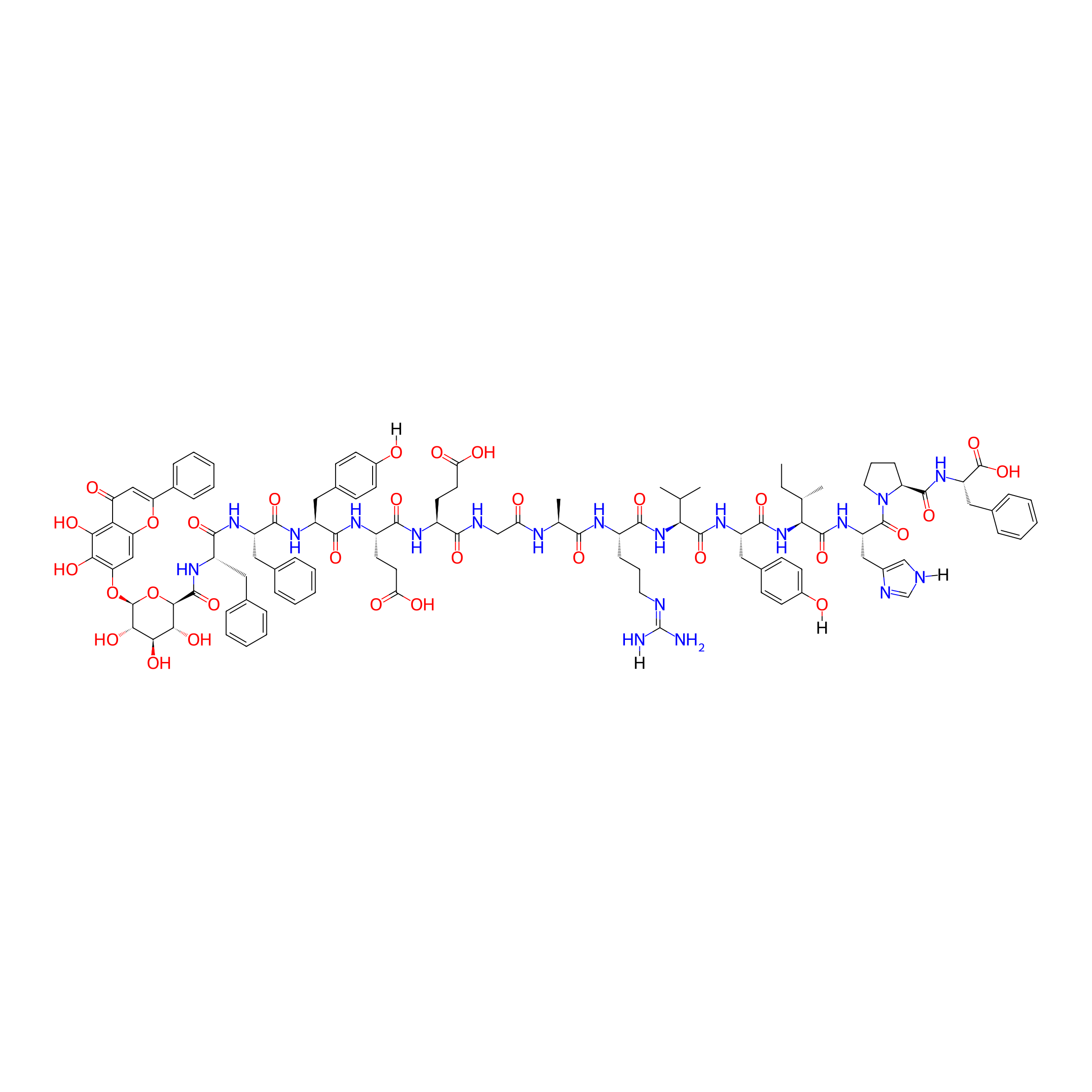
BA-NFs
|
|||||
| PDC Status |
Investigative
|
|||||
| Indication |
In total 1 Indication(s)
 DOX-induced cardiomyopathy
|
|||||
| Structure |
|
|||||
| Peptide Name |
FFYEEG-ARVYIHPF
|
Peptide Info | ||||
| Receptor Name |
Type-1 angiotensin II receptor (AGTR1)
|
Receptor Info | ||||
| Drug Name |
Baicalin
|
Drug Info | ||||
| Linker Name |
Amide bond
|
Linker Info | ||||
| Formula |
C109H131N19O31
|
|||||
| #Ro5 Violations (Lipinski): 4 | Molecular Weight | 2203.349 | ||||
| Lipid-water partition coefficient (xlogp) | -0.8373 | |||||
| Hydrogen Bond Donor Count (hbonddonor) | 26 | |||||
| Hydrogen Bond Acceptor Count (hbondacc) | 30 | |||||
| Rotatable Bond Count (rotbonds) | 58 | |||||
Full List of Activity Data of This Peptide-drug Conjugate
Revealed Based on the Cell Line Data
| Experiment 1 Reporting the Activity Data of This PDC | [1] | ||||
| Indication | DOX-induced cardiomyopathy | ||||
| Efficacy Data | Fe2+ decrease ratio |
50%
|
|||
| Administration Time | 24 h | ||||
| Administration Dosage | 100 µM | ||||
| Evaluation Method | Western blotting assay | ||||
| MOA of PDC |
Based on the above background, we designed and synthesized supramolecular self-assembled nanofibers with AT1R-specific targeting moieties (Baicalin-FFYEEG-ARVYIHPF, BA-NFs). Baicalin (BA), with its capacity for ROS scavenging and ferroptosis inhibition, constitutes an ideal candidate for ameliorating DIC. BA was conjugated with the self-assembling peptide FF and targeting peptide ARVYIHPF to form a specific nanostructure to improve its aqueous solubility and incorporate a targeting functionality, thereby addressing its inherent limitations. Our results indicated BA-NFs can mitigate doxorubicin-induced cardiomyocyte ferroptosis and cardiac dysfunction. This remarkable therapeutic effect is primarily attributable to the targeting proficiency of BA-NFs for injured cardiomyocytes, culminating in superoxide and ROS scavenging, reduced iron deposition, alleviated lipid peroxidation, and enhanced SLC7A11 and GPX4 expression. Therefore, we propose that BA-NFs proffers an efficacious targeted drug delivery strategy for the amelioration of DIC.
Click to Show/Hide
|
||||
| Description |
The accumulation of iron is a characteristic feature of ferroptosis. Intracellular iron, especially labile ferrous iron, can react with oxidants to generate cytotoxic hydroxyl radicals via Fenton reactions, thereby promoting ferroptosis. FerroOrange staining revealed significantly increased intracellular Fe2+ levels in DOX-treated H9c2 cells compared to controls, indicating DOX induced iron dyshomeostasis, resulting in ferrous iron buildup and subsequent ferroptosis. BA-NFs alleviated the accumulation of intracellular ferrous ions, suppressing ferroptosis. Fe2+ accumulation may disrupt the balance between LPO and oxygen homeostasis. We observed that BA-NFs efficiently attenuated DOX-induced elevation in malondialdehyde (MDA), a lipid peroxidation end-product, while increased antioxidant glutathione (GSH) levels. These findings suggested that BA-NFs can prevent DOX-induced ferroptosis in cardiomyocytes. Furthermore, protein expression of SLC7A11 and GPX4, key components of the antioxidant defense system against ferroptosis, was examined. DOX significantly decreased SLC7A11 and GPX4 expression in H9c2 cells compared to controls, suggesting DOX disrupts cellular antioxidant systems leading to ferroptosis. BA and BA-NFs partially restored SLC7A11 and GPX4 expression versus DOX treatment, with BA-NFs exhibiting the most significant impact. Together, these results indicate BA-NFs specifically inhibits DOX-induced cardiomyocyte ferroptosis by reducing intracellular iron accumulation and enhancing antioxidant system gene expression. In addition, the cardiotoxic effects of DOX are mediated via excessive oxidative stress and induced mitochondrial damage, thereby activating intrinsic apoptosis as an additional pathway. Flow cytometric analysis using Annexin V-Fitc/PI staining revealed that BA-NFs potently attenuated DOX-induced cardiomyocyte apoptosis, with a more pronounced effect than BA alone. DOX enhanced the green fluorescent signal of cleaved caspase-3 (as a biomarker of apoptosis) in H9c2 cells, whereas BA-NFs significantly inhibited this upregulation. These results provided further evidence that BA-NFs serve as potential therapeutic approaches for DIC.
Click to Show/Hide
|
||||
| In Vitro Model | Normal | H9c2 cell | CVCL_0286 | ||
| Experiment 2 Reporting the Activity Data of This PDC | [1] | ||||
| Indication | DOX-induced cardiomyopathy | ||||
| Efficacy Data | GPX4/GAPDH increase ratio |
120%
|
|||
| Administration Time | 24 h | ||||
| Administration Dosage | 100 µM | ||||
| Evaluation Method | Western blotting assay | ||||
| MOA of PDC |
Based on the above background, we designed and synthesized supramolecular self-assembled nanofibers with AT1R-specific targeting moieties (Baicalin-FFYEEG-ARVYIHPF, BA-NFs). Baicalin (BA), with its capacity for ROS scavenging and ferroptosis inhibition, constitutes an ideal candidate for ameliorating DIC. BA was conjugated with the self-assembling peptide FF and targeting peptide ARVYIHPF to form a specific nanostructure to improve its aqueous solubility and incorporate a targeting functionality, thereby addressing its inherent limitations. Our results indicated BA-NFs can mitigate doxorubicin-induced cardiomyocyte ferroptosis and cardiac dysfunction. This remarkable therapeutic effect is primarily attributable to the targeting proficiency of BA-NFs for injured cardiomyocytes, culminating in superoxide and ROS scavenging, reduced iron deposition, alleviated lipid peroxidation, and enhanced SLC7A11 and GPX4 expression. Therefore, we propose that BA-NFs proffers an efficacious targeted drug delivery strategy for the amelioration of DIC.
Click to Show/Hide
|
||||
| Description |
The accumulation of iron is a characteristic feature of ferroptosis. Intracellular iron, especially labile ferrous iron, can react with oxidants to generate cytotoxic hydroxyl radicals via Fenton reactions, thereby promoting ferroptosis. FerroOrange staining revealed significantly increased intracellular Fe2+ levels in DOX-treated H9c2 cells compared to controls, indicating DOX induced iron dyshomeostasis, resulting in ferrous iron buildup and subsequent ferroptosis. BA-NFs alleviated the accumulation of intracellular ferrous ions, suppressing ferroptosis. Fe2+ accumulation may disrupt the balance between LPO and oxygen homeostasis. We observed that BA-NFs efficiently attenuated DOX-induced elevation in malondialdehyde (MDA), a lipid peroxidation end-product, while increased antioxidant glutathione (GSH) levels. These findings suggested that BA-NFs can prevent DOX-induced ferroptosis in cardiomyocytes. Furthermore, protein expression of SLC7A11 and GPX4, key components of the antioxidant defense system against ferroptosis, was examined. DOX significantly decreased SLC7A11 and GPX4 expression in H9c2 cells compared to controls, suggesting DOX disrupts cellular antioxidant systems leading to ferroptosis. BA and BA-NFs partially restored SLC7A11 and GPX4 expression versus DOX treatment, with BA-NFs exhibiting the most significant impact. Together, these results indicate BA-NFs specifically inhibits DOX-induced cardiomyocyte ferroptosis by reducing intracellular iron accumulation and enhancing antioxidant system gene expression. In addition, the cardiotoxic effects of DOX are mediated via excessive oxidative stress and induced mitochondrial damage, thereby activating intrinsic apoptosis as an additional pathway. Flow cytometric analysis using Annexin V-Fitc/PI staining revealed that BA-NFs potently attenuated DOX-induced cardiomyocyte apoptosis, with a more pronounced effect than BA alone. DOX enhanced the green fluorescent signal of cleaved caspase-3 (as a biomarker of apoptosis) in H9c2 cells, whereas BA-NFs significantly inhibited this upregulation. These results provided further evidence that BA-NFs serve as potential therapeutic approaches for DIC.
Click to Show/Hide
|
||||
| In Vitro Model | Normal | H9c2 cell | CVCL_0286 | ||
| Experiment 3 Reporting the Activity Data of This PDC | [1] | ||||
| Indication | DOX-induced cardiomyopathy | ||||
| Efficacy Data | GSH/GSSG increase ratio |
85%
|
|||
| Administration Time | 24 h | ||||
| Administration Dosage | 100 µM | ||||
| Evaluation Method | Western blotting assay | ||||
| MOA of PDC |
Based on the above background, we designed and synthesized supramolecular self-assembled nanofibers with AT1R-specific targeting moieties (Baicalin-FFYEEG-ARVYIHPF, BA-NFs). Baicalin (BA), with its capacity for ROS scavenging and ferroptosis inhibition, constitutes an ideal candidate for ameliorating DIC. BA was conjugated with the self-assembling peptide FF and targeting peptide ARVYIHPF to form a specific nanostructure to improve its aqueous solubility and incorporate a targeting functionality, thereby addressing its inherent limitations. Our results indicated BA-NFs can mitigate doxorubicin-induced cardiomyocyte ferroptosis and cardiac dysfunction. This remarkable therapeutic effect is primarily attributable to the targeting proficiency of BA-NFs for injured cardiomyocytes, culminating in superoxide and ROS scavenging, reduced iron deposition, alleviated lipid peroxidation, and enhanced SLC7A11 and GPX4 expression. Therefore, we propose that BA-NFs proffers an efficacious targeted drug delivery strategy for the amelioration of DIC.
Click to Show/Hide
|
||||
| Description |
The accumulation of iron is a characteristic feature of ferroptosis. Intracellular iron, especially labile ferrous iron, can react with oxidants to generate cytotoxic hydroxyl radicals via Fenton reactions, thereby promoting ferroptosis. FerroOrange staining revealed significantly increased intracellular Fe2+ levels in DOX-treated H9c2 cells compared to controls, indicating DOX induced iron dyshomeostasis, resulting in ferrous iron buildup and subsequent ferroptosis. BA-NFs alleviated the accumulation of intracellular ferrous ions, suppressing ferroptosis. Fe2+ accumulation may disrupt the balance between LPO and oxygen homeostasis. We observed that BA-NFs efficiently attenuated DOX-induced elevation in malondialdehyde (MDA), a lipid peroxidation end-product, while increased antioxidant glutathione (GSH) levels. These findings suggested that BA-NFs can prevent DOX-induced ferroptosis in cardiomyocytes. Furthermore, protein expression of SLC7A11 and GPX4, key components of the antioxidant defense system against ferroptosis, was examined. DOX significantly decreased SLC7A11 and GPX4 expression in H9c2 cells compared to controls, suggesting DOX disrupts cellular antioxidant systems leading to ferroptosis. BA and BA-NFs partially restored SLC7A11 and GPX4 expression versus DOX treatment, with BA-NFs exhibiting the most significant impact. Together, these results indicate BA-NFs specifically inhibits DOX-induced cardiomyocyte ferroptosis by reducing intracellular iron accumulation and enhancing antioxidant system gene expression. In addition, the cardiotoxic effects of DOX are mediated via excessive oxidative stress and induced mitochondrial damage, thereby activating intrinsic apoptosis as an additional pathway. Flow cytometric analysis using Annexin V-Fitc/PI staining revealed that BA-NFs potently attenuated DOX-induced cardiomyocyte apoptosis, with a more pronounced effect than BA alone. DOX enhanced the green fluorescent signal of cleaved caspase-3 (as a biomarker of apoptosis) in H9c2 cells, whereas BA-NFs significantly inhibited this upregulation. These results provided further evidence that BA-NFs serve as potential therapeutic approaches for DIC.
Click to Show/Hide
|
||||
| In Vitro Model | Normal | H9c2 cell | CVCL_0286 | ||
| Experiment 4 Reporting the Activity Data of This PDC | [1] | ||||
| Indication | DOX-induced cardiomyopathy | ||||
| Efficacy Data | MDA increase rate |
50%
|
|||
| Administration Time | 24 h | ||||
| Administration Dosage | 100 µM | ||||
| Evaluation Method | Western blotting assay | ||||
| MOA of PDC |
Based on the above background, we designed and synthesized supramolecular self-assembled nanofibers with AT1R-specific targeting moieties (Baicalin-FFYEEG-ARVYIHPF, BA-NFs). Baicalin (BA), with its capacity for ROS scavenging and ferroptosis inhibition, constitutes an ideal candidate for ameliorating DIC. BA was conjugated with the self-assembling peptide FF and targeting peptide ARVYIHPF to form a specific nanostructure to improve its aqueous solubility and incorporate a targeting functionality, thereby addressing its inherent limitations. Our results indicated BA-NFs can mitigate doxorubicin-induced cardiomyocyte ferroptosis and cardiac dysfunction. This remarkable therapeutic effect is primarily attributable to the targeting proficiency of BA-NFs for injured cardiomyocytes, culminating in superoxide and ROS scavenging, reduced iron deposition, alleviated lipid peroxidation, and enhanced SLC7A11 and GPX4 expression. Therefore, we propose that BA-NFs proffers an efficacious targeted drug delivery strategy for the amelioration of DIC.
Click to Show/Hide
|
||||
| Description |
The accumulation of iron is a characteristic feature of ferroptosis. Intracellular iron, especially labile ferrous iron, can react with oxidants to generate cytotoxic hydroxyl radicals via Fenton reactions, thereby promoting ferroptosis. FerroOrange staining revealed significantly increased intracellular Fe2+ levels in DOX-treated H9c2 cells compared to controls, indicating DOX induced iron dyshomeostasis, resulting in ferrous iron buildup and subsequent ferroptosis. BA-NFs alleviated the accumulation of intracellular ferrous ions, suppressing ferroptosis. Fe2+ accumulation may disrupt the balance between LPO and oxygen homeostasis. We observed that BA-NFs efficiently attenuated DOX-induced elevation in malondialdehyde (MDA), a lipid peroxidation end-product, while increased antioxidant glutathione (GSH) levels. These findings suggested that BA-NFs can prevent DOX-induced ferroptosis in cardiomyocytes. Furthermore, protein expression of SLC7A11 and GPX4, key components of the antioxidant defense system against ferroptosis, was examined. DOX significantly decreased SLC7A11 and GPX4 expression in H9c2 cells compared to controls, suggesting DOX disrupts cellular antioxidant systems leading to ferroptosis. BA and BA-NFs partially restored SLC7A11 and GPX4 expression versus DOX treatment, with BA-NFs exhibiting the most significant impact. Together, these results indicate BA-NFs specifically inhibits DOX-induced cardiomyocyte ferroptosis by reducing intracellular iron accumulation and enhancing antioxidant system gene expression. In addition, the cardiotoxic effects of DOX are mediated via excessive oxidative stress and induced mitochondrial damage, thereby activating intrinsic apoptosis as an additional pathway. Flow cytometric analysis using Annexin V-Fitc/PI staining revealed that BA-NFs potently attenuated DOX-induced cardiomyocyte apoptosis, with a more pronounced effect than BA alone. DOX enhanced the green fluorescent signal of cleaved caspase-3 (as a biomarker of apoptosis) in H9c2 cells, whereas BA-NFs significantly inhibited this upregulation. These results provided further evidence that BA-NFs serve as potential therapeutic approaches for DIC.
Click to Show/Hide
|
||||
| In Vitro Model | Normal | H9c2 cell | CVCL_0286 | ||
| Experiment 5 Reporting the Activity Data of This PDC | [1] | ||||
| Indication | DOX-induced cardiomyopathy | ||||
| Efficacy Data | SLC7A11/GAPDH increase rate |
83%
|
|||
| Administration Time | 24 h | ||||
| Administration Dosage | 100 µM | ||||
| Evaluation Method | Western blotting assay | ||||
| MOA of PDC |
Based on the above background, we designed and synthesized supramolecular self-assembled nanofibers with AT1R-specific targeting moieties (Baicalin-FFYEEG-ARVYIHPF, BA-NFs). Baicalin (BA), with its capacity for ROS scavenging and ferroptosis inhibition, constitutes an ideal candidate for ameliorating DIC. BA was conjugated with the self-assembling peptide FF and targeting peptide ARVYIHPF to form a specific nanostructure to improve its aqueous solubility and incorporate a targeting functionality, thereby addressing its inherent limitations. Our results indicated BA-NFs can mitigate doxorubicin-induced cardiomyocyte ferroptosis and cardiac dysfunction. This remarkable therapeutic effect is primarily attributable to the targeting proficiency of BA-NFs for injured cardiomyocytes, culminating in superoxide and ROS scavenging, reduced iron deposition, alleviated lipid peroxidation, and enhanced SLC7A11 and GPX4 expression. Therefore, we propose that BA-NFs proffers an efficacious targeted drug delivery strategy for the amelioration of DIC.
Click to Show/Hide
|
||||
| Description |
The accumulation of iron is a characteristic feature of ferroptosis. Intracellular iron, especially labile ferrous iron, can react with oxidants to generate cytotoxic hydroxyl radicals via Fenton reactions, thereby promoting ferroptosis. FerroOrange staining revealed significantly increased intracellular Fe2+ levels in DOX-treated H9c2 cells compared to controls, indicating DOX induced iron dyshomeostasis, resulting in ferrous iron buildup and subsequent ferroptosis. BA-NFs alleviated the accumulation of intracellular ferrous ions, suppressing ferroptosis. Fe2+ accumulation may disrupt the balance between LPO and oxygen homeostasis. We observed that BA-NFs efficiently attenuated DOX-induced elevation in malondialdehyde (MDA), a lipid peroxidation end-product, while increased antioxidant glutathione (GSH) levels. These findings suggested that BA-NFs can prevent DOX-induced ferroptosis in cardiomyocytes. Furthermore, protein expression of SLC7A11 and GPX4, key components of the antioxidant defense system against ferroptosis, was examined. DOX significantly decreased SLC7A11 and GPX4 expression in H9c2 cells compared to controls, suggesting DOX disrupts cellular antioxidant systems leading to ferroptosis. BA and BA-NFs partially restored SLC7A11 and GPX4 expression versus DOX treatment, with BA-NFs exhibiting the most significant impact. Together, these results indicate BA-NFs specifically inhibits DOX-induced cardiomyocyte ferroptosis by reducing intracellular iron accumulation and enhancing antioxidant system gene expression. In addition, the cardiotoxic effects of DOX are mediated via excessive oxidative stress and induced mitochondrial damage, thereby activating intrinsic apoptosis as an additional pathway. Flow cytometric analysis using Annexin V-Fitc/PI staining revealed that BA-NFs potently attenuated DOX-induced cardiomyocyte apoptosis, with a more pronounced effect than BA alone. DOX enhanced the green fluorescent signal of cleaved caspase-3 (as a biomarker of apoptosis) in H9c2 cells, whereas BA-NFs significantly inhibited this upregulation. These results provided further evidence that BA-NFs serve as potential therapeutic approaches for DIC.
Click to Show/Hide
|
||||
| In Vitro Model | Normal | H9c2 cell | CVCL_0286 | ||
References